
The Descent from the Sundeck
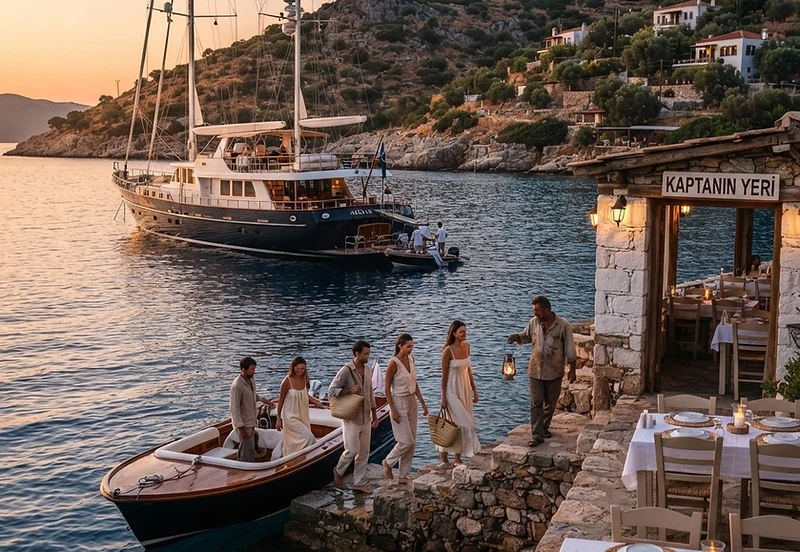
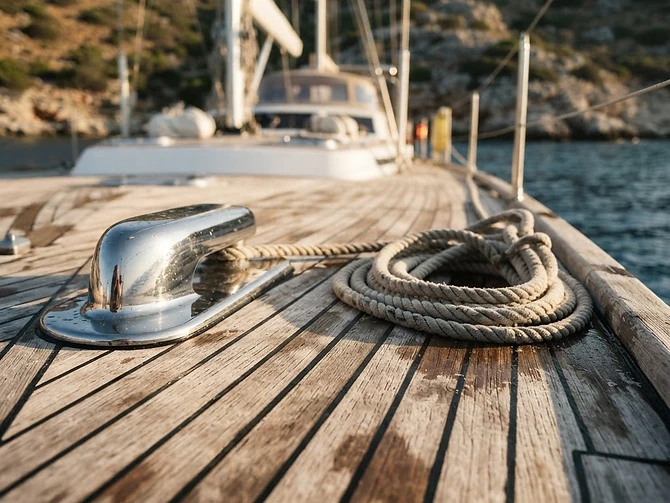
The afternoon heat was beginning to soften into a buttery, golden hum as our 40-meter motor yacht swung gently at anchor in the protected turquoise basin of the Gulf of Göková. From the sundeck, the water was so impossibly translucent that the shadow of the hull was cast sharply against the white sand seabed, some six meters below. There is a specific, tactile quality to the Turkish Aegean in late September—a clarity that demands movement. When we lowered the rigid inflatable tender, the scent of parched pine needles and wild thyme drifted off the headland, carried on a breeze that seemed to hold the promise of the evening's first ritual: a shore-bound dinner at a place accessible only by the sea.
Steering the tender toward the shoreline, we felt the transition from the vessel’s controlled, climate-regulated serenity to the raw, sun-baked immediacy of the coast. The outboard engine’s low thrum replaced the hum of the yacht’s generators, and as we skirted the rocky fringes, we observed the local fishermen hauling their nets. These are waters that have sustained the same small-scale trade for centuries, where the catch remains a seasonal matter of chance and skill, far removed from the cold-chain efficiency of the city.
The Hearth at the Edge of the Pines
We made landfall at a small, weathered stone jetty near Okluk Cove, where a family-run establishment—the type that has no formal signage, only the smell of woodsmoke and the sight of drying nets—waited for our arrival. Here, the culinary culture is not a performance but an extension of the landscape. We were greeted by the sight of lagos (white grouper) and sea bass resting on beds of crushed ice and shaved local lemon, their eyes still bright with the morning's life. The kitchen is a sparse, efficient affair, anchored by a wood-fired grill that imparts a subtle, char-flecked depth to everything it touches.
We sat at a table set directly into the shingle, our feet brushing the polished stones. The first plate to arrive was deniz börülcesi—samphire gathered from the brackish margins of the nearby salt flats—dressed simply in cold-pressed olive oil from the groves that climb the surrounding hills, and a sharp, citrusy squeeze of the local Dalaman lemon. It was a lesson in restraint, the saline crunch of the samphire echoing the very sea that had brought us to the shore. For the main, the grouper had been grilled over vine cuttings, resulting in a skin that crackled like parchment, giving way to flesh that tasted faintly of the sea’s own mineral pulse.
The Return to the Night Anchor
Dinner in the Gulf of Göková is never a hurried affair; it follows the slow, atmospheric rhythm of the night air as it pulls down from the mountains. Over a final pour of raki, the conversation turned to the following day’s navigation—a slow cruise toward the ruins of Knidos to catch the morning light on the temple stones. The proprietor, a man whose hands held the callouses of both a seaman and a gardener, brought out a dish of warm figs drizzled with local honey and walnuts, a final, sticky-sweet tribute to the land's late-summer yield.
The return run to the yacht was a plunge into the profound silence of the Gulf. Under a canopy of stars so vivid they seemed to vibrate against the dark velvet of the sky, the tender cut a phosphorescent path through the water. As we approached, the silhouette of our vessel—a graceful, balanced form against the stillness of the anchorage—glowed with a soft, inviting warmth. We cut the engine, letting the current drift us alongside the swim platform, the only sound the rhythmic lapping of the Aegean against the hull as we transitioned from the wild coast back to the steady, reassuring peace of the deck.






