
The Fluid Threshold
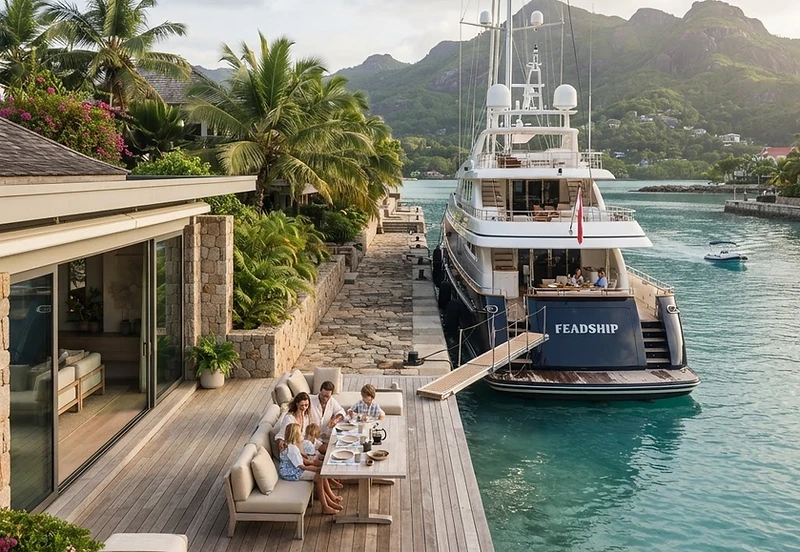
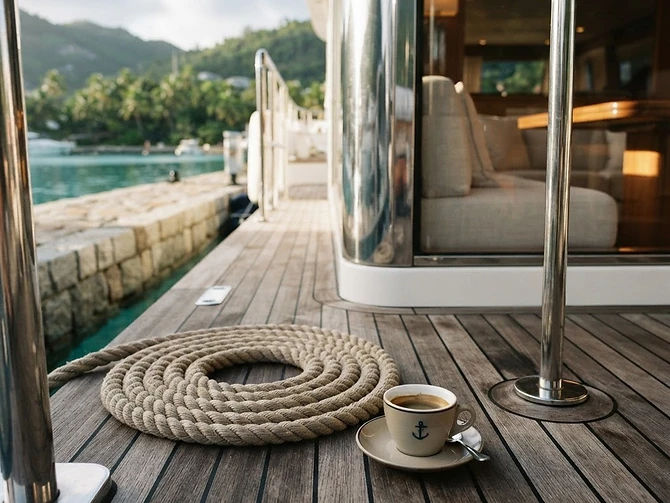
The dawn over Mahé is not a gradual brightening; it is an ignition of saturated light that demands immediate attention. From the deep-set terrace of the residence at Eden Island, the transition from living space to the quay is measured not in meters, but in the subtle shift of humidity and the rhythmic, hollow slap of water against a composite hull. Here, the floor-to-ceiling glass does not merely frame the view; it acts as a permeable membrane between the domestic interior and the deep, indigo life of the marina. On this particular Tuesday, the air held the faint, sweet scent of crushed frangipani mingled with the sharp, honest tang of marine diesel and salt—an olfactory cocktail that signals the true commencement of a voyage. Standing by the bifold doors, I watched the crew of a 45-meter Royal Huisman ketch preparing for departure. The precision of their movements—a coil of line tightened here, a fender retrieved there—was a choreographed dance of nautical intent. My own morning was defined by the sensory gravity of the sea: the taste of strong, black coffee, the rough texture of weathered teak under bare feet, and the constant, shifting knowledge that the horizon is never a static concept. The architecture of the home, with its clean, white-washed timber and deliberate, shaded sightlines, serves only to heighten the realization that one is fundamentally an inhabitant of the ocean, merely borrowing a room on the shore to recalibrate between passages.
Refractions of the Indian Ocean
Life in the Seychelles dictates a pace set by the monsoon winds and the tidal pulse of the inner islands. When we returned from the outer banks later that afternoon, the yacht, a custom performance cruiser, slid into the berth with the practiced silence of a predator returning to its lair. The act of stepping from the passerelle directly into the residence’s cooling interior is a singular luxury, a seamless continuation of the yachting life. The interior design of the residence reflects this continuity; there are no heavy barriers, no jarring shifts in palette, only a deliberate echoing of the bleached coral tones and the deep, oceanic blues visible through the glass. I recall an evening spent discussing the nuances of the Amirantes passage while sitting on the threshold of the living room, the quay just inches from my chair. We spoke of the specific, temperamental currents near Desroches and the way a Feadship handles the swell when the southeast trades are at their peak. There is a specific kind of conversation that only occurs in these spaces—a dialogue informed by the intimacy of being wet, tired, and utterly content. The architecture did not demand attention; it simply provided the stage upon which the true subject, the vessel and the voyage, could be dissected and celebrated.
As the sun dipped behind the granitic peaks of Mahé, the marina light softened to a bruised purple. The superyachts lining the quay became silhouettes, their masthead lights flickering to life like terrestrial stars. There was no grand finale, only the quiet, profound satisfaction of a day spent in service to the sea. The last task was simple: to slide the glass door fully open, allowing the Indian Ocean breeze to sweep through the room, ensuring that even in sleep, one remains anchored to the rising tide.






