
The Geometry of the Morning Trade
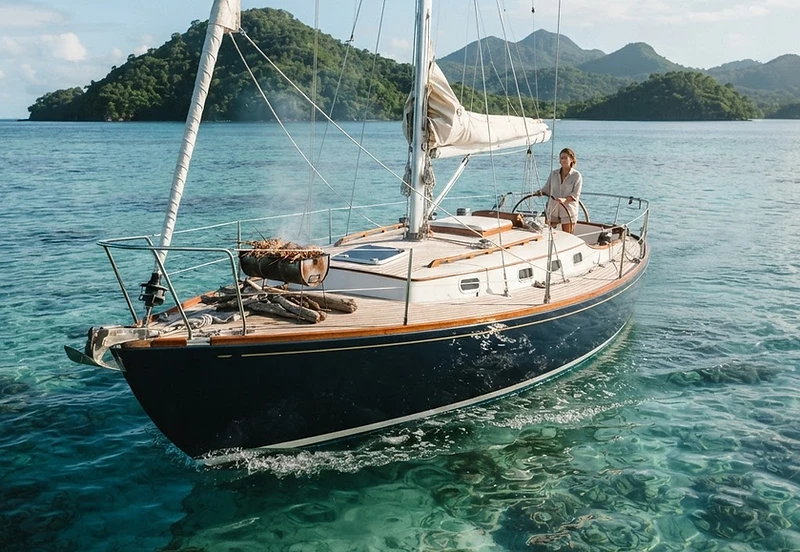
The dawn air in the Mozambique Channel carries the weight of the Indian Ocean—a cooling, rhythmic breath that stirs the surface of the water into a thousand fractured mirrors. We are aboard a classic Hinckley, her lines as sharp and purposeful as the headlands of Nosy Komba rising in the distance. The wind is a reliable southerly, the kind that fills the main with a steady, reassuring hum, pulling us away from the bustle of Hell-Ville. Sailing a daysailer in these waters requires a constant dialogue with the depth sounder; the coral heads here are unforgiving, mere silhouettes beneath a layer of crystalline turquoise that invites an intimacy with the seafloor found in few other cruising grounds.
Steering by the feel of the tiller, I watch the way the water feathers along the hull. There is a specific cadence to a small craft in the archipelago, a sense of immediate connection between the rudder and the reef-strewn shallows. We hold our course for a nameless bay tucked behind a cluster of limestone outcrops, a place where the tide dictates the rhythm of entry and the anchor holds in fine, white sand that seems to glow even beneath ten feet of water.
The Shorebound Pantry
The anchor chain rattles out—a sharp, metallic punctuation in the surrounding silence—and as the vessel settles into her position, the mission turns to the galley. The Malagasy coastline does not merely provide food; it offers a sensory map of the region. Before leaving the wharf at dawn, we had secured a haul of tsingy lobster and a bundle of green peppercorns from a local fisherman whose wooden pirogue bobbed in the lee of our transom. Back on board, the smell of the sea is joined by the sweet, dark, earthiness of vanilla pods, sourced from a nearby cooperative, which our chef is currently macerating to glaze the morning’s catch.
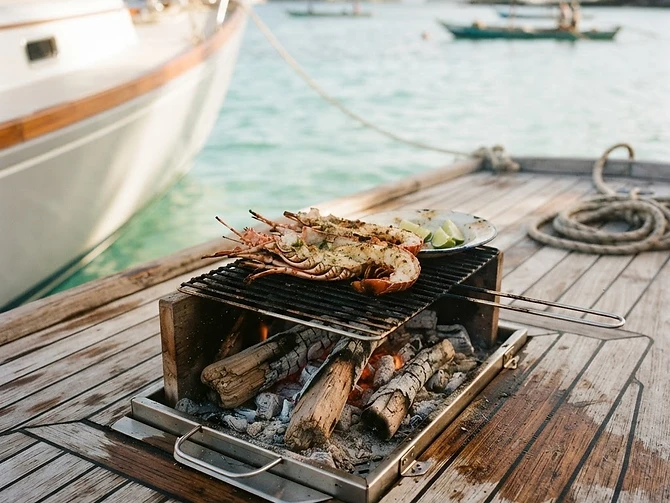
We take the tender ashore, the small motor cutting through the glassy calm until we strike the sand of a private, hidden beach. We have brought with us the tools of a proper Malagasy picnic: a woven mat, a bottle of chilled, crisp mineral water, and the bounty of the islands—citrus fruits with skins so thin they seem translucent, freshly grated coconut, and the lobster, now grilled over driftwood embers until the shell achieves a deep, scorched carmine. To eat here, amidst the swaying palms and the distant sound of the surf breaking on the outer reef, is to understand that the luxury of the charter is not in the equipment, but in the access to such profound, unadulterated stillness.
A Lingering Afternoon Tide
As the sun climbs, the temperature shifts, and the water takes on a deeper, more profound indigo. We linger over the remnants of our meal—the lingering heat of wild ginger, the citrus snap of local lime. The conversation drifts, as it always does when the wind dies down, toward the next anchorage and the possibility of reaching the Radama Islands by the next tide. There is no urgency here, only the steady, terrestrial clock of the archipelago. We clear our table, shaking the sand from the linens, and row back to the Hinckley, her brightwork shimmering under the midday glare. Looking back at the empty beach, the only evidence of our presence is the brief, shifting pattern of footprints that the incoming tide will claim, restoring the bay to its pristine, silent state before we hoist the sails once more for the open sea.






