
The North Channel Silent Fleet
There is a peculiar tension in the North Channel of Lake Huron at dawn, a stillness that seems to press against the varnished mahogany caprails of our Hinckley. Unlike the brine of the Atlantic, the water here possesses a glassy, almost clinical transparency, hinting at the history resting beneath the keel. We had tracked our path through the La Cloche Mountains, the quartzite ridges glowing pale lilac in the early light, before dropping the hook in a sheltered bight near the western tip of Manitoulin Island. Here, the depth sounder revealed a jagged anomaly—the remains of a 19th-century schooner claimed by the shifting, unforgiving shoals of the Great Lakes.
Descending into the water, the temperature shock is immediate—a sharp, exhilarating reminder that we are far from tropical reefs. Visibility here is a miracle of the Great Lakes, where the absence of salt prevents the rapid decay of timber. As I hovered over the mainmast, which remains remarkably intact, the silence of the lake felt profound, heavy with the weight of centuries. To dive these wrecks is to understand that the yachting life in the Great Lakes is not merely about navigation, but about a deep, tactile communion with a maritime graveyard that refuses to be reclaimed.
The Galley’s Forage and the Shorebound Table
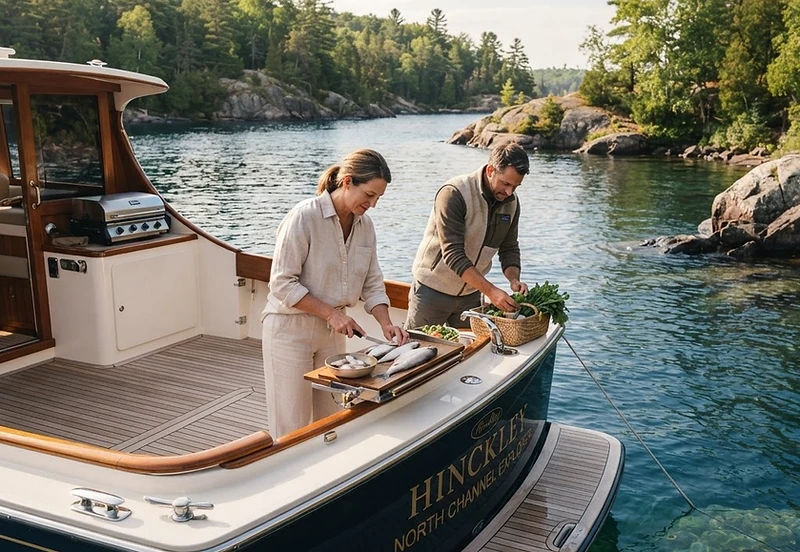
Returning to the deck, the transition from the abyss to the warmth of the cockpit is one of the true rituals of the season. Our chef had spent the previous afternoon scouring the shoreline of the nearby bays for the delicacies that define this rocky, northern latitude. As the boat swung on its anchor, the scent of wild leeks and fresh morels began to drift from the galley. These are the ingredients of the Manitoulin table—earthy, assertive, and entirely tied to the short, intense summer.
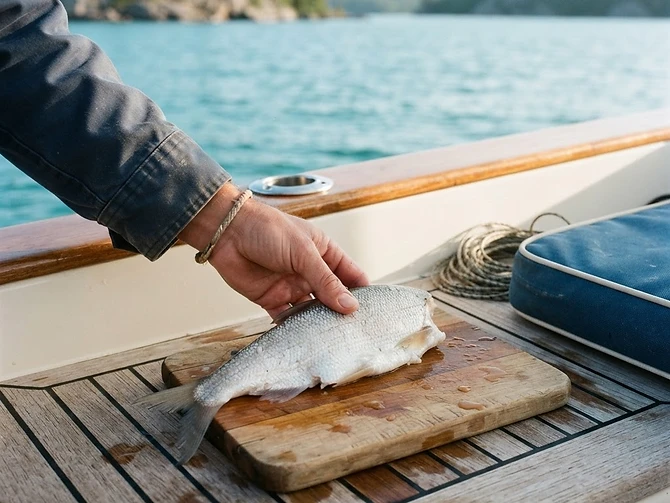
We took the tender ashore that evening to a small, unassuming outpost near Kagawong, a place where the local fishermen swap tales over bowls of whitefish chowder. The fish, a silver-scaled prize pulled from the deep-water trenches of Huron, was served simply—pan-seared in butter with a touch of local maple syrup and a handful of foraged rock samphire. It is a meal that tastes of the geology itself: the mineral tang of the limestone cliffs and the cold, freshwater purity of the lake. We ate beneath a sky that turned the deep indigo of a bruised plum, the conversation drifting toward the charts and the planned passage through the Detour Passage the following day.
There is no pretense in the way one eats here; it is an honest dialogue between the water and the stove. Whether it is the smoked trout landed at a remote dock or the berries picked from the crags of the Niagara Escarpment, the culinary tradition of this region remains steadfast. The boat sits tethered to the history of the lake, a vessel of modern comfort balanced against the rugged, unyielding nature of the Canadian Shield. As the anchor chain rattled through the hawsehole to signal our departure, the only thing remaining on the water was the widening wake, a fleeting scar on the glass, vanishing into the vast, grey-blue serenity of the North Channel.






