
The Geometry of the Arrival
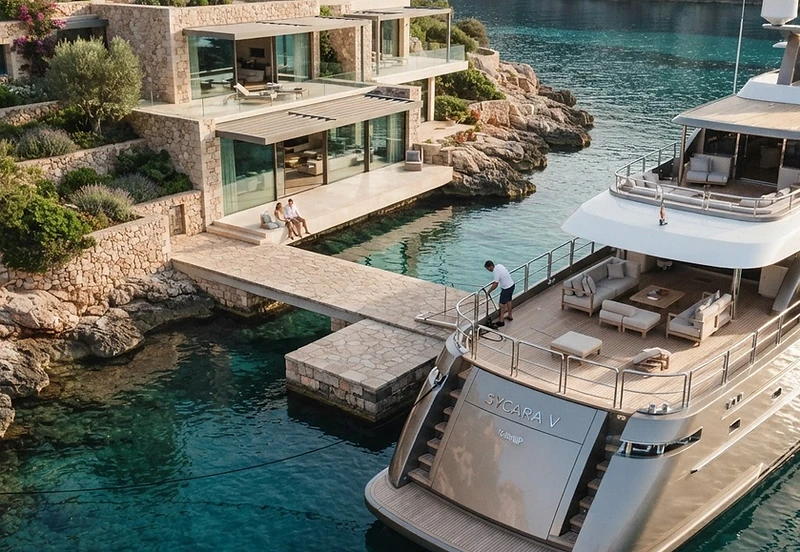
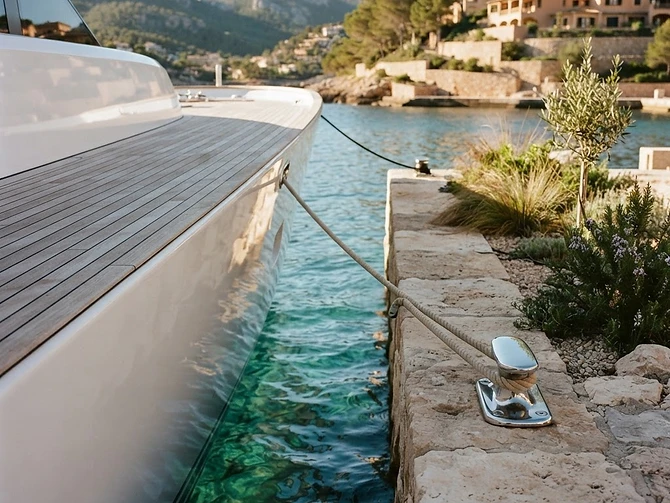
The morning light in Port d’Andratx hits the limestone cliffs with a distinctive, bleached intensity, turning the surrounding hills into a jagged backdrop of ochre and grey. I watched from the stern deck of a 55-metre Feadship as the captain eased her toward a private quay, a masterwork of structural restraint designed by the local practice of Martinez Lapeña-Torres. There is a particular, visceral satisfaction in the silence of an electric thruster during the final meters of a docking maneuver, a quiet that allowed the sounds of the shore to drift across the water: the rhythmic, hollow clatter of a mast slapping against a halyard, the faint scent of crushed sea fennel, and the sharp, bright call of a gull circling the breakwater. This was not merely a place to tie off lines; the quay had been carved into the living rock to extend the horizontal lines of the yacht’s own profile, a deliberate blurring of where the vessel ends and the architecture begins.
Reflections in Stone and Salt
Stepping off the passerelle onto the scorched stone of the quay feels less like arriving at a destination and more like continuing the voyage on solid ground. The pavilion, cantilevered over the water with a roofline that mirrors the gentle sheer of a classic sailing yacht, is stripped of artifice. Its floor-to-ceiling glass panels are pushed back to reveal a space that is as much an extension of the sea as the deck itself. I sat in a low, linen-upholstered chair as a steward brought a glass of cold, crisp Mallorcan prensal blanc, the condensation forming droplets that mirrored the salt spray still clinging to the yacht’s stainless steel guardrails. The brilliance of the pavilion’s design lies in its lack of hierarchy; the teak flooring matches the exact width and grain of the deck aboard, creating a visual bridge that tricks the eye into believing the entire structure might simply float away with the tide.
The Quiet Vigil of the Pityuses
As the afternoon heat settled, the wind shifted, bringing the cooler, saline draft common to the Pityuses. Looking out from the pavilion’s shade, the relationship between the yacht and the shore became a study in intentional stillness. Most berths are frantic, noisy junctions of commerce and transit, but here, the deliberate positioning of the structure acts as a sound baffle, preserving the hush of the harbour. Watching the shadows lengthen across the hull of a nearby Nautor’s Swan, I was struck by the humility of the design. It did not attempt to dominate the coastline or shout for attention; instead, it served as a quiet, stone-bound guardian for the vessel, a place to shed the salt of a passage and wait for the next set of favorable winds. The day ended with the sun dipping behind the headland, leaving the white topsides of the Feadship glowing with a pale, ethereal light against the cooling, dark stone of the quay, a singular, quiet moment before the rhythm of the sea took hold once more.






