
The Quiet Geometry of the Anchor
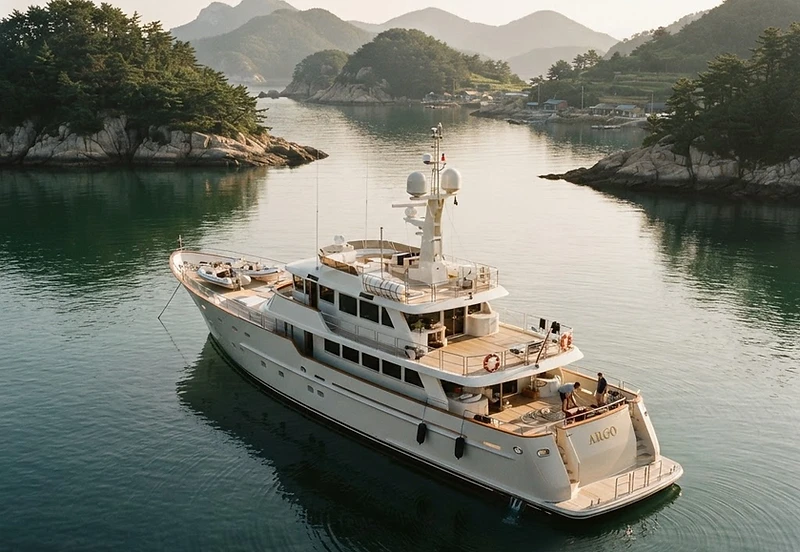
There is a specific, low-frequency hum that vibrates through the hull when a vessel finds its footing in the Hallyeohaesang marine park. Dropping the hook off the western flank of Hansando, the water beneath us was as still as a sheet of hammered pewter, broken only by the occasional, lazy rings of a surfacing sea bream. Being the sole vessel in this hidden cove is a rare privilege, a deliberate choice to trade the polished circuit of the major ports for the raw, serrated beauty of South Korea’s southern archipelago. The silence here is not empty; it is a weight, a tactile presence that demands you slow your own pace to match the drift of the tide.
We had spent the previous day navigating the swirling currents around the jagged headlands, the yacht cutting through the chop with that refined, muted power only high-end naval architecture provides. When the engines finally cut, the sudden absence of mechanical vibration allowed the natural acoustics of the bay to rush in—the soft cluck of water against the transom, the rustle of wind through the pine-clad ridges, and the distant, rhythmic clang of a buoy marker. It is in this stillness that the yacht transitions from a machine of passage into a sanctuary, a private island tethered to the seabed by nothing more than a galvanized chain and the sheer force of patience.
From the Morning Market to the Galley Table
Life aboard, when stripped of the coastal itinerary, inevitably gravitates toward the galley. Before departing the bustling docks of Tongyeong, we had secured a haul of bangeo—large, seasonal yellowtail—and a basket of sea-wracked miyeok, or brown seaweed, which the local fishermen pull from the kelp forests that hug these granite shorelines. Watching our chef work in the galley is to witness a quiet, focused choreography. There is no pretense, only the intense respect for the provenance of the ingredients, a practice that mirrors the way the yacht itself is kept—with precision and an unwavering eye for the integrity of the whole.
By noon, the bangeo was prepared as a crisp, cool hoe, served alongside a sharp dipping sauce of soy, sesame oil, and minced garlic that had been pounded in a mortar on deck earlier that morning. We ate on the aft deck, the table set with simple, heavy linens, watching the afternoon sun dapple the water. These are the rituals that define the yachting life: the slow, deliberate transition from the hunt for local sustenance to the simple pleasure of consuming it in the very waters from which it was gathered. We followed the meal with a light, chilled tea brewed from toasted buckwheat, its nutty, earthy profile echoing the resinous scent of the pines clinging to the cliffs above.
The Threshold of the Tide
As evening descends, the Hallyeohaesang landscape shifts. The granite monoliths lose their sharp definition, softening into deep, indigo silhouettes that press inward toward the anchorage. There is a profound comfort in being disconnected from the land-bound world, held safely within the teak-lined cocoon of the vessel. We spent the final hours of light on the sundeck, observing the local haenyeo—the legendary free-diving women—making their final, quiet return to shore in small, outboard-powered skiffs, their day of foraging for abalone and sea urchin finished.
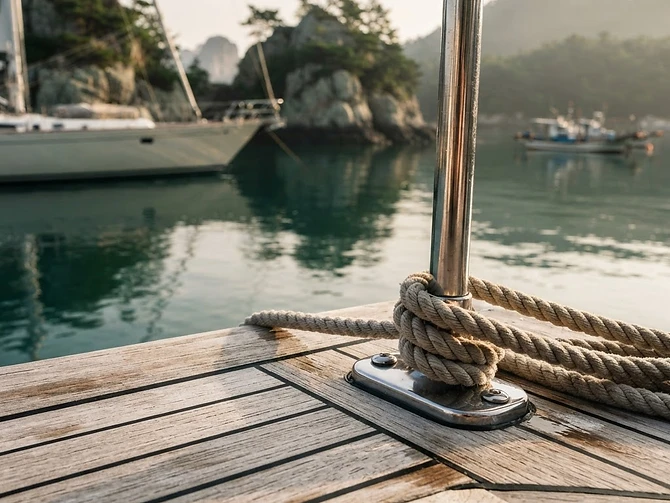
The yacht seemed to settle deeper into the evening, the lights of the deck illumination casting only a faint, protective halo onto the black, unmoving surface of the bay. In the distance, a solitary light flickered from a small farmhouse on the ridge, the only other human presence for miles. We retreated to the saloon, the air inside cool and still, leaving the grand, darkened expanse of the sea to claim the night. There was no need for conversation; the sound of the halyards tapping softly against the mast told us everything we needed to know about the solitude we had found.






