

The Geometry of the Sound
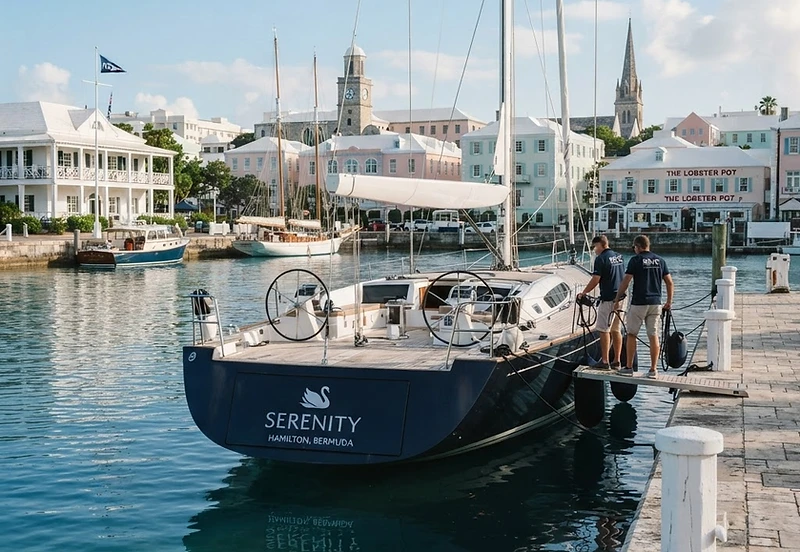
The transition from the open, unforgiving expanse of the Sargasso Sea to the protected stillness of Hamilton Harbour is a sensory recalibration of the highest order. As we slipped past the breakwater, the chaotic, irregular rhythm of the mid-Atlantic swells dissolved into a gentle, rhythmic lapping against the hull of our Nautor’s Swan. The light here possesses a crystalline, almost startling quality, refracting off the limestone bluffs that cradle the capital and casting a soft, ochre glow over the teak decks. There is a palpable shift in the air—the sharp, stinging salt of the deep ocean is replaced by the faint, sweet perfume of oleander and cedar drifting from the land. Navigation requires an intimate knowledge of the reefs that guard the approach, a series of submerged sentinels that force a captain to rely as much on local instinct as on the electronic charts flickering in the nav-station.
The Logistics of the Anchorage
For the visiting skipper, Hamilton Harbour provides a rare marriage of genuine security and immediate, unhurried proximity to the island’s core. The harbour is a natural amphitheater, offering near-total immunity from the prevailing westerlies that can make the offshore reaches so demanding. Depth is generally ample for vessels drawing up to six or seven meters, though one must remain vigilant of the shifting sandbars that define the primary entrance channels. We dropped our hook in holding ground that consists of firm, white sand and coral silt; the anchor set with a satisfying, deep resistance that promised a peaceful night despite the afternoon’s freshening breeze. Shore power is reliably delivered at the commercial quays managed by the Corporation of Hamilton, where standard 50-amp and 100-amp hookups are maintained to a high standard, though for larger, higher-load vessels, advance coordination with the harbour master is the mark of a seasoned hand. Fuel bunkering requires prior arrangement with local providers, ensuring that traffic flow remains fluid in what can occasionally become a constrained basin.
Life at the Quay Wall
Life in Hamilton is defined by the deliberate cadence of the afternoon. After securing the tender at the lower docks near the historic Royal Bermuda Yacht Club, we wandered up toward Front Street. There is a ritualistic quality to the late-day service here—the clink of ice in heavy glass, the polite, measured pace of the locals, and the sight of crews finishing their daily maintenance wash-downs under the shade of colonial-style awnings. We found a small table at The Lobster Pot, where the catch of the day, served with a simple, lime-drenched slaw, tasted of the very reefs we had navigated hours earlier. It is this proximity—between the raw power of the ocean passage and the refined, quiet hospitality of the port—that makes Hamilton a singular waypoint. Access to marine mechanics and chandlery services is remarkably efficient, grounded in a long-standing maritime heritage that respects the complexities of a well-found yacht. As the sun dipped behind the western ridge, painting the water in deep shades of bruised purple and gold, the harbour fell into a hushed stillness, the yachts swinging gently in unison, connected to the island by nothing more than a single, taut nylon line.






