

The Vertical Horizon
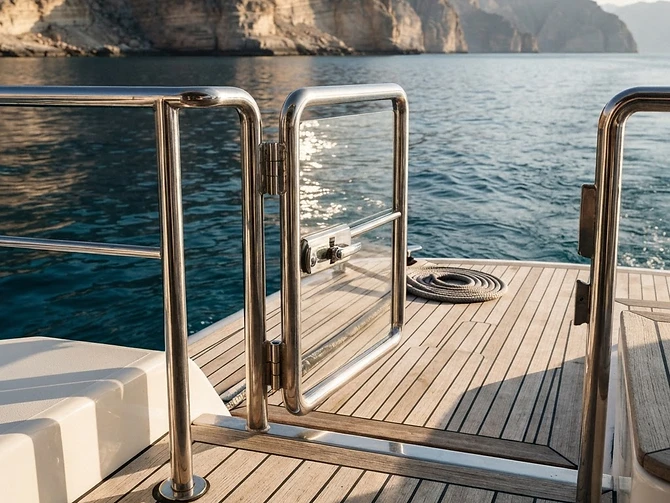
The Musandam Peninsula does not invite passage so much as it commands submission. Approaching the jagged, obsidian-hued cliffs that plunge into the Strait of Hormuz, our vessel—a low-slung, seventy-foot custom motor yacht—felt like a delicate sliver of modernity against the prehistoric geology of Oman. Steering through the fjord-like khors, the depth sounder rarely registers a bottom; the water here is a deep, bruised indigo, holding the perennial chill of the Arabian Gulf’s deepest currents. There is no gentle littoral transition; the mountains simply drop into the sea, their limestone faces worn smooth by eons of salt and wind, creating an amphitheatre of stone that amplifies the slightest sound of the halyards against the mast.
We dropped anchor in the lee of a sheltered cove near Khasab, the engine’s low hum finally yielding to the rhythmic slap of small, dark swells against the teak hull. The air, despite the late hour, remained thick with the scent of sun-warmed stone and the faint, briny sharpness of the deep sea. On deck, the crew moved with a silent, practiced efficiency, securing the lines and prepping the carbon-fibre tender for a shore run, a transition that felt as instinctive as the changing of the tide. The isolation here is absolute, an essential component of the yachting experience that demands a recalibration of one’s internal clock to the sun and the swell.
The Ritual of the Harbour
Life aboard in the Musandam is defined by the fluid transition from the solitude of the anchorage to the communal, earthen hospitality found once you step onto the quay. We took the tender into the small harbour at Khasab as the twilight deepened, the town’s lights blinking into existence against the massive, looming shadows of the Jabal al-Harim range. The culinary culture of this coast is fundamentally tethered to the sea—a rugged, unpretentious dialogue between the day’s catch and the aromatic staples of the inland valleys. Here, the food tells the story of the geography: high-altitude spices meeting low-tide bounty.
Dining at a traditional harbour-front establishment, the menu was an exercise in heritage. We began with shua, a slow-cooked lamb marinated in a potent, fragrant blend of cardamom, turmeric, and garlic, wrapped in banana leaves and buried in an underground pit—a process that mirrors the patience required for a long-distance passage. This was served with machboos, basmati rice infused with loomi, or dried lime, which provides a sharp, fermented acidity that cuts through the profound richness of the meat. The seafood, landed just hours before at the wooden docks, was prepared with restraint: a local grouper, known as hamour, grilled over charcoal until the flesh was pearlescent and sweet, brushed only with estate olive oil and a heavy pinch of sea salt harvested from the nearby lagoons. It was a meal that tasted entirely of the region, unadorned and deeply resonant.
The Quiet Return
Returning to the yacht, the transition back to the water is the final, essential movement of the day. The shift from the low hum of the harbour to the absolute, resonant quiet of the anchorage is profound; once back on board, the vessel seems to breathe with the water. Our chef had sourced a basket of Omani dates and fresh pomegranates from the morning market, their sweetness a sharp, cooling contrast to the salty, metallic scent of the mooring lines as we checked the tension for the night. Standing on the aft deck, looking up at a sky so clear it felt as though the stars were caught in the rigging, the yacht felt less like a machine and more like a sanctuary. The currents of the Musandam would inevitably pull at our hull at dawn, but for now, the only movement was the soft, persistent rocking of the tide against the chines, a reminder that in this corner of the world, the sea always dictates the rhythm of the life held within it.






