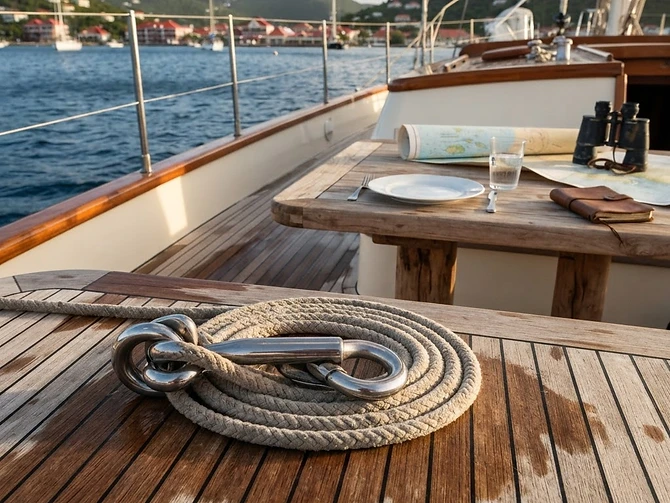
The North Atlantic swell does not offer gentle introductions. As we held our position in the deep-water corridor between St-Barthélemy and the outlying reefs, our 140-foot Royal Huisman yacht rose and fell with a rhythmic, heavy grace. To stand on the aft deck of a vessel of this pedigree is to feel the ocean’s true scale; the naval architecture here is designed not to fight the sea, but to move in concert with it. Below our keel, the bathymetry drops away with vertical, dizzying suddenness, creating the ideal stage for the sperm whales that migrate through these Caribbean currents. We were not chasing, but waiting; the engine vibrations were dampened to a low, imperceptible hum, allowing the natural amphitheater of the water to dominate our morning watch.
The Geometry of the Breach
The dawn had broken sharp and clear, illuminating the crests of the swells as we scanned the horizon for the tell-tale lateral blow of a surfacing cetacean. Then, the silence was broken not by a sound, but by a physical rupture of the sea’s surface. A massive, charcoal-coloured head breached the horizon, the water cascading from its furrowed skin like a waterfall off a cliff face. We held our breath, the yacht idling in the deep cobalt, while the whale lingered—a prehistoric presence that rendered our technological comforts secondary. It was an exercise in humility that only the open water can provide. When the creature finally sounded, its fluke slicing the surface with the precision of a guillotine, the quiet that returned to the anchorage felt weighted, heavy with the magnitude of what we had just witnessed.
From the Salt Spray to the Gustavia Larder
Returning to the anchorage in Gustavia, the transition from the wildness of the deep to the refined rituals of the harbour is a shift in frequency rather than an abrupt change. By midday, our chef had already secured a bounty from the local fishermen: fresh wahoo, landed just beyond the shelf, and clusters of spiny lobster pulled from the crags at first light. We sought out the quiet intensity of L'Isola, where the essence of the island is distilled into the simplicity of the plate. Here, the focus remains on the raw integrity of the catch—the translucent, firm slices of wahoo finished only with local lime, a touch of sea salt, and a precise drizzle of cold-pressed oil.
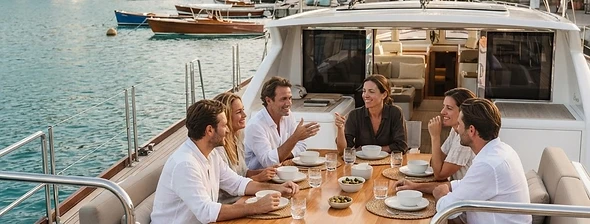
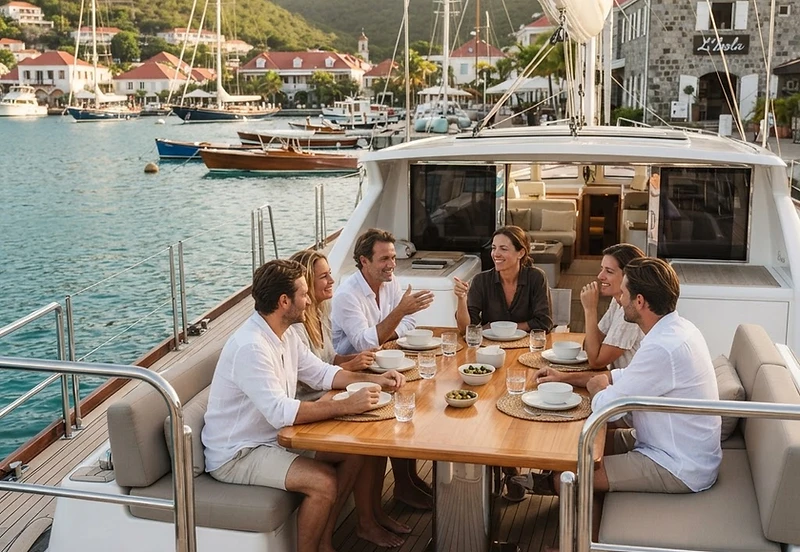
We dined on the terrace, watching the masts of the cruising fleet swaying in the harbour, the late afternoon light catching the oiled teak of nearby Nautor's Swans. The meal was an honest reflection of our day: bold, direct, and unadorned. We shared a dish of local shellfish, the sweet, clean meat a stark contrast to the salt-crusted shells. It is in these moments—the taste of the brine still lingering on one’s lips, the memory of the whale’s breach still vivid in the mind—that the true spirit of the yachting life reveals itself. It is never about the vessel in isolation; it is about the connection it facilitates between the vast, indifferent power of the ocean and the grounded, communal joy of the table.
As the sun dipped behind the headland and the anchor lights of the surrounding yachts began to shimmer against the darkening water, we felt the day reach a natural, quiet resolution. The sea had yielded its giants, and the land had provided the sustenance to reflect upon them. There is nothing left to add to such a day, only the gentle tension of the anchor chain and the promise of the morning tide.