
The Weight of the Wind
The 12-Metre Class was never designed for the lethargy of light air. Under the intense, bleached sun of the Cape Verde islands, as we rounded the northern headland of São Vicente, the boat—a weathered, pedigree racer from the late fifties—shook off its moorings with a visceral, heavy-heeled grace. The wind here is not a suggestion; it is a physical force that pours off the Sahara, cooled only by the depth of the Atlantic, catching our mainsail with a report like a closing vault door. Standing at the helm, the sensation is one of profound, mechanical honesty. Every gust translates directly into the vibration of the tiller, a kinetic conversation between the deep lead ballast and the obsidian water beneath us.
We were in the thick of a local regatta, a collection of classic hulls and modern cruisers dancing in the lee of Mindelo. Around us, the volcanic cliffs of the island loomed, stark and architectural, against a sky of impossible, deep-water indigo. Life aboard a vintage 12-Metre is a study in purposeful movement. There is no room for the superfluous. We moved in a choreography of halyards and winches, our boots finding purchase on teak that has been scrubbed to a silver-grey patina by decades of salt and spray. The boat is a living instrument, and here, in the middle of this Atlantic chain, it felt perfectly, dangerously at home.
The Shorebound Ritual
By dusk, the urgency of the race dissolved into the long, slow shadows of Porto Grande. We dropped the hook in the holding ground off the town, the anchor chain rattling through the hawsepipe with a metallic finality. Ashore, the rhythm shifted from the tension of the winches to the charcoal smoke curling above the waterfront. Cape Verdean life is inextricably tied to what the ocean yields; the local foodways are a testament to resourcefulness born of geography. We took the tender to the jetty, following the scent of roasting garlic and the unmistakable, briny tang of percebes—goose barnacles—plucked from the jagged rocks where the tide beats hardest.
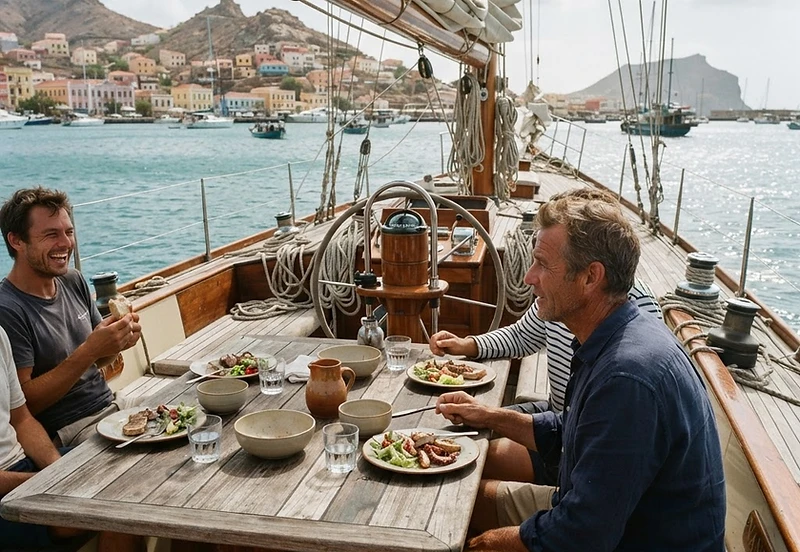
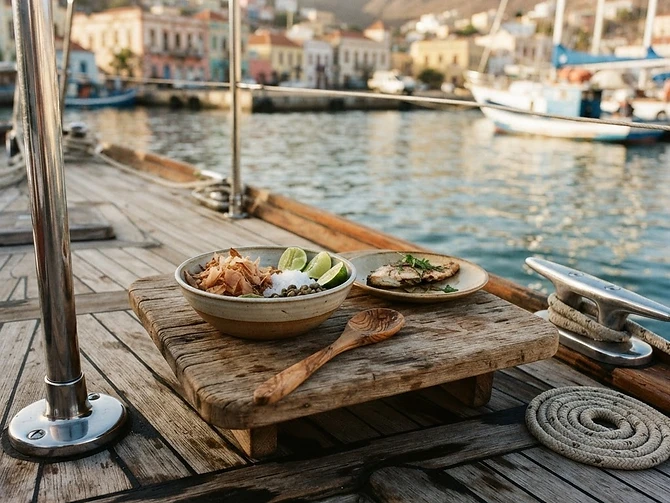
We found ourselves at a small, family-run establishment tucked into the labyrinthine alleys of the harbour, where the catch of the day is brought in not by refrigerated truck, but by the very fishermen whose boats share the anchorage. Dinner was a platter of garoupa, the local grouper, grilled simply over open flames and seasoned with the coarse, grey sea salt harvested from the salt pans of Sal. The flesh was firm and sweet, served alongside a bowl of cachupa, the island’s slow-cooked, soul-deep stew of hominy, beans, and marinated pork. There is a quiet luxury in this—the lack of pretension, the immediacy of the ingredients, and the shared knowledge that the fish was swimming only hours before it touched the plate. We ate under the persistent hum of the evening trade winds, the glass of crisp, chilled white wine sweating in the heat, a cool counterpoint to the volcanic earth beneath our feet.
The Silent Vigil
Back on board, the deck was still warm from the day’s sun. The harbour had quieted, save for the rhythmic lap of the Atlantic against our hull and the distant, melodic cadence of a creole ballad drifting from a nearby tavern. The 12-Metre lay at anchor, a dark, elegant silhouette against the lights of Mindelo, its masthead light blinking in synchronicity with the swell. I leaned against the mahogany coaming, feeling the residual tension of the day’s sailing slowly drain away. There is a particular clarity that comes when one has spent the entire day focused on nothing but the trim of a sail and the direction of the wind. As the moon rose, casting a silver path across the harbour, the boat settled into the stillness of the anchorage, a temporary home held fast by nothing more than iron and intention.






