
The Anatomy of a Highland Anchorage
The dawn in Loch Sunart does not break so much as it bruises the horizon, a slow transition from charcoal to the bruised violet of a coming squall. Anchored in the lee of a granite headland, our 60-foot sailing catamaran—a custom-built vessel designed for the temperamental beauty of these northern latitudes—sits motionless, her hulls barely shivering against the incoming tide. There is a specific silence here, one that carries the scent of wet peat and cold, deep-circulating salt. Within, the heated deck salon serves as a necessary sanctuary against the raw, uncompromising grip of the Hebrides, offering a visual tether to the shifting grey sky.
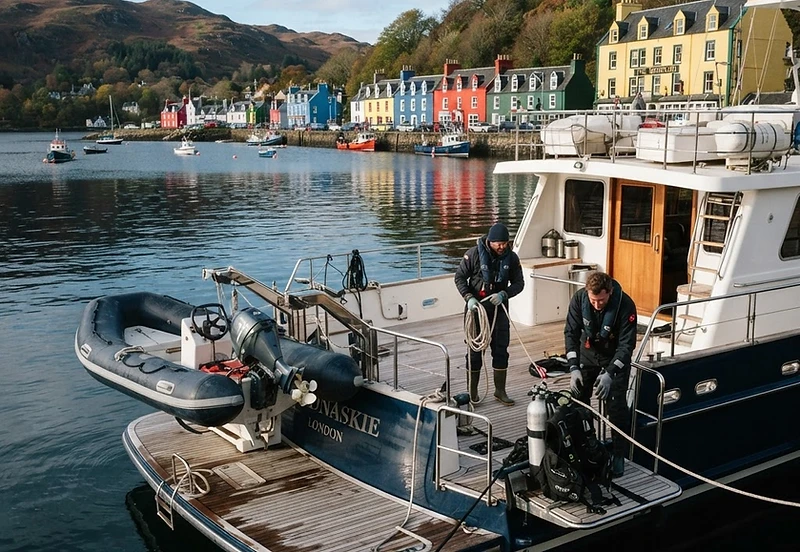
Stepping out onto the aft deck, the air is sharp enough to act as a stimulant. The morning ritual is stripped of artifice; it is coffee served in heavy ceramic, the steam swirling into the mist, while the skipper monitors the barometer. We are waiting for the slack water, a brief window of stillness in a sea defined by its relentless, tidal movement, to take the tender out toward the jagged, submerged reefs that guard the entrance to the Sound of Mull.
Beneath the Surface of the Sound
Dropping below the surface in the frigid waters off the coast of Mull is an exercise in startling, high-definition clarity. The visibility here, often dismissed by those who only chase the warmth of the tropics, is a crystalline, emerald affair. Kelp forests sway in the heavy tidal surge, their fronds thick and leather-like, housing a world of nudibranchs and shy, mottled dogfish that retreat into the shadows of the rock face. It is an industrial, hard-won beauty—the reef is not a carpet of neon, but a complex fortress of barnacles, plumose anemones, and soft corals that cling to the submerged volcanic basalt.
Returning to the deck, the chill of the dive is chased away by the rhythmic preparations in the galley. The chef, having bartered with a local creel boat at first light, has secured a catch that defines our afternoon: langoustines, pulled from the deep-water canyons only miles from our anchorage. They are served simply, tossed in a pan with foaming salted butter, lemon zest, and wild garlic foraged from the damp forest floor lining the shore. The sweetness of the crustacean, contrasted against the sharp brine of the Atlantic, is a sensory shorthand for the entire geography of the west coast.
The Ritual of the Evening Tide
As evening pulls the remaining light from the sky, we take the tender into Tobermory to walk the painted quay. The village is a cluster of saturated colour against the grey-green hills, the air thick with the smell of wood smoke and the faint, briny output of the nearby distillery. We spend the final hour at The Mishnish, where the conversation among the harbour crew turns to the shifting character of the current and the local obsession with the harvest of the sea. There is no fanfare here, only the resonant knowledge that we are temporary guests in a landscape that has existed in its current, brutal grace long before our hulls sliced these northern waters.
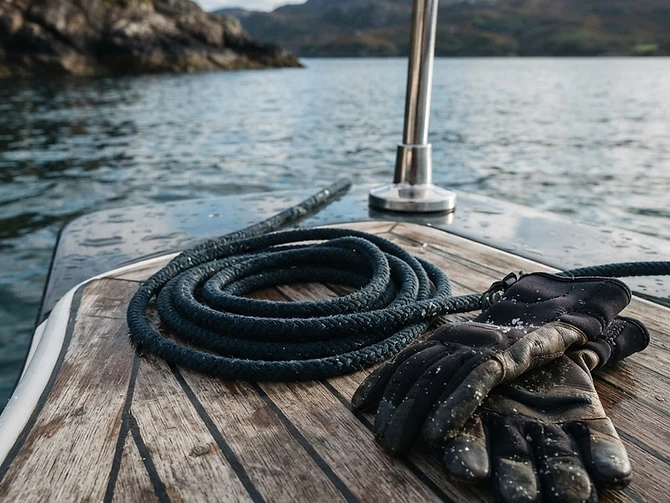
Back on board, the mooring lines are checked and tightened for the night. The sea laps against the composite hulls, a rhythmic, hollow sound that signals the end of another day spent navigating the Hebridean reach. We drift toward sleep, the boat shifting gently with the turn of the tide, anchored firmly in the dark, cold heart of the Highlands.






