
The Architecture of the Open Ocean
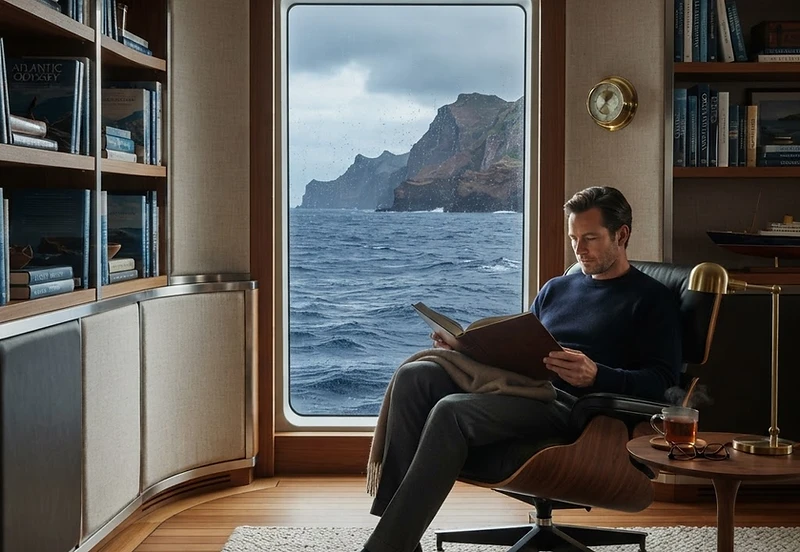
The Atlantic does not offer stillness; it is a restless, shifting force that demands constant attention from the bridge. Yet, in the mahogany-lined study of this custom Feadship, anchored in the lee of São Vicente, the world appears to hold its breath. As the unrelenting trade winds whip around the volcanic ridgelines of Mindelo, the cabin remains a sanctuary of engineered silence, a private redoubt against the mid-ocean swell. The naval architects and interior designers have treated this room less as a traditional ship's cabin and more as a freestanding house afloat—a villa of fine joinery and structural gravity. Deep, hand-stitched leather panels and solid, oil-finished teak bookshelves provide the necessary ballast, grounding the interior against the rhythmic, vertical motion of the Cape Verde current. The joinery is exacting, designed with the knowledge that a vessel’s hull is a living thing, perpetually flexing under the weight of the sea.
Tactile Quiet in the Trade Winds
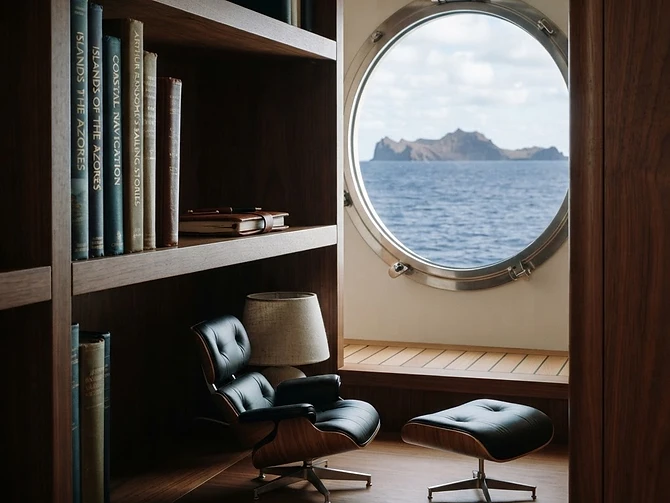
I sat in the worn Eames lounge chair this morning as the golden, slanted light caught the spine of an original 1920s maritime atlas, the leather binding softened by decades of deep-sea passage. There is a specific, immutable scent to a well-kept library at sea: a layering of ozone, aged vellum, and the faint, grounding musk of beeswax on polished timber. On the main deck, the boatswain and his crew were meticulously prepping the tender for an afternoon run toward the harbour, the distant, rhythmic chatter of the VHF radio providing a mechanical counterpoint to the profound stillness inside. Being here—surrounded by architecture that prioritizes the physical weight of ink on paper over the hollow, blue-light glare of digital screens—reminds one that a long-range yacht is, at its essence, a portable archive. The shelves are braced against the heavy rollers we encountered crossing from the Canaries, each volume secured by a delicate, custom-machined brass tension rod. It is a small, quiet mechanical detail that speaks to the inherent necessity of life at sea, where every object must be prepared for the whims of the weather.
The Shoreline Perspective
Looking out through the thickened, watertight porthole, the stark, lunar landscape of Santo Antão looms in the distance. It is a jagged, unforgiving coastline of sheer basalt cliffs that demands a quiet respect from any mariner. When we finally launch the tender to navigate the narrow, rocky inlets near Tarrafal, the transition from the library’s domestic, refined scale to the wild, vertical geography of the island is physically jarring. The villa-like quality of the study, with its deep-seated comfort and coffered ceiling, serves as a necessary psychological tether to the world we left behind. It is a home in every sense, providing a structured frame through which the vastness of the archipelago becomes manageable, even intimate. As the sun dips behind the western rim of the Atlantic, casting long, bruised violet shadows across the surface, the soft glow of the library lamp reflects against the dark, iron-grey hull. It remains a singular, glowing point of human order in a vast, shifting, and beautiful world.






