
The Electric Silence of Grand Traverse Bay
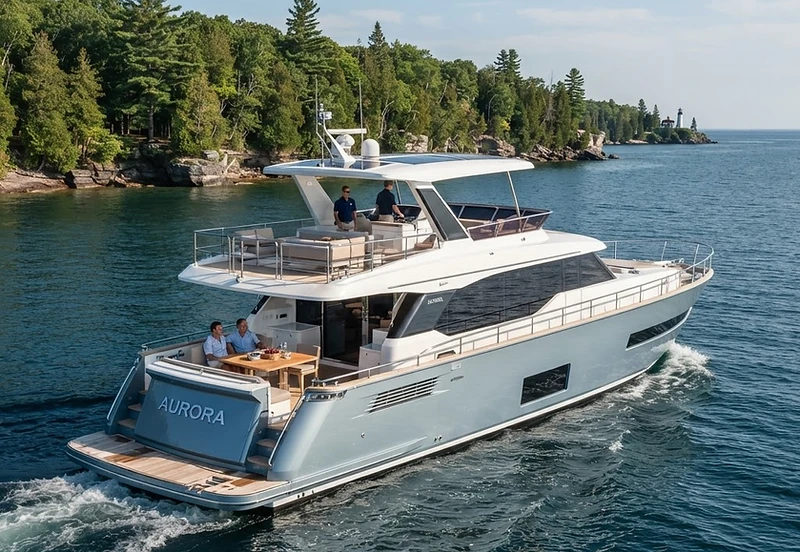
There is a specific, low-frequency hum that once defined the charter experience in the Great Lakes, a mechanical growl that echoed off the limestone bluffs of the Leelanau Peninsula. As we cast off from the Traverse City Marina this season, that vibration was replaced by a fluid, almost meditative silence. Our vessel, a custom-engineered craft utilizing an advanced hybrid-electric drivetrain, slipped through the cobalt-blue waters of Lake Michigan with the grace of a skiff. This shift to hybrid power is not merely a technological benchmark for the industry; it has fundamentally altered how we engage with the shoreline. In these expansive, freshwater reaches, the capacity to run under pure electric power allows for an intimacy with the environment—hearing the call of a loon across the water or the gentle slap of a wave against the hull—that was previously reserved for pure sailing craft.
The Culinary Rhythms of the Inland Sea
The true utility of this silent propulsion is the ability to tuck into protected, shallow anchorages, such as the secluded reaches near the South Manitou Island, without the acoustic footprint of heavy machinery. On a recent Tuesday, after a morning transit powered by the stored energy of our battery banks, we anchored in the lee of the shore to meet a local fisherman. He arrived in a battered center-console, delivering a haul of lake whitefish, still shimmering with the cold, silver light of the depths. The galley team, having spent the morning sourcing wild ramps and morels from the nearby hardwood forests of the Sleeping Bear Dunes, prepared a lunch that captured the essence of the region: pan-seared whitefish served with a delicate emulsion of spring-foraged leeks and a garnish of crisp, spicy radishes harvested from a nearby farm.
Dining aboard in this fashion, moored in the quiet shadow of the peninsula, is a lesson in the specific terroir of the Great Lakes. The produce here—the sharp, tart cherries of the orchards, the sweet, earthy beets pulled from the sandy loam, and the whitefish pulled from the deep, glacial basins—demands a culinary approach that respects simplicity. Whether enjoying a curated menu at The Tribune in Charlevoix or a chef’s table setup on the aft deck, the philosophy remains consistent: the bounty of the Great Lakes requires little manipulation. We paired the midday catch with a crisp, dry Riesling from a nearby estate on the Old Mission Peninsula, noting how the bright acidity cut through the delicate, buttery richness of the whitefish, grounding the meal in the very earth beneath our feet.
Reflections on a Greener Passage
As the sun began to dip toward the horizon, casting a long, amber glow across the vast expanse of Lake Michigan, the boat shifted silently to generator-assisted mode, recharging as we turned toward the harbor. There is a profound sense of stewardship that comes with these waters. Unlike the salt-stung hulls of the Mediterranean, these freshwater vessels preserve the pristine clarity of the Michigan shoreline. Watching the wake disappear into the darkening water, I was struck by the realization that our presence was lighter, more considerate. The hybrid shift is not simply about energy efficiency; it is about extending our capacity to linger in these quiet, beautiful places. The evening concluded not with the rattling vibration of a heavy engine, but with the gentle, rhythmic lap of water against a hull that had, for a few hours, existed in perfect, quiet harmony with the lake itself.






