
The Turn at Land’s End
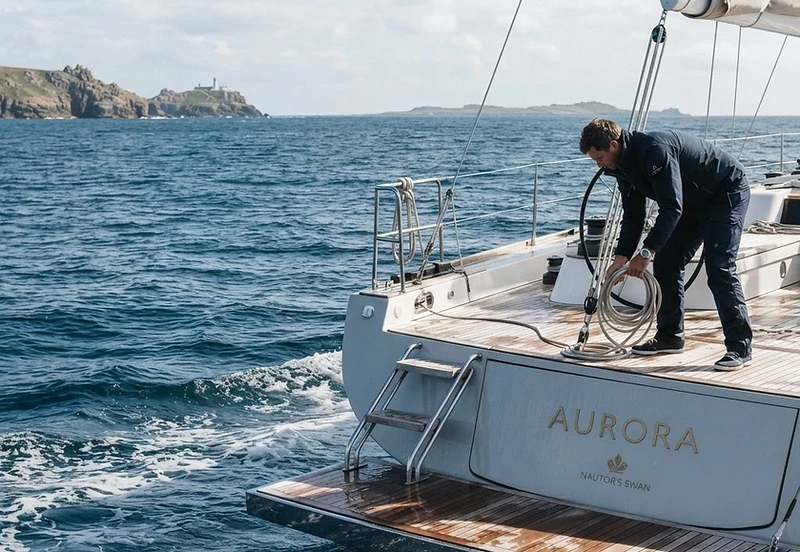
The Atlantic does not offer an invitation to the Isles of Scilly; it merely presents a series of challenges to be solved. As our Nautor’s Swan 60 carved a sharp arc around the base of the Longships Lighthouse, the wind tightened, pushing a fine, saline mist across the cockpit. It was the kind of morning where the distinction between sky and sea dissolved into a uniform grey, forcing a reliance on the rhythmic pulse of the instrumentation and the steady weight of the watch fixed to the helmsman’s wrist. There is a peculiar, grounding comfort in the ticking of a mechanical movement when the horizon has abandoned you, a reminder that human ingenuity possesses its own internal gravity amidst the unpredictable chaos of a rising swell. Here, the watch is not a mere accessory, but a physical extension of the navigation table, providing a constant, tactile reference point against the shifting moods of the Celtic Sea.
The Scillonian Crossing
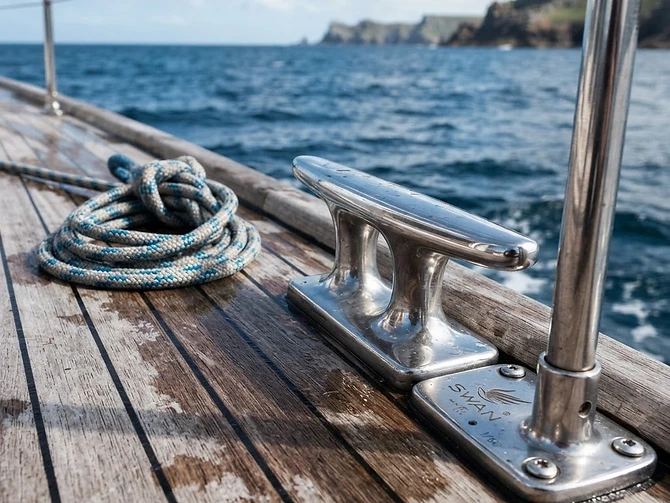
Steering for St. Mary’s requires a meticulous accounting of the tidal race. The currents here are notorious, swirling around the granite teeth of the archipelago with a violence that makes light work of a complacent navigator. As we made our crossing, the watch—a Patek Philippe Nautilus, its steel case reflecting the cool, muted Cornish light—became an essential instrument for timing our approach to the harbour mouth. It is not merely a piece of jewelry; it is a tactical necessity in a place where missing the tide gate by twenty minutes can leave a vessel stranded on a sandbar near the eastern approach to Tresco. We sat in the cockpit, the teak deck cool and damp underfoot, watching the silhouette of the Bishop Rock Lighthouse recede into the haze. The low, guttural thrum of the rigging was punctuated only by the occasional soft click of the watch bezel against the carbon fibre wheel as the helmsman made a final, minute correction to our bearing, aligning our bow with the subtle change in the water’s colour.
Anchorages and the Evening Tide
By the time we dropped anchor in the lee of St. Mary’s, the front had pushed through, leaving behind a sky the colour of crushed shells and a sea of absolute stillness. We took the rigid inflatable tender into the stone quay, the smell of brine, damp granite, and faint woodsmoke rising from the shore to greet us. At the Star Castle Hotel, we sat for a meal of local crab, the meat sweet and firm, seasoned with nothing more than the memory of the salt we had just traversed and a squeeze of lemon. The watch, catching the warm, flickering glow of the evening lanterns, looked as much at home here as it did on the bridge of the Swan, its face obscured for a moment by the steam of a bowl of local chowder. It had kept our passage faithfully, counting the minutes until the safe harbour found us. Later, as we rowed back to the vessel, the dark water beneath the oars glowed with bioluminescence, each stroke leaving a shimmering, ethereal tear in the surface. In the deep, resonant silence of the anchorage, the only sound was the distant, rhythmic clatter of halyards against masts and the steady, unhurried ticking of time kept perfectly, far beyond the reach of the shore.






