The Descent into the Shadow of Aore
The transition from the deep, cobalt swells of the Coral Sea into the protected, emerald stillness of the Segond Channel is a ritual of measured deceleration. As we brought our vessel—a low-slung, purposeful Nautor's Swan—past the jagged, palm-fringed silhouette of Aore Island, the trade winds dropped to a phantom breath. The heat of the afternoon, which had been tempered by the consistent airflow across our teak decks, suddenly pooled in the air, thick with the scent of crushed hibiscus and the heavy, mineral perfume of damp volcanic earth. There is a profound, humbling sensation in navigating these waters; the chart plotter flickers with the maritime memory of deep-water wrecks and the topography of an unforgiving, shifting floor, demanding a constant, watchful eye and a steady hand on the throttle until the anchor bites deep into the sandy shelf off Luganville.
The Market’s Sunset Toll
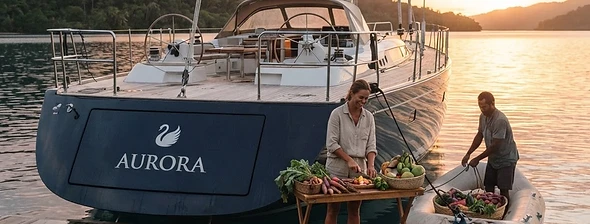
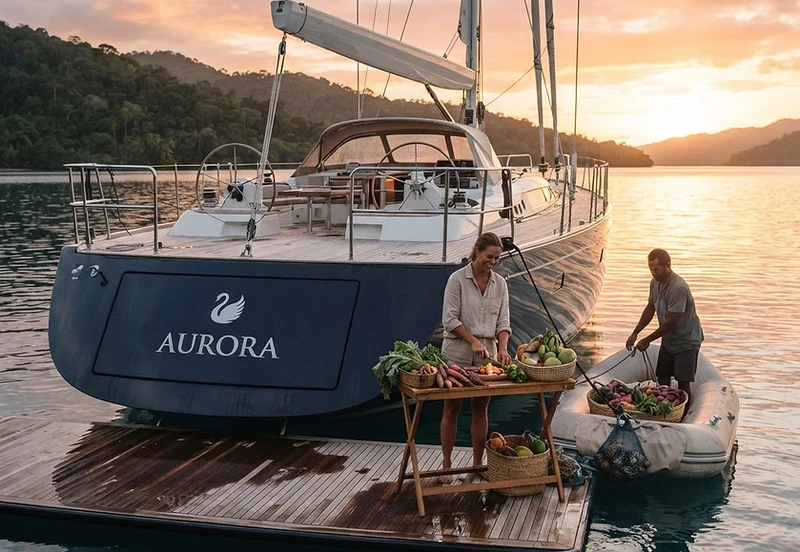
Life aboard in Vanuatu is defined by the ephemeral rhythm of what can be traded at the quay before the sun dips behind the western ridges. By mid-afternoon, I took the tender ashore, the small, rigid-hulled craft slicing through water so preternaturally clear it felt like drifting over a suspended glass floor. At the Luganville waterfront, the market served as a theatre of vibrant, unadorned commerce. We bypassed the standard commercial purveyors for the local stalls, where we bartered for the day’s haul. We secured a pair of prime poulet fish—the regional snapper prized for its delicate, translucent flesh—alongside a bounty of crisp island cabbage, hand-harvested taro, and limes so potent their oils stung the air upon the first cut. There is no pretense in this procurement; you eat what the tide and the garden provide, a discipline that anchors the crew firmly in the immediate, tangible reality of the island.
A Table Set Against the Tide
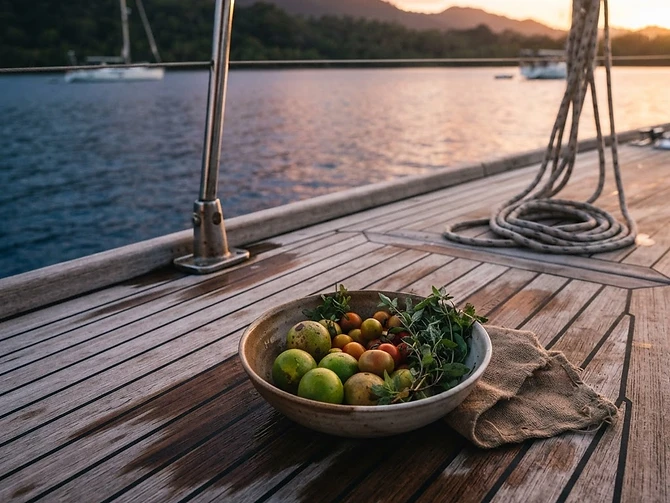
Back on deck, the evening light transformed the metallic grey of the Swan’s hull into a bruised, deep purple. Our chef, working from the compact but brilliantly engineered galley, treated the snapper with a reverence that only true distance from a global supply chain can instill. The fish was seasoned simply with coarse sea salt and the sharp zest of those local limes, then seared over a light char, the skin tightening to the colour of burnt sugar. We dined in the cockpit, the only sound the gentle, rhythmic lap of water against the waterline and the faint, distant drumming emanating from a village bonfire on the nearby shore. We passed a bowl of coconut-creamed taro, the earthy richness of the root balancing the clean, saline punch of the fish. As the Southern Cross began to assert itself above the masthead, the conversation dwindled into a contented silence. In this remote corner of the Pacific, the luxury is not found in the polish of the chrome or the thread count of the linens; it resides in the absolute, unfiltered connection between the vessel, the dark water beneath it, and the meal that was pulled from the depths mere hours before it graced our plates.
The tide shifted, pulling at the anchor chain with a low, rhythmic, metallic groan that echoed through the hull—a subtle reminder that we were merely guests of the current. I sat alone at the stern, watching the lights of the distant settlement flicker and eventually die, until only the faint, ghostly glow of bioluminescence in the wake of a passing fish remained to mark the boundary between the deep, hungry sea and our wooden sanctuary.