
The Geometry of the Kimberley Tides
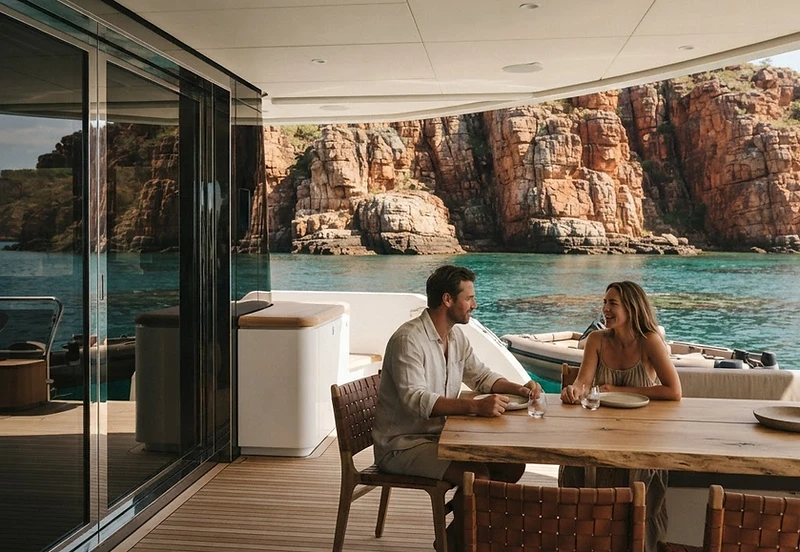
The tide in the Kimberley does not merely rise and fall; it breathes with a violent, hydraulic urgency. As we sat on the aft deck of a ninety-metre Oceanco, anchored in the sheltered lee of a red-rock headland near Talbot Bay, the water surged with a silt-heavy, churning opacity that felt deeply primordial. Here, the Indian Ocean forces its way through the narrow gaps of the Buccaneer Archipelago, creating whirlpools that ripple with the weight of raw geography. Inside, however, the world shifted into a profound, deliberate stillness. The designer, Remi Tessier, approached the interior with a restraint that felt less like a nautical project and more like a quiet dialogue between the sea and the structural form. He stripped away the superfluous gilding and dated maritime tropes often found in such vessels, replacing them with a series of interlocking, clean-lined volumes. The effect is that of a secluded, modernist villa perched on a cliffside rather than a cabin on the water. The flooring, a seamless drift of brushed light oak, mirrored the calcified, bleached limestone of the surrounding islands, creating a visual bridge between the deck and the rugged, unpeopled coast just meters away.
Living at the Edge of the Archipelago
By mid-afternoon, the sun had reached a punishing intensity, prompting a venture into the mouth of a hidden gorge via the yacht’s custom tender. As we cut the engines, the sudden hush allowed the sound of distant rock-wallabies and the frantic, piercing call of white-bellied sea eagles to infiltrate the silence of the gorge. Returning to the yacht afterwards felt like stepping into a sanctuary of intentional architecture. Tessier’s design philosophy here draws directly from the principles of high-end residential design, treating the superyacht as a floating home that must both withstand the volatility of the Kimberley currents and provide an absolute, meditative quiet. The main saloon featured floor-to-ceiling glazing, but the frames were recessed, buried within the ship's steel structure so that the threshold between the interior mahogany panels and the exterior landscape vanished entirely. We sat with a glass of dry Grosset Polish Hill Riesling, harvested from the Clare Valley, watching the light soften as it struck the ochre cliffs, the interior ambient light calibrated perfectly to mirror the fading copper of the Kimberley sky.
The Weight of Solitude
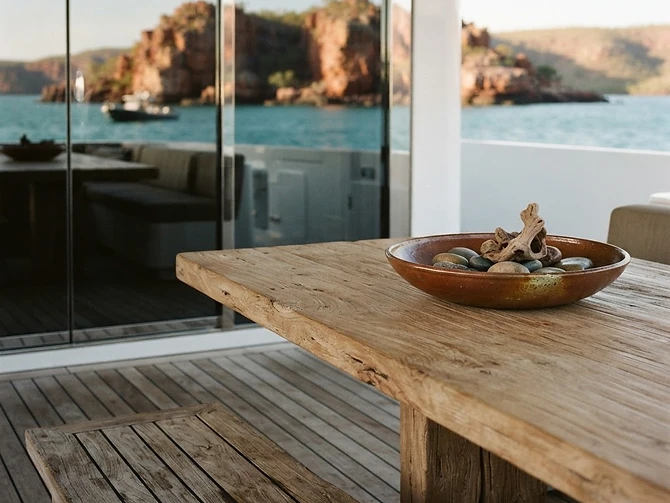
The success of this design lies in its resolute refusal to compete with the sheer scale of the Kimberley wilderness. In the master suite, the cabinetry is finished in a matte, hand-rubbed timber that echoes the silvered, weathered grain of the driftwood we had gathered from the mudflats earlier that morning. There is no bravado here, only the tactile joy of textures curated for endurance and grace. In the master bath, a monumental slab of raw-edged quartzite was chosen specifically to mimic the geological strata of the nearby headlands—a subtle, grounding reminder that even at the furthest reach of the map, design can root a traveler firmly in the earth. As night fell and the stars began to pinprick the absolute black void of the Australian sky, the vessel felt small, a singular, luminous object suspended between the dark, swirling water and the infinite, starlit silence. We retreated to the lower deck, where the soft, warm glow of concealed lighting turned the cabin into a cocoon, the rhythmic, percussive slap of the receding tide against the hull the only reminder that we were anchored in one of the world’s last true, untamed edges.






