
The Vertical View from the Belizean Shallows
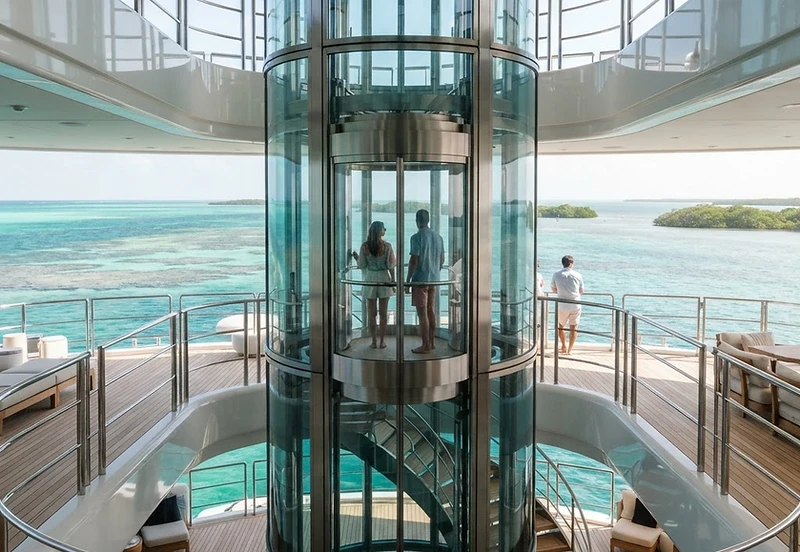
The transition from the salt-sprayed, sun-bleached deck of a tender to the cool, pressurized stillness of a yacht’s main saloon is a threshold most mariners cross in horizontal, rhythmic steps. Yet, aboard this six-deck custom vessel, currently holding position just off the eastern edge of the Turneffe Atoll, the geography of the ship reveals itself through a different axis. Standing in the heart of the central glass elevator, the sensation is one of profound, weightless suspension. As the lift hums with a near-silent hydraulic resonance, the world outside—the sprawling, kaleidoscopic expanse of the Belize Barrier Reef, a labyrinth of shifting cerulean blues and jagged, dark coral heads—begins to slice through the architecture of the yacht. The glass walls of the shaft act as a precise, architectural lens, compressing the vast, horizon-heavy Caribbean into a vertical ribbon of shifting, prismatic light.
Engineering the Domestic Horizon
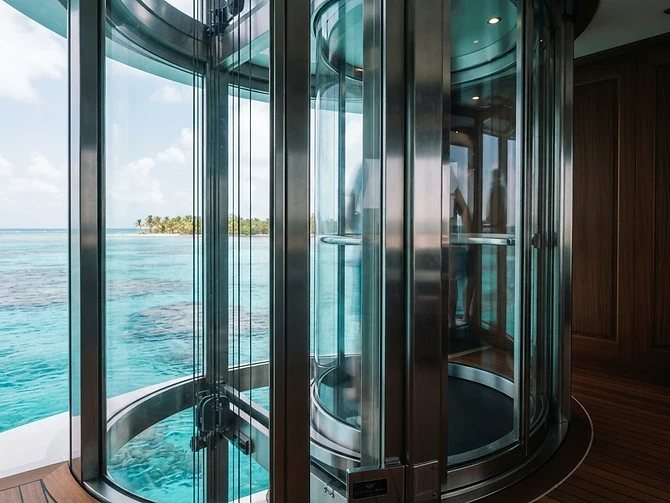
Architecture, when executed with genuine restraint, does not merely house the occupant; it narrates the surrounding environment. Much like the cantilevered, concrete-and-glass villas perched precariously along the limestone bluffs of northern Ambergris Caye, this yacht treats its interior volume as a sequence of deliberate, unfolding viewpoints. The elevator, encased in structural, load-bearing glass and brushed marine-grade stainless steel, is an exercise in transparency that rejects the claustrophobic, bunker-like anonymity of traditional shipboard lifts. It functions as a piece of kinetic architecture that mimics the open-plan design of a high-desert residence, allowing for a seamless, unencumbered visual flow from the water-level beach club—where the sharp, clean smell of wet limestone and briny sea-grass hangs in the humid morning air—all the way to the sun-drenched bridge deck. As we ascended toward the upper lounge, I watched the captain adjust our dynamic positioning system from the wheelhouse; the thrusters momentarily churned the soft, carbonate silt into plumes of pale, milky jade visible through the glass flooring beneath my feet.
Light and the Geometry of the Passage
By late afternoon, the sun began to dip behind the dense coastal mangroves, casting long, bruised violet shadows across the aft deck. I met the chef near the galley on the lower deck, where he was finishing a simple, sharp plate of fresh conch ceviche, bright with the zest of local Key limes and hand-torn cilantro. There is a distinct, quiet luxury in watching the yacht’s structure respond to the waning light from within the lift; the way the hand-rubbed mahogany paneling catches the golden-hour glow, sharply contrasted against the cold, clinical transparency of the elevator’s shaft. It effectively turns the vessel into a living lantern, a domestic space that does not hide from the volatility of the sea, but invites it directly into the vertical core of the household. As the last sliver of sun vanished behind the distant reef, the ship settled into the twilight, save for the rhythmic, melodic clinking of halyards against the aluminum mast of a nearby Nautor’s Swan sloop anchored in the lee. I descended one final time, watching the deep, indigo water rise to meet the glass, grounding myself in the slow, inevitable, and ancient pull of the tide.






