
The Quiet Architecture of the Maine Swell
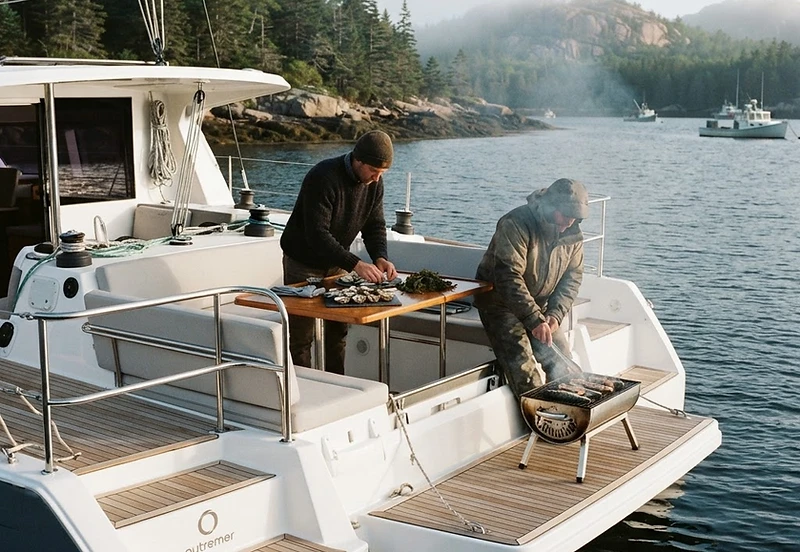
The dawn in Somes Sound does not announce itself with tropical fanfare; it arrives as a slow, deliberate unveiling of granite and shadow. Aboard our Outremer 5X, the transition from the interior cabin to the aft cockpit feels less like stepping onto a deck and more like entering an outdoor salon curated by the tides. The air is sharp, carrying the resinous scent of balsam fir from the slopes of Mount Desert Island—a crisp, cooling contrast to the familiar tactile warmth of the teak underfoot. As the vessel swings gently on the hook, the rhythmic, percussive slap of the Atlantic against the hull serves as our only metronome, a steady pulse that defines the scale and stillness of the morning.
The Galley’s Dialogue with the Shore
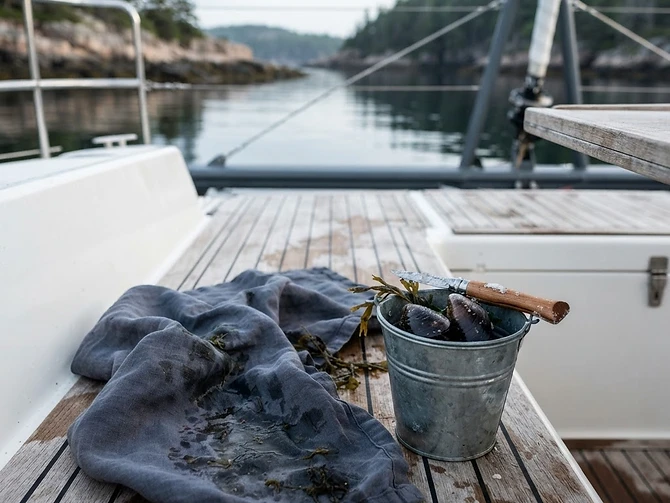
Life aboard hinges on the dialogue between the yacht’s galley and the frigid, nutrient-rich bounty of the Gulf of Maine. By mid-morning, the tender returns from the docks of Northeast Harbor, laden with a haul that dictates our culinary rhythm for the day. Our chef works with unassuming precision, handling day-boat scallops that still possess the translucent, pearlescent quality of the deep shelf. There is no artifice in this kitchen; the preparation is an exercise in subtraction, allowing the inherent sweetness of the shellfish to anchor the palate against a sharp backdrop of local sea salt and the bright, vegetal punch of wild chives foraged from the nearby granite crags. We dine in the cockpit, the expansive transom acting as a floating stage for the rugged shoreline, where the shifting interplay of light on the water mirrors the clean, bracing textures of the meal.
The Ritual of the Open Water
As the sun climbs, illuminating the distinct, layered geology of the Acadia cliffs, the cockpit transforms into a space of profound, active repose. We prepare for the afternoon passage, checking the trim of the sheets and the taut geometry of the traveler. Sailing in these latitudes requires a different order of vigilance than the open blue of the tropics; the fog can roll in with an insulating, sudden weight, and the currents swirling around the headlands demand a respectful, tactile touch. Yet, even in the push and pull of the coastal breeze, the comfort of the aft cockpit remains our constant—a well-engineered refuge that permits us to remain fully present in the landscape. Whether we are reading in the quiet shelter of the hardtop or tracking the steady wake of a lobster boat navigating the channel toward the open sea, the vessel facilitates a rare intimacy with the environment, grounded firmly in the reality of carbon, canvas, and the cold, dark Atlantic.
By late afternoon, as the shadows lengthen across the harbour and the gulls retreat toward the deep timber of the pines, the cockpit cools. We stow the cushions, the vessel’s movement settling into the evening, and prepare to watch the first stars emerge above the jagged, black silhouette of the coast. We remain there as the water goes still, anchored by the knowledge that tomorrow, the shifting tide will offer an entirely different perspective on the same enduring granite.






