
The Geometry of the Morning Run
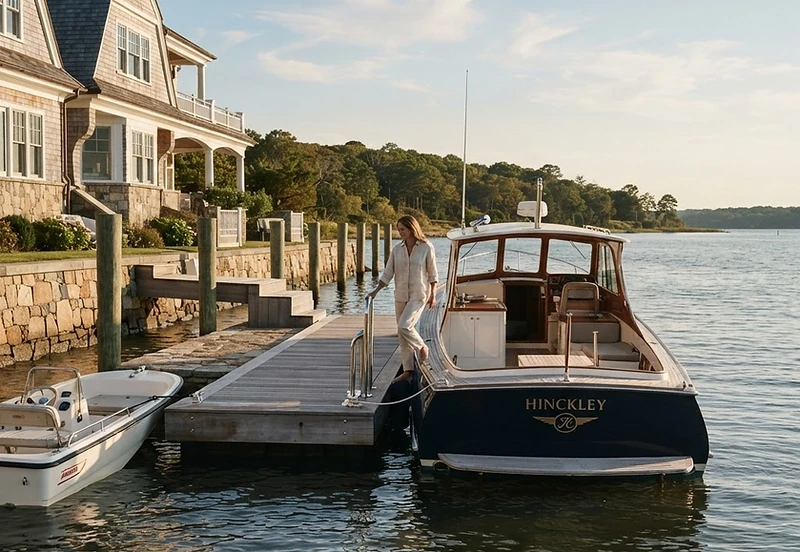
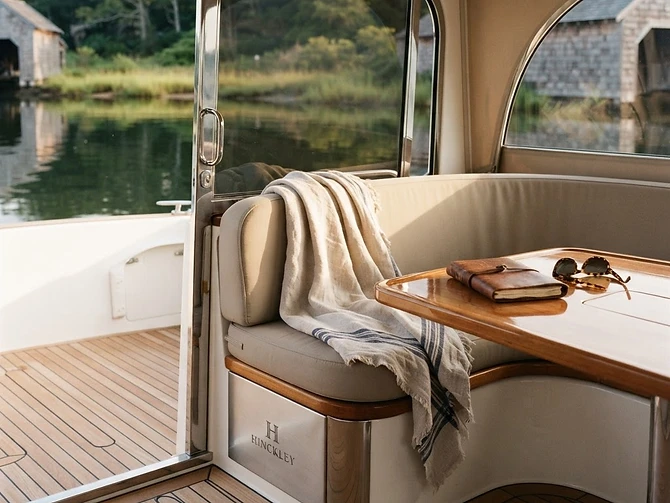
The dawn air over the Chesapeake is rarely truly still, but this morning the water held a glassy, tension-filled surface one finds only before the thermal winds begin to stir off the Delmarva Peninsula. Aboard our 65-foot Hinckley, the transition from the deep-water channel toward the Eastern Shore was a careful exercise in navigation. We had been holding position near the mouth of the Choptank, watching the navigation lights of the local skipjacks blink out as the horizon shifted from a charcoal depth to a bruised, electric violet. The yacht, crafted with a focus on deep-sea stability and elegant, functional lines, felt less like a mechanical vessel and more like a floating observatory. There is a specific, guttural resonance to a boat of this pedigree when the engines are at idle—a low, rhythmic thrum that seems to calibrate the sailor to the slow, inevitable pace of the incoming tide.
The Tender to the Shore
We lowered the Boston Whaler just as the sun cleared the horizon, the sharp, clean scent of damp pine and brackish silt rising to meet us. Our destination was the cliffside residence at Cedar Point, a structure that exists in a permanent architectural dialogue with the shoreline. From the water, the villa appears to have been folded directly out of the sediment; it is an exercise in cedar-shingled vernacular, cantilevered over a drop that plunges directly into the bay’s dark, silty depths. As we approached, the scale of the house became evident: it does not loom over the bluff but rather mirrors the rugged, inherent verticality of the coastal shelf. The architectural intent is singular—to extend the living space of the yacht into the stone itself, bridging the gap between the nomadic life at anchor and the grounded stability of the land. We pulled the tender alongside a weathered wooden dock that seemed to cling to the base of the bluff by sheer force of will, the lines humming in the cross-current.
A Perspective on the Tide
Stepping off the tender and onto the cedar planks, the shift in equilibrium was absolute. On the water, one measures the progression of the day by the slight, imperceptible drift of the compass; here, one measures it by the way the light fractures against the salt-crusted glazing of the house. We ascended the limestone path toward the main terrace, where the owner had prepared a breakfast of oysters pulled from the nearby beds, the shells still retaining the cold of the seabed, paired with black coffee. The architecture of the villa is designed to funnel the breeze, creating a sheltered space where the roar of the bay is muted into a constant, soothing murmur. It is a place that feels like a ship in dry-dock, held in place by the geography of the Eastern Shore but oriented entirely toward the nautical horizon. As we sat, the Hinckley held station at anchor, a graceful, dark-hulled reference point against the vast, slate-grey expanse of the bay. There was no urgency in our silence. We watched the tide pull away from the pilings, feeling the rhythmic, slow-motion descent of the water, knowing that when the wind shifted, we would be back on board, tracing the deep-water meridians toward the open Atlantic.






