
The Architecture of the Southern Larder
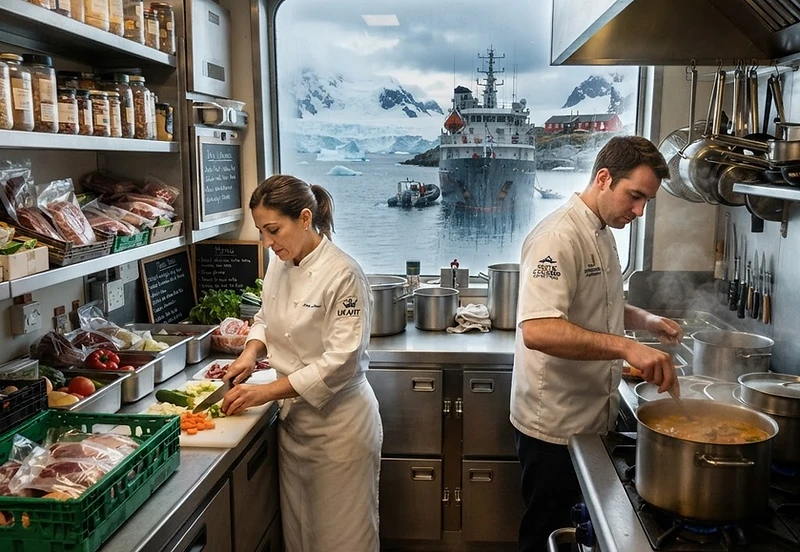
The Southern Ocean does not permit the casual, spontaneous provisioning that defines a summer charter in the Mediterranean. When we nudged our expedition yacht—a 45-meter vessel with a reinforced steel hull capable of breaking through the jagged teeth of pack ice—into the bracing currents near Neko Harbour, the galley had already been transformed into a fortress of preservation. To cook in these latitudes is to accept that the nearest market is thousands of miles to the north, across the turbulent expanse of the Drake Passage. Here, provisioning transcends simple menu design; it becomes a study in structural engineering. Every crate of hardy root vegetables, every vacuum-sealed portion of grass-fed beef sourced from the pampas of Argentina, and every jar of preserved aromatics must be meticulously logged against the reality of a seven-day window where the only 'supermarket' is the sea itself and the shelf life of a lemon is a precious, finite commodity.
The Alchemy of the Antarctic Kitchen
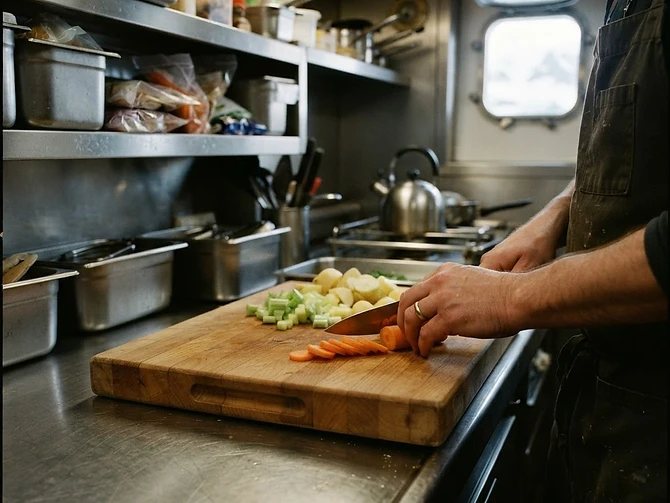
Life aboard takes on a profound, heightened rhythm when the katabatic winds howl against the superstructure, forcing us to lean into the sanctuary of the interior. The chef, working with a lean inventory and the rare, regulated haul of cold-water species, operates with the focused intent of an artisan. We rely heavily on the integrity of the galley's stores, supplemented by the occasional sustainable catch of Patagonian toothfish, sourced through the strictly monitored fisheries that operate on the fringes of the Southern Ocean. There is a specific, bracing joy in sitting down to a meal of pan-seared toothfish—its flesh dense, buttery, and remarkably resilient—while watching icebergs the size of cathedrals drift silently past the salon window. The heat radiating from the ovens, travelling through the bulkheads, transforms the galley into the yacht’s most vital piece of machinery, a glowing, metallic heart suspended in a frozen void.
Rituals Beneath the Glacial Shelf
On our third evening, anchored deep within the protected, mirror-still shelter of a towering glacier, we broke the rigorous routine with a dish that mirrored the stark, unforgiving landscape outside. The chef prepared a warm salad of hardy bitter greens dressed with a sharp, house-made vinaigrette, followed by a slow-braised lamb shank that had been quietly rotating in the convection oven since dawn. The air inside the boat smelled of rosemary, charred aromatics, and deep-winter comfort—a sensory bulwark against the sub-zero breath of the Antarctic night. We chose to ignore the formal dining room, opting instead to huddle on the aft deck, wrapped in heavy, traditional wool blankets, listening to the periodic, tectonic groaning of the ice shelf as it calved into the black, ink-like water. The meal was not merely sustenance; it was a defiant, communal anchor in a place that cares little for the presence of humans.
As the light bled into that bruised, eternal violet unique to the high latitudes, the chef joined us on deck with a copper pot of tea steeped with dehydrated mountain berries. We sat in total silence, a small, warm knot of humanity suspended between the immense, indifferent geography of the ice and the quiet, steady thrum of the yacht’s generators. The dishes would be cleared, the galley stowed, and tomorrow we would weigh anchor for the historic research station at Port Lockroy. For now, the taste of the warm, spiced broth lingering on the palate was the only map we needed, a grounding reminder that even at the edge of the world, life is defined entirely by what we choose to bring with us and the grace with which we share it.






