
The Anatomy of Absolute Silence
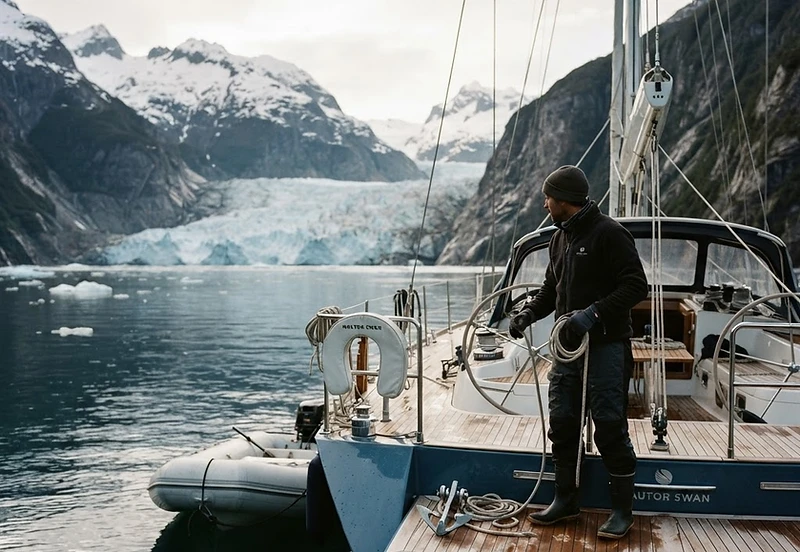
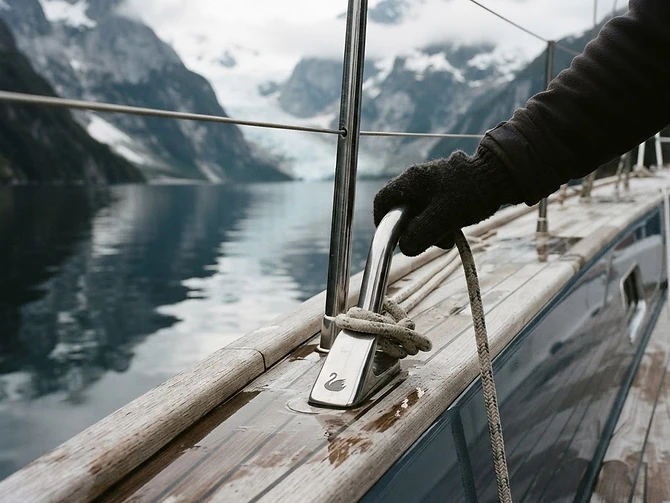
The transition from the violent, chaotic swells of the Drake Passage into the sheltered, deep-water arteries of the Chilean fjords is a profound physical recalibration. As we slipped our Nautor’s Swan into the serpentine channel of Seno Otway, the satellite uplink flickered and finally surrendered to the geography, leaving us with nothing but the rhythmic, reassuring hum of the generator and the occasional, sharp report of calving ice echoing against granite cliffs. There is a specific, heavy quality to the air here, sharpened by the proximity of the Southern Patagonian Ice Field and the damp, peaty breath of the surrounding Nothofagus forests. To anchor here, tucked beneath the immense shadow of a basalt buttress, is to feel the scale of the earth reassert itself against the polished steel and teak of one's vessel.
The Galley’s Cold-Water Harvest
Life aboard in these high latitudes demands an intimate, almost reverent respect for the regional larder. Our chef spent the morning bartering with a local fisherman at the mist-shrouded hamlet of Puerto Natales, returning to the galley with a haul of centolla—the prized Southern King Crab—and a basket of earthy, wild-foraged calafate berries. In the galley, he eschewed elaborate technique, opting instead to preserve the integrity of the catch. The crab was dressed only in a light emulsion of local lemon and a generous pinch of hand-harvested sea salt, the meat’s inherent, delicate sweetness offering a sharp, clean counterpoint to the raw environment. Dining in the cockpit as the late twilight stretched into an endless violet, the meal felt like an extension of the landscape itself; the cold, deep ocean density of the crustacean mirrored the glacial water lapping just meters from our hull.
The Ritual of the Southern Tide
As the evening progressed, the quiet ritual of the anchorage took hold. We took the tender through the dense, swaying kelp forests toward the shore, the silence so profound that the rhythmic splash of an oar felt like an intrusion upon the wilderness. We pulled up to a weathered wooden jetty near a remote estancia, where the scent of burning lenga wood smoke mingled with the sharp, brine-heavy tang of salt spray. The hosts offered a glass of robust, high-altitude Carmenere, a deep, spiced red that provided a grounding contrast to the stark, windswept austerity of the fjords. Returning to the yacht, the warm, low-level illumination of our vessel appeared like a solitary, amber constellation pinned against the absolute, ink-black void of the Patagonian night. This is not luxury in the gilded, gold-leafed sense; it is the luxury of total, uninterrupted presence—a rare opportunity to exist entirely within the slow, ancient pulse of the sea.
As we prepared to weigh anchor at first light, the thick, white mist began to peel back from the jagged peaks, revealing a sharp, obsidian horizon. We stood on the foredeck, feeling the anchor chain go taut, the yacht straining gently against the morning current. In these waters, navigation is a dialogue between intuition and the chart plotter, a process that demands a steady hand and a quiet, watchful mind. By the time the engine caught, the sun had crested the ridges, turning the still, glacial water into a vast sheet of hammered copper. We drifted out of the silence, leaving the fjords to their own ancient rhythm, the wake behind us the only fleeting mark we would ever leave in this vast, indifferent expanse.






