
The Anatomy of an Island Passage
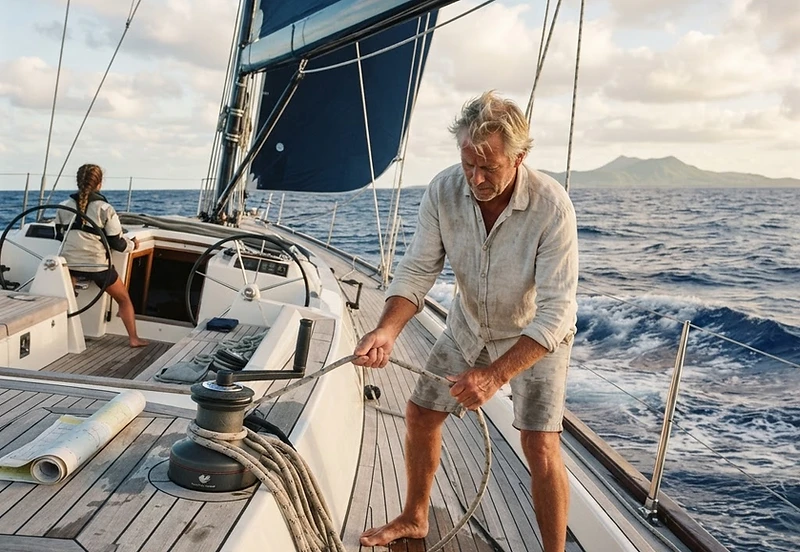
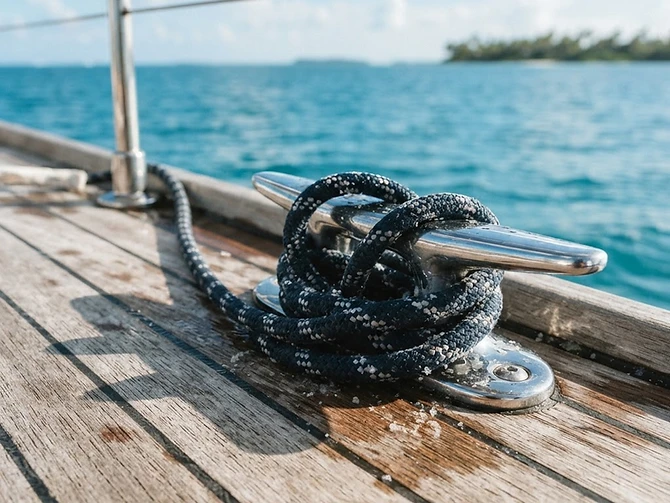
Stepping onto the passerelle of a 30-metre Nautor's Swan in Port Louis, the air is dense with the humid promise of the Indian Ocean—a cocktail of sea salt and the faint, sweet tether of drying vanilla beans from the interior. To pack for these waters is to acknowledge that the vessel, not the wardrobe, is the protagonist. The region demands a rigorous asceticism; here, the weight of one's luggage is inversely proportional to the clarity of the horizon. One trades the heavy artifice of city life for the tactile reality of bleached linen, robust canvas, and the singular, grounding sensation of bare feet on sanded teak. My own kit bag, a battered canvas holdall, carries nothing that cannot survive a stray splash or a sudden scramble toward a line during a building squall.
As we slip the moorings and carve a path east toward Rodrigues, the swell finds a deep, rhythmic pulse that serves as a permanent reminder of our status as guests of the current. The kit is stripped back: three pairs of light cotton trousers, shirts that have already seen their best days, and a compact headlamp for navigating the dark reaches of the anchor locker. In this expanse, we do not pack for the shore in the traditional sense; we pack for the sea, ensuring we are prepared for the transition between the polished solitude of the cockpit and the wild, shallow theatre of the outer reefs.
The Larder of the Reef
The culinary philosophy of these islands is as honest as the wind. At anchor off the coast of Rodrigues, the galley functions as an extension of the seafloor. One morning, anchored in the turquoise embrace of a secluded bay near the Hermitage, we watched our chef return from a local fisherman’s skiff with a handful of fresh-caught capitaine—a firm, white-fleshed fish that carries the mineral tang of the coral shelves it inhabits. We watched as it was prepared with utilitarian grace: grilled over charcoal, finished with a generous squeeze of wild lime and a sharp, humming dash of piment confit. The meal was served on the aft deck, the sound of the rigging slapping against the mast providing the only accompaniment to a lunch of raw sea urchin, bright sea grapes, and the searing, floral heat of locally grown chili.
Provisioning here is an act of genuine exploration rather than a chore of procurement. It requires engaging with the unhurried rhythm of the village. At the small, sun-bleached markets, you find the true heartbeat of the coast—heaps of turmeric, star anise, and fragrant tamarind that eventually find their way into the galley’s evening stew. It is a constant dialogue between the day’s navigation and the island’s bounty. When we dined at a small, family-run shack reachable only by a careful run through the inner reef to the shore of Port Mathurin, the experience was blissfully stripped of all pretension. We sat on mismatched wooden chairs, eating rougaille prepared with salt-cured fish and tomatoes that tasted of the volcanic soil, watching the sun dip behind the dramatic crags of the mainland, the taste of the salt still sharp and cooling on our lips.
The Quiet Horizon
The profound beauty of a charter in the Mascarenes lies in its insistence on simplicity. As we weigh anchor and set a course for the next hidden cove, the gear is tucked away, and the Nautor’s Swan returns to its essential duty: slicing through the sapphire water toward the next unmapped horizon. There is a specific, rare luxury in this—the total absence of clutter, the reliance on the local tide, and the knowledge that every item on board serves a distinct, functional purpose. As the moon rises over the stern, casting a jagged silver path across the Indian Ocean, the day ends as it began: with the steady, persistent vibration of the hull and the taste of the deep sea still lingering in the cooling night air.






