
The Geometry of Ice and Anchor
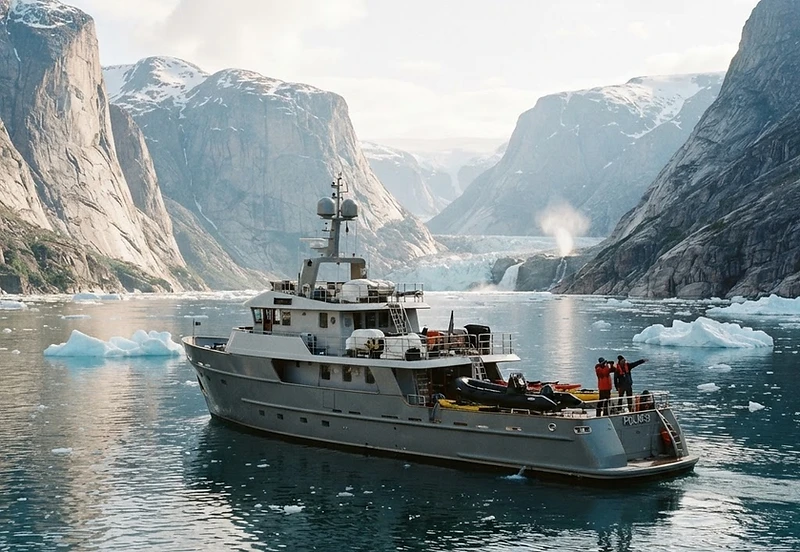
The transition from open Atlantic swell to the glass-like stillness of the Nuup Kangerlua is a physical recalibration. Aboard a 45-metre custom build, the steady thrum of the engines serves only to heighten the profound silence of the surrounding granite walls, which rise abruptly from the dark, cold depths of the fjord. Navigation here is an exercise in absolute, unyielding attention; with icebergs calving from the distant glaciers and drifting like silent, jagged cathedrals, the bridge team remains in a state of constant, rhythmic vigilance. There is no Mediterranean ease to be found in these waters. Instead, one encounters a rigorous, crystalline beauty that demands a respect for the environment that feels both archaic and entirely essential.
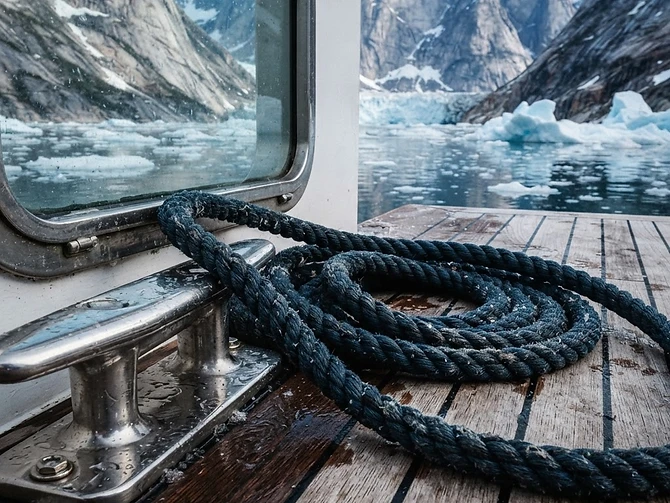
Dropping the hook in a sheltered bight near the mouth of the fjord, the deck crew works with a deliberate, quiet economy, securing the lines against the sudden, biting katabatic winds. The air carries the sharp, clean scent of crushed stone, cold water, and lingering salt. Here, life aboard is defined by the stark contrast between the steel-cold exterior and the warmth of the interior spaces, where the teak-lined bulkheads and wool-clad furnishings absorb the fading light of a long Arctic dusk. The rhythm of our charter is dictated not by a social calendar or the lure of a crowded quay, but by the slow, stately movement of the ice and the relentless clarity of the northern horizon.
The Arctic Larder and the Chef's Vigil
The culinary philosophy of these waters is one of extreme, uncompromising provenance. We pushed south toward the quiet settlement of Qoornoq, where local fishermen arrive at the weathered docks at first light with the morning’s haul. Our chef, working in an intuitive dialogue with the local skippers, secured Greenland halibut—firm, translucent-fleshed, and rich with the essential oils of the cold deep—alongside the delicate, sweet meat of the snow crab pulled from the canyon floors of the fjord. There is a profound, stripped-back simplicity in how these ingredients are handled; the objective is to honor the harsh, geological scale of the landscape through the plate.
Back in the galley, the transformation is immediate and tactile. The chef works with sea salt harvested from the nearby coast and arctic thyme foraged from the tundra-dusted rocky slopes. One evening, we dined on pan-seared halibut served with a reduction of local crowberries and wild angelica, a pairing that tasted entirely of the high-latitude earth. We sat on the aft deck under a sky that refused to fully surrender to the night, the plate reflecting the bruising violets and deep, oceanic blues of the northern horizon. To eat here is to participate in the ancient cycle of the region, understanding that every bite is a direct, honest consequence of the environment through which we are passing.
The Echo of the North
As we moved deeper toward the terminus of the glaciers, the yacht became a singular point of focus against a scale so vast it felt indifferent to human presence. The tender runs to the shoreline were brief, adventurous sorties, often leading us to hidden, obsidian-pebble beaches where the only sound was the distant, tectonic groan of shifting ice. There is no traditional comfort in these fjords; the true luxury lies in the exclusivity of the silence and the proximity to a world that remains fundamentally untamed. Our final evening was spent drifting near a massive, translucent bergy bit that caught the last, slanted light of the midnight sun. The water was perfectly still, reflecting the monolithic cliffs like a dark, polished lens. Watching the ice catch the light—a shifting, ancient glow—one realizes that the true privilege of the sea is not the port or the destination, but the fleeting, singular moment of existing in a place where the map still feels like a suggestion.






