
The Geometry of the Morning Tide
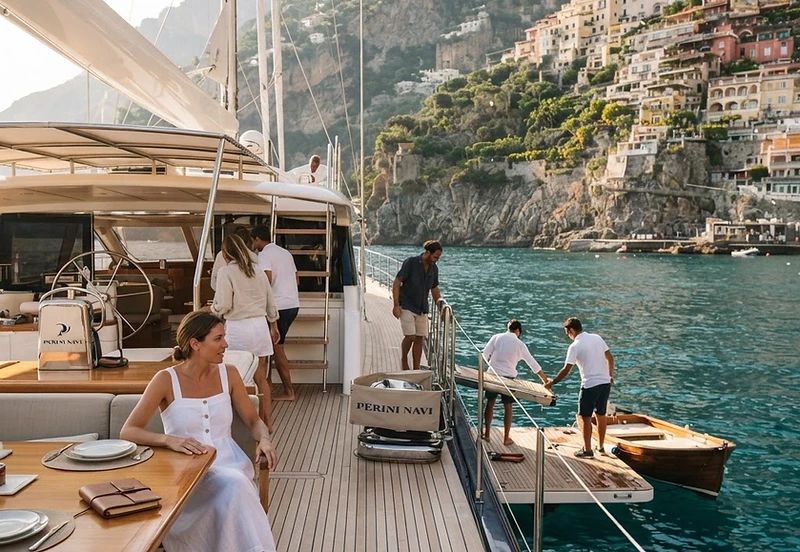
The Tyrrhenian Sea at six in the morning does not move; it breathes. From the aft deck of a 45-meter Perini Navi, the Amalfi coastline appears as a vertical tapestry of terracotta and limestone, suspended between the indigo water and the pale lavender sky. There is a specific sound to this hour: the distant, rhythmic slapping of the tender against the swim platform and the low-frequency hum of the crew preparing the deck for the day’s first sortie. We aren't here for the crowded harbours of Positano, but for the quiet, deep-water anchorages that lie tucked under the shadow of the Li Galli islands. Navigating these waters requires an intimacy with the draft and the erratic shifts of the coastal thermal winds, a dance of navigation that feels more like an extension of one’s own senses than the operation of machinery. One feels the subtle yaw of the vessel as the land breeze dies, a soft, deliberate transition that signals it is time to ready the lines.
From the Galley to the Crags
The true essence of this cruising ground is revealed when the galley dialogue shifts to the local market stalls. By mid-morning, we take the tender into the salt-crusted docks of Marina Piccola, where the air is thick with the scent of sun-warmed brine. The objective is to source the day’s raw materials: alici caught before the sun touched the horizon, the small, intensely sweet pomodorini del piennolo that gain their character from the mineral-rich volcanic soil of Vesuvius, and lemons so fragrant they seem to hold the heat of the afternoon. Our chef, an individual who approaches the local larder with the precision of a master watchmaker, insists on waiting for the fishermen to return with the day’s haul of pesce azzurro. Back on board, the afternoon is spent preparing a delicate crudo, dressed only in cold-pressed local olive oil, coarse sea salt, and the zest of those lemons, served on the teak deck as the heat of the day reaches its zenith. It is a meal defined by its proximity to the water, a culinary reflection of the geography we inhabit.
The Shadow of the Faraglioni
As evening approaches, we make the short crossing to the base of the Faraglioni, where the yachts swing in the deep, cobalt water. There is a ritual to the descent at sunset, watching the lights begin to flicker in the hillside towns like embers cooling in a hearth. We choose to tender toward the rugged coast, avoiding the central throngs to reach Da Paolino, tucked within a fragrant grove of lemon trees. The air here is heavy with the scent of citrus and sea salt, a sharp contrast to the metallic, clean atmosphere of the yacht’s bridge. Over a dish of handmade scialatielli tossed with shellfish gathered from the nearby shallows, the conversation drifts naturally back to the boat—the way the current tugs at the anchor chain, the subtle vibration of the stabilizers, and the simple, quiet satisfaction of being perfectly positioned at the edge of the world. Returning to the yacht under a canopy of stars, the water slick as obsidian against the hull, there is no need for anything more than the quiet, organic creak of the teak and the gentle, persistent pulse of the Mediterranean tide against the steel.






