
The Geometry of the Approach
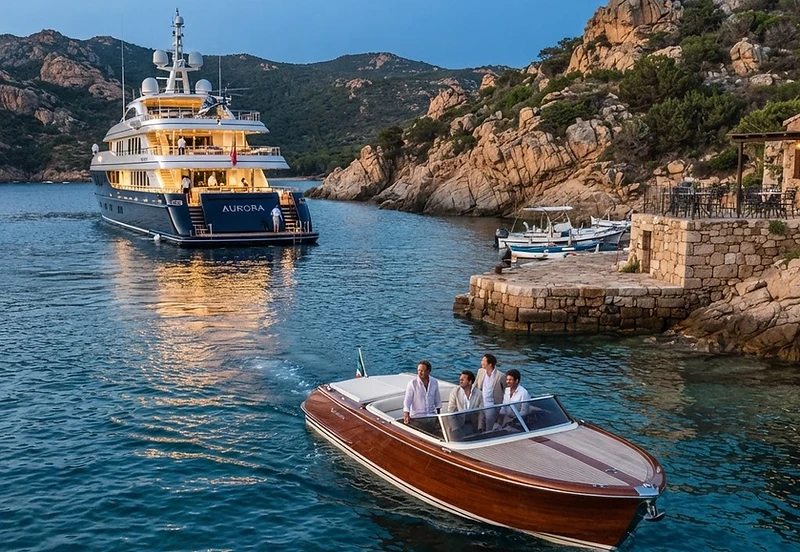
There is a specific, low-frequency hum to a Feadship at anchor in the Golfo di Cugnana that signals the end of the navigational day. As the sun dips behind the jagged, sun-bleached ridges of northern Sardinia, the transition from the expansive Tyrrhenian to the intimate scale of the shore begins. The heavy teak deck feels cooling underfoot, the salt crust from the day’s passage finally yielding to the evening’s humidity. Lowering the tender is not merely a logistical necessity; it is a ritual of arrival. As the outboard catches, the yacht shrinks against the backdrop of the darkened coastline, leaving us to navigate the darkening water toward the smell of wild myrtle and charcoal smoke drifting from the rocks.
The Granite Shore and the Sardinian Larder
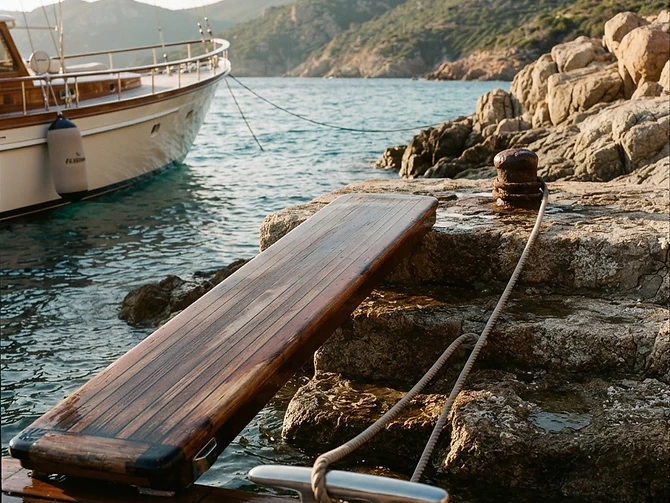
Tucked into a protected inlet near Porto Cervo, the small dock at Il Pescatore offers the kind of landfall that rewards a steady hand at the tiller. Here, the dining culture is defined by the rugged geography of the Gallura region. It is a menu dictated by the morning's haul and the stubborn tenacity of local farmers. We find ourselves eating bottarga di muggine, the amber-hued, sun-dried roe of the grey mullet, shaved thin over handmade malloreddus pasta. The flavour is sharp, metallic, and profoundly oceanic, echoing the very waters we crossed only hours before. It is brightened by a drizzle of local olive oil, pressed from the small, peppery drupes harvested from the ancient groves that cling to the granite slopes above the bay. There is no performative luxury here, only the elemental honesty of culurgiones—pasta parcels filled with potato, pecorino, and wild mint—a dish that tastes of the mountains and the sea in a single, balanced bite.
The Galley’s Dialogue
Even when dining ashore, the mind of the mariner remains tethered to the vessel. We overhear a skipper from a nearby Nautor’s Swan discussing the morning’s procurement with the restaurant’s proprietor. There is a mutual respect for the catch—the silver-scaled sea bass and the vibrant, spiny rock lobsters that thrive in the current-swept channels between the islands of the La Maddalena archipelago. Back on board, our own chef mirrors this focus, treating the local produce with the same reverence as a master shipwright treats a fine timber hull. The conversation over dinner is not about the logistics of the cruise, but about the quality of the ingredients: the fragrance of a crushed wild fennel sprig, the particular salinity of the sea salt harvested from the pans at nearby Stintino, and the way the Mediterranean heat intensifies the aromatics of a simple tomato and basil ragu. It is a reminder that the yacht is a mobile extension of the land, an aperture through which we taste the world as it moves past the hull.
The return trip in the tender is a quiet affair, the water turned to liquid obsidian beneath the boat’s soft wake. As we approach the anchorage, the yacht appears as a constellation of lights against the vast, dark silhouette of the coast. We climb back aboard, the day’s exploration settling into the quiet heave of the hull against its mooring. The shore remains a distant, fleeting scent of rosemary on the wind, a final sensory anchor in the endless, shifting blue.






