
The Turn toward the Ninepin Group
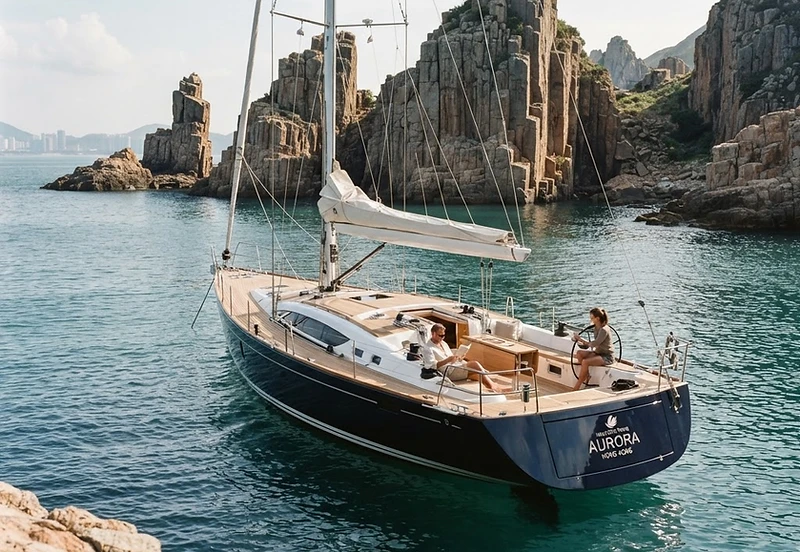
The morning light over the East Lamma Channel has a peculiar, metallic quality, silvering the wakes of the industrial trawlers that emerge from the grey haze of the South China Sea. Steering a daysailer—in this instance, a Nautor’s Swan—the sensation is entirely distinct from the heavy, mechanical pulse of a superyacht. Here, the vessel acts as a nervous system; every shift in the wind, funneled through the craggy, jagged gaps of the Ninepin Islands, is transmitted directly through the tiller to the palm. We are hunting the reach, leaning into a breeze that carries the sharp, unfiltered salinity of the Pacific, leaving the frenetic, humming energy of Victoria Harbour far astern. The goal is simple, yet demanding: to find a pocket of absolute stillness amidst the vertiginous, columnar basalt cliffs that define this rugged, geological theatre of the Hong Kong Geopark.
Anchorages and the Tide’s Geometry
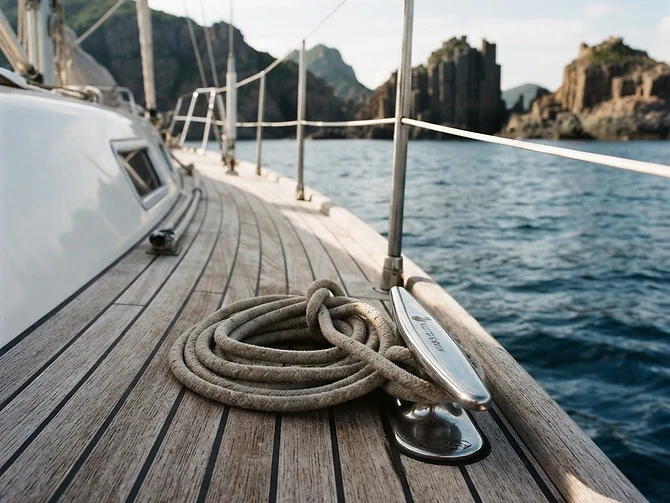
Rounding the weathered headland of Bluff Island, the water transforms from a deep, turbulent indigo into a startling, translucent turquoise. We drop the hook in a hidden bay where the seabed falls away with dizzying suddenness, a navigational luxury that grants us proximity to the ancient, volcanic stone walls. The rhythm of the galvanized chain snaking through the hawsepipe—a sharp, metallic rattle—is the only sound that interrupts the rhythmic, gentle slapping of the swell against the white fiberglass hull. Life aboard this daysailer is defined by a rigorous lack of clutter; there are no sprawling saloons, only the intimacy of the cockpit and an immediate, tactile connection to the maritime landscape. In these hidden coves, the yacht acts as a floating terrace, a vessel perfectly scaled to bridge the gap between the chaotic open sea and the inaccessible, quiet shoreline.
The Larder of the Eastern Coast
Before casting off from the pier at Hebe Haven, we had curated the essentials of the local larder, an exercise in respecting the culinary heritage of this coast. A market run at dawn yielded lethrinus nebulosus, or spangled emperor, its scales still holding a faint, iridescent sheen, alongside a basket of crisp, organic greens harvested from the small-plot farms of the New Territories. On deck, we prepare a lunch that prioritizes the integrity of the ingredient above all else. The fish is flash-seared over a restrained, portable flame with a whisper of aged soy, fresh ginger, and a drop of toasted sesame oil, accompanied by a cold salad of blanched choy sum and roasted, crushed peanuts. This is the authentic flavor of the region: a marriage of the sea’s cold bounty and the land’s verdant, sun-drenched edges. We dine simply, recognizing that the preparation is merely a conduit for the landscape itself.
As the afternoon wanes, the sun begins its slow, heavy descent behind the jagged peaks of the mainland, casting long, bruised shadows across the water and turning the bay into a sheet of hammered copper. The wind dies down to a whisper, leaving us suspended in the transition between day and the cooling dusk. It is a quiet, anchored peace—a moment entirely removed from the city’s electric pulse—yet one defined by the precise, unwavering discipline of those who choose to live by the wind and the tide. As the first stars begin to prick the darkening sky, the yacht swings slowly on its rode, a solitary white sliver against the darkening basalt monoliths.






