
The Architecture of the Morning Tide
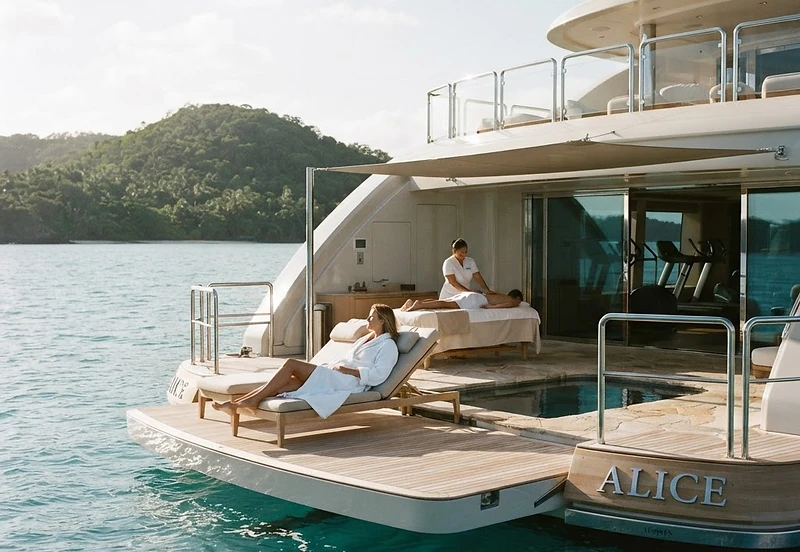
The dawn air off Green Island is thick with the scent of damp limestone and the faint, sweet musk of the Antiguan scrubland. At 06:00, the 85-meter Lürssen Amatasia swings gently on her anchor, her profile slicing against the bruised purple of the pre-dawn sky. There is a specific stillness here, a suspension of time that only occurs when the trade winds briefly lose their resolve. From the main deck, the walk toward the aft wellness pavilion feels less like moving through a ship and more like navigating a floating villa, where the teak planking mirrors the rhythmic, linear precision of a desert-modernist home.
Designing a spa aboard a vessel of this scale is a feat of spatial translation. Naval architects have long treated the yacht as a mobile habitat, but the modern spa deck demands a domestic sensibility: the intimacy of a library combined with the openness of a waterfront pavilion. Here, the floor-to-ceiling glass sliding panels retract entirely, stripping away the distinction between the climate-controlled serenity of the steam room and the vast, unscripted blue of the Caribbean shelf. It is a house afloat, where the architecture serves not to protect against the sea, but to invite its geometry into the room.
Sensory Anchors in the Salt Air
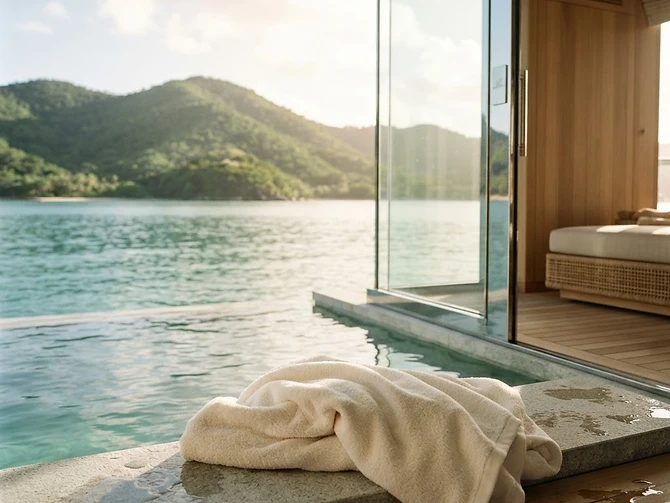
Stepping into the sauna, the heat is sharp, pine-infused, and dry. It is a stark contrast to the humid, salt-heavy atmosphere waiting just inches away behind the thermal glass. I sit for a moment, listening to the deep, resonant thrum of the yacht’s generators—a mechanical pulse that is the heart of any life lived at sea. One does not simply 'use' a spa on a vessel like this; one undergoes a ritual of transition. After twenty minutes, the transition is tactile: pushing open the glass door and feeling the immediate, jarring change as the tropical breeze wraps around the skin, carrying the scent of drying sea kelp from the nearby reef.
The wellness deck is structured to mirror the functionality of a coastal residence. There is a plunge pool fed by a secondary water purification system, creating a cooling sensation that mimics the chill of a North Atlantic spring, though the surroundings remain defiantly tropical. Later, when the tender arrives to ferry us toward the shore at Nonsuch Bay for a simple lunch of grilled snapper and plantains, the ship looks different from the water. It stands as a monolithic anchor in the bay, its architecture speaking to the landscape with a confidence that few structures on the beach can muster. It is a home built for the tide, refined to the point where the distinction between interior sanctuary and the churning, turquoise reality of the outer reef ceases to exist.
As the sun begins its heavy descent behind the hills of Antigua, the lights of the pavilion flicker to life, reflecting on the surface of the water like a quiet, amber lantern. The ship settles deeper into its evening rhythm, the crew moving with the grace of those who have long since mastered the art of living between the elements. There is a profound honesty in this, in the way a deck of wood and glass can hold so much stillness while surrounded by the constant, shifting motion of the sea.






