
The Solar Pulse of the Kuroshio
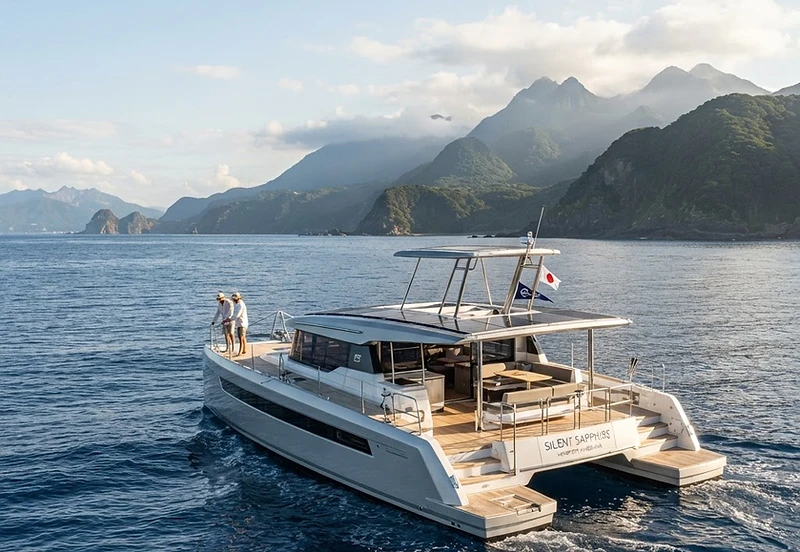
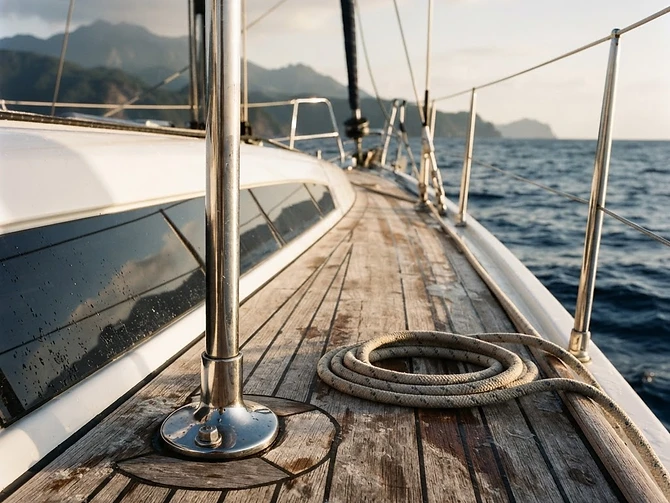
The dawn off the coast of Yakushima arrives not with the roar of a combustion engine, but with the subtle, shifting hum of electrons meeting glass. Aboard our vessel, a custom-rigged sailing yacht featuring high-efficiency integrated solar-film in its rigging, the morning begins in an eerie, blissful silence. As the sun clears the craggy, cedar-drenched peaks of Miyanoura-dake, the array begins its work, converting the fierce Pacific glare into the kinetic energy that turns our drive shaft. We are moving at a steady five knots, propelled entirely by the photons bouncing off the deep indigo water, ghosting toward the jagged, ancient silhouette of the southern Kyushu coastline. There is a singular clarity to this mode of travel. Without the mechanical vibration of a traditional diesel engine transmitting through the teak decking, the sensory landscape of the sea opens up. I can hear the sharp, rhythmic slap of water against the composite hull—a sound that feels tethered directly to the ancient pulse of the tide. The yacht, shaped with naval architectural sensibilities that prioritize hydrodynamic grace, feels less like a machine and more like an extension of the Kuroshio Current itself.
A Morning Harvest from the Volcanic Shelf
By midday, we hold station in a secluded cove near the village of Anbo. The anchor drops with a clean, metallic bite into the dark volcanic sand, holding fast in the deep. The tender, a nimble, hand-finished RIB, carries us toward the shore, where the sea meets a landscape defined by sharp, weathered basalt and mist-shrouded forests. The culinary identity of Yakushima is as untamed as its geography. We head straight for Kashibo, a compact, family-run kitchen tucked against the harbour wall, where local fishermen congregate to trade stories and salt. Here, the menu is dictated entirely by what the currents have yielded in the last four hours. We sit on seasoned timber benches while the proprietor presents a platter of tobi-uo—flying fish—harvested just beyond the reef. It is served sashimi-style, the flesh translucent and firm, kissed by the citrus brightness of tankan orange peel and a pinch of coarse, locally harvested sea salt. There is no artifice in this dining; it is a direct translation of the island’s terroir. The richness of the fish, combined with the sharp, acidic snap of the citrus, provides the perfect sustenance after a morning spent capturing the very sun that ripens the inland groves.
The Quiet Return
As the afternoon wanes and the shadows lengthen across the Miyanoura coastline, we return to the yacht. The solar-film sails, now angled to catch the lower-slung rays of the late afternoon, continue to trickle power into our lithium-ion banks, ensuring our navigation systems remain steady and the galley ready for the evening. The transition from the rugged, humid life ashore back to the controlled, pristine environment of the cockpit feels effortless. We watch the light shift from a brilliant, piercing gold to a bruised, volcanic purple, casting long, stark silhouettes of the distant mountains across the deck. Standing at the helm, the wheel responding with a light, frictionless precision, I realize that the true luxury of this life is not in the excess, but in the alignment with the elements. We are guests in these waters, and as the sun slips below the horizon, leaving behind a sky of embers, the yacht remains perfectly still—a solar-charged vessel cradled by the deep, silent currents of the East China Sea.






