
The Geometry of Silence in the Ice
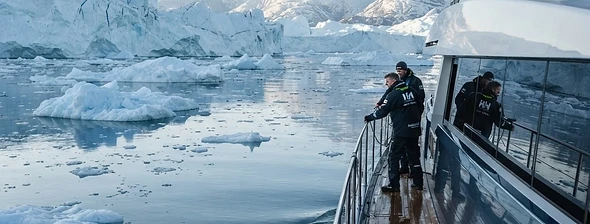
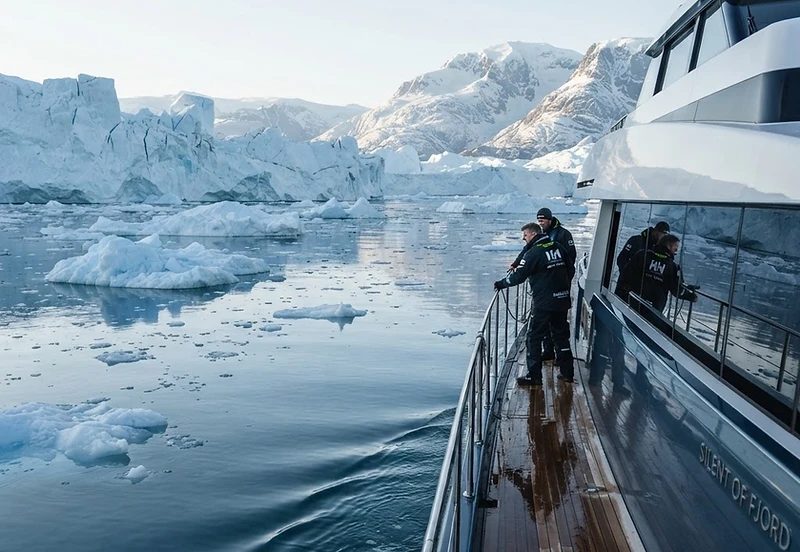
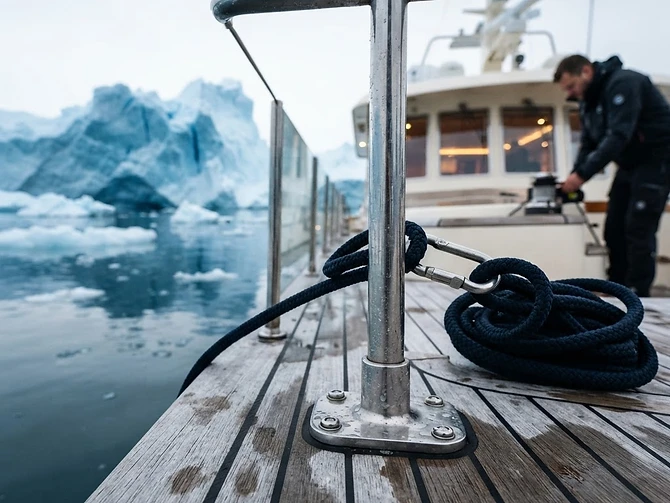
The dawn air in Disko Bay does not carry the familiar, heavy vibration of a twin-engine diesel thrumming against the hull. Instead, as we slip the mooring at the edge of the Ilulissat Icefjord, the vessel moves with a startling, uncanny grace. This is the emerging architecture of northern exploration: a modern hybrid-propulsion superyacht, her extensive lithium-ion banks providing enough silent, emissions-free torque to navigate the labyrinthine drift of growlers and bergy bits without disturbing the absolute stillness of the water. For those of us long accustomed to the constant, rhythmic mechanical heartbeat of a long-range cruiser, the sensation of moving through these ancient, glacial waters on battery power alone is both surreal and deeply reverent. We are no longer imposing ourselves upon the landscape with industrial noise and exhaust; we are merely visitors gliding through a cathedral of shifting ice, our presence marked only by the gentle wake peeling away from the hull.
The Galley’s Arctic Forage
Life aboard, finally freed from the mechanical dissonance of the engine room, pivots naturally toward the rhythm of the land and the frigid bounty of the sea. We have arrived in the wake of the local fishermen who ply these nutrient-rich depths for Greenland halibut—or qaleralik. By mid-morning, the chef has secured a pristine, snow-white fillet from a local cutter operating out of the small, vibrant quay at the settlement of Oqaatsut. Back in the galley, the preparation is elemental, stripping away the superfluous to highlight the landscape’s character. The fish, firm and translucent, is flash-seared using a hint of rendered fats and finished with a delicate scattering of freshly foraged mountain sorrel—kuannit—harvested from the nearby permafrost slopes earlier that morning. The sharp, bright acidity of the sorrel cuts through the rich, buttery texture of the halibut, providing a meal that tastes precisely like the biting, clean air of the North Atlantic shelf. It is a dialogue between the vessel and the geography, where the sustenance we consume is as honest as the waters we traverse.
A Dialogue with the Glaciers
Navigating the fjords north of Disko requires more than just modern engineering; it demands a constant, attentive dialogue with the shifting ice. Relying on the yacht's electric mode allows the bridge team to hear the subtle, crystalline pops of ancient air escaping from the bergs—a haunting, ephemeral sound that is otherwise lost to the monotonous hum of combustion engines. We anchor off the coast of the Arveprinsens Ejland, where the total silence of the anchorage allows us to hear the distant, guttural call of a humpback whale breaching in the sound, the spray hanging in the thin, frigid air. The transition to hybrid power is not merely a technical pursuit of fuel efficiency or sustainability; it is an expansion of our sensory experience. We are no longer distant observers, but participants in the quiet, steady life of the Greenlandic coast.
As the sun circles low toward the horizon, painting the jagged granite peaks in long, bruised purples and burnt oranges, the ship settles into the evening. The shift to electric propulsion has allowed us to linger in anchorages that were once merely transit points, turning brief stops into meaningful immersions. We sit on the aft deck, wrapped in thick wool, listening to the tide lick against the waterline—a final, resonant quiet that seems to belong to the ice itself, anchoring us firmly in this brief, luminous passage of the Arctic summer.