
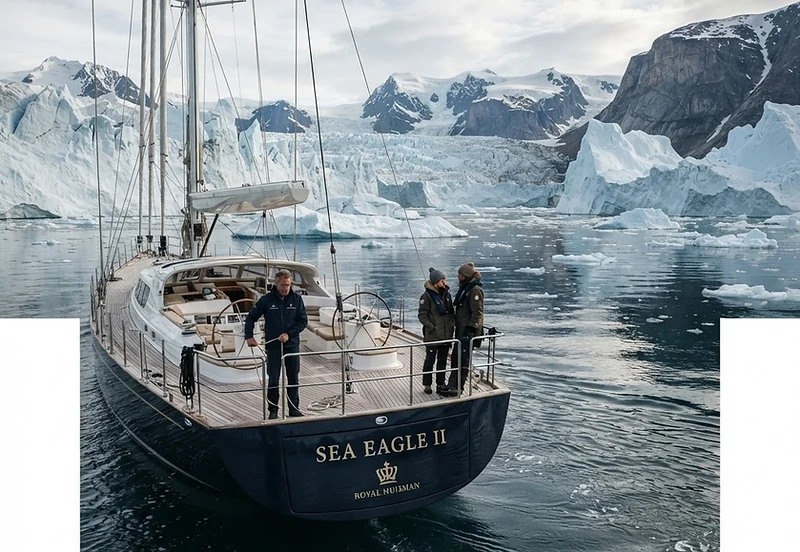
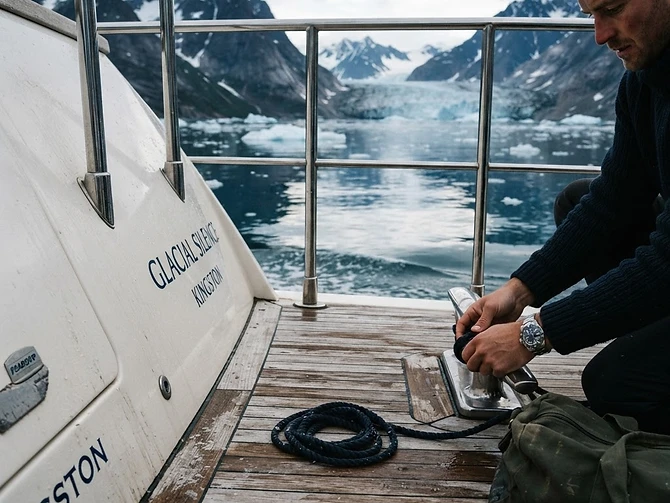
There is a specific quality to the silence of the high Arctic—a sound so profound it feels tangible, pressing against the hull of the yacht like a physical weight. As we navigated the jagged entry into Scoresby Sund, the sheer scale of the landscape rendered all human artifice insignificant. For thirty days, our vessel served not as a fortress against the elements, but as a glass-walled observatory, drifting through a monochromatic masterpiece of basalt cliffs and sapphire icebergs that had drifted from the calving fronts of glaciers unseen by the modern world. It is a place where the air bites with a crisp, sterile purity, stripping away the clutter of one’s usual life until only the immediate pulse of the sea remains.
The Architecture of Isolation
Modern luxury in the yachting sphere is often measured by the vibrancy of the Mediterranean coast, yet here, it is defined by the absence of the superfluous. Our yacht, a masterclass in naval engineering, was designed for thermal autonomy, allowing us to anchor in remote inlets where the wind whispered through the rigging with a mournful, singular beauty. Architecture here serves a singular purpose: to frame the horizon. Every teak-decked vantage point was curated to provide an unobstructed view of the shifting light, which transformed the fjords from bruised violet at midnight to a blinding, ethereal silver by mid-morning.
I recall one particular morning moored off the coast near Ittoqqortoormiit. I stood on the bridge deck as the mist burned off, revealing a jagged, obsidian-colored mountain range that seemed to rise directly from the dark water. The silence was broken only by the low hum of the yacht's generators and the distant, thunderous crack of ice calving—a sound like a cannon shot echoing through a canyon. Breakfast was simple: a bowl of warm, steel-cut oats prepared by the galley, accompanied by the sight of a lone humpback whale surfacing near the stern. It was a stark reminder that we were merely passing guests in a kingdom ruled by cold and current.
To travel through these waters is to witness the earth in its most primordial, unyielding state.
Navigating the Crystalline Labyrinth
The rhythm of our month was dictated entirely by the movement of the ice. We moved with a deliberate, restrained pace, often idling for hours to allow the pack ice to shift or to watch a pod of narwhal breach the surface of the freezing black water. Observing the fjords requires a surrender of the clock. The sheer technical capability of our stabilizers and reinforced hull granted us access to narrow passages where the ice mirrored the sky with startling clarity. It is a sobering experience to stand on the aft deck, wrapped in heavy wool, realizing that the ice beneath the surface spans miles into the deep, echoing a geology that has existed long before our arrival and will surely persist long after we have departed.
Technical navigation in Scoresby Sund is an exercise in profound humility. The captain maintained a constant, vigilant watch, maneuvering the yacht with the surgical precision required to avoid growlers—small, deceptive blocks of ice that hide just beneath the surface. One evening, as we prepared to drop anchor in a hidden, unnamed bay, the light took on a surreal, golden hue, casting long shadows against the glacier face. We shared a quiet drink in the wheelhouse, the crew speaking in low, clipped tones, the atmosphere thick with the gravity of the surroundings. It is in these moments—where the yacht is your only lifeline to the world you left behind—that the engineering of a vessel becomes a source of deep, personal gratitude.
As the expedition drew to a close, the return to open water felt less like a departure and more like an awakening from a lucid dream. Greenland does not ask for your attention; it commands your reverence. We left the fjords with the quiet understanding that the true luxury of this life is not found in the arrival, but in the rare, chilling privilege of having existed, if only for a moment, in a world that remains entirely wild.






