
The Geometry of the Deep Fjord
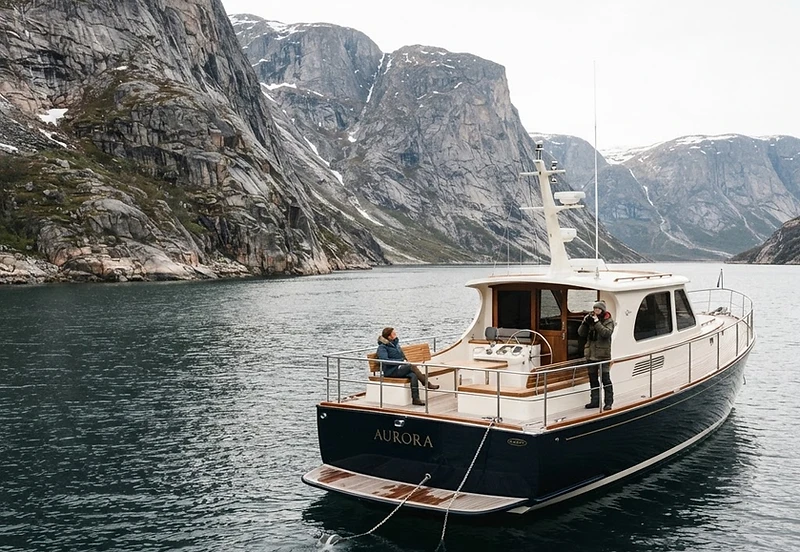
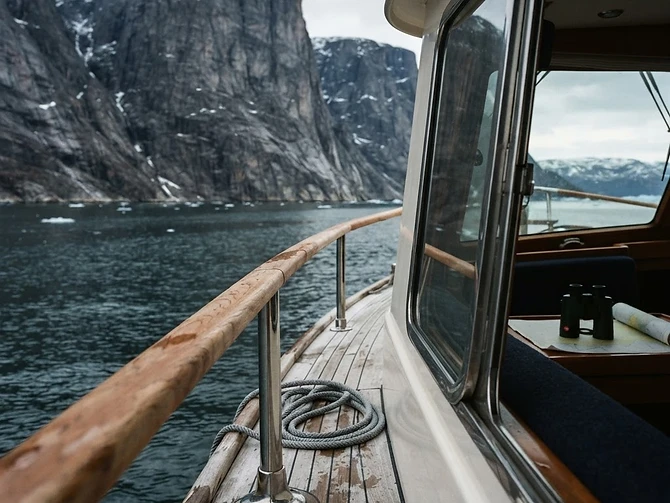
The water in the Kangerlussuaq fjord does not behave like the translucent basins of the tropics. It is a heavy, steel-grey medium that carries the history of centuries-old ice, demanding a refined vigilance from the helm. We were running north under the low-hanging, slate-coloured light of a Greenlandic afternoon, our Hinckley Talaria 43 cutting through the stillness with the dry, rhythmic hum of a well-maintained jet drive. To starboard, the coastline is a riot of ancient, fractured granite—a vertical, inhospitable landscape that seems to defy the sea. Yet, perched precariously against that wall, we spotted it: a sharp-edged structure of charred Shou Sugi Ban cedar and glass, cantilevered out over the tidal drop, defying the gravity of the cliffside.
It is the work of an architect who understands that in this environment, one does not build against the landscape; one participates in it. The house reaches out like an extended bowsprit over the churning, frigid spray, mirroring the aggressive, functional lines of the long-range explorer vessels that occasionally disturb these waters. As we brought the Hinckley to a halt, the profound silence of the fjord reclaimed the space, punctuated only by the distant, thunderous crack of calving ice from a glacier tucked deep within the mountain's shadow. The house felt less like a static dwelling and more like a bridge between the solid, unyielding geology of Greenland and the fluid, transient nature of our voyage.
The Tender at the Threshold
Bringing the tender in to the structure's private, rock-hewn pontoon requires a steady hand and a keen eye for the erratic, cold-water current. The water is deceptively deep but riddled with suspended glacial silt and hidden debris. As I leaned over the gunwale to fend off the soft, polished teak fender, the smell of sharp brine mixed with the metallic tang of cold, wet stone. This is the authentic privilege of the yachting life: the ability to find a quiet, human-made sanctuary in a place that feels entirely indifferent to human existence. The boat settled against the dock, the fiberglass hull nudging the rough-hewn stone with a muted, rhythmic thud that resonated through the deck plates.
Stepping onto the platform, the transition was jarring. Inside, the architecture framed the ocean in ways that felt curated—long, horizontal bands of floor-to-ceiling glass turned the restless, dark fjord into a series of living, monochromatic paintings. We shared a simple, firm-fleshed plate of smoked Arctic char, sourced from a local Inuit cooperative, and watched as the light began to stretch thin and violet across the headlands. There was no pretense here; the home served as an observation deck for the sea's immense, slow-moving power, a static counterpart to the technical agility of our vessel anchored just meters away in the deep, black water.
The Final Watch
As the sun dipped behind the jagged, frost-dusted peaks, the temperature plummeted, drawing a sharp breath of air through the seams of the structure and forcing our return to the climate-controlled warmth of the cabin. Leaving that cantilevered room felt remarkably like leaving an exposed cockpit; the house was designed to put one at the mercy of the weather, providing a vantage point that felt both intimate and dangerously open. We cast off, the jet-drive of the Hinckley swirling the dark water into a temporary, frothy wake before we accelerated toward the mouth of the fjord. Looking back, the house was already merging into the charcoal silhouette of the cliff, a flicker of warm, internal amber disappearing into the vast, indifferent expanse of the north. We retreated into the dark, our course set by the rhythmic pulse of the navigation buoys and the steady, guiding geometry of the stars.






