
The Approach from the Cold Atlantic
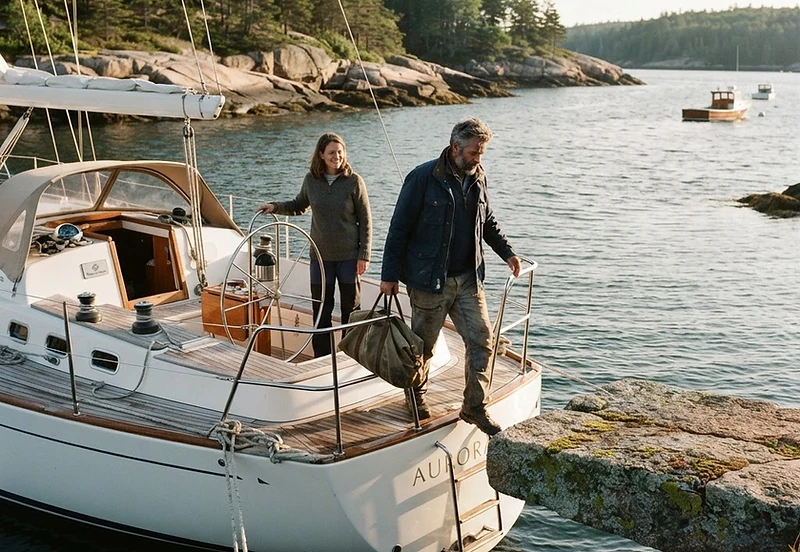
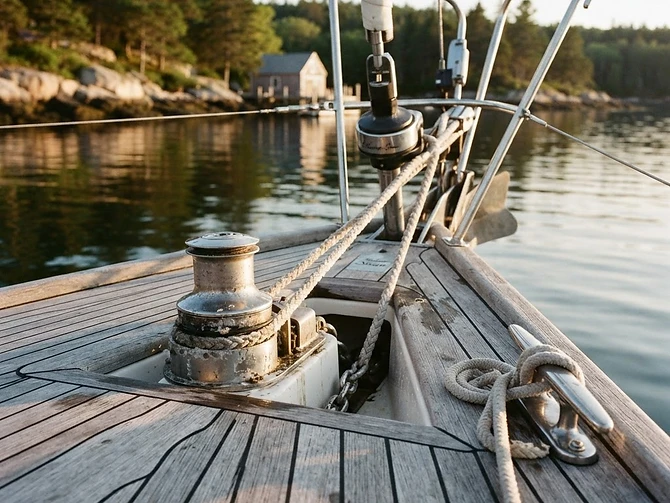
The dawn air off the coast of Maine possesses a sharp, clean vitality that stays in the lungs long after the engines have settled into a low, rhythmic thrum. We were standing off the eastern edge of Muscongus Bay, our 85-foot Nautor’s Swan riding a gentle, long-period swell that spoke of deeper water further offshore. The morning fog was just beginning to peel back from the dark, spruce-clad headlands, revealing the jagged granite anatomy of the coastline. There is a particular discipline required to navigate these waters—a constant reading of the lobster buoys that bob like sentinels in the tidal current and a respect for the hidden shoals that have claimed many a keel before us. We dropped the hook in a sheltered bight where the water turned from deep indigo to a clear, cold emerald, the chain rattling down to mark the beginning of our transit to the shore.
Architecture Carved from the Coast
To transition from the teak-decked world of a high-performance cruiser to the solid, unyielding earth of the mainland requires a shift in perspective. Our tender, a sturdy, custom-built Hinckley, cut a clean line through the glassy water toward a narrow granite staircase built directly into the cliff face. Above, a private villa emerged from the tree line—not as an imposition, but as an extension of the rock itself. Designed with a mastery of regional modernism, the structure utilized native stone and expansive, frameless glass to blur the distinction between the spruce forest and the interior living spaces. It was the architectural mirror of the vessel we had just left: both were focused entirely on the orientation of the sea. Standing on the lower terrace, the air smelled of wet cedar and salt, a sensory combination that defines the quintessential Maine summer. The owner, a man whose life is as much defined by the tides as it is by the structural integrity of his homes, noted that he designed the cantilevered deck specifically to align with the seasonal migratory path of the gulls. It felt less like a house and more like a permanent observatory, a stationary anchor point for those who spend their lives in motion.
The Quiet Horizon
We spent the better part of the afternoon on that terrace, the sounds of the boat anchored below—the occasional slap of a halyard against the mast, the cry of a distant osprey—serving as the only soundtrack to our conversation. There is a profound luxury in the stillness of the Maine coast, a sharp contrast to the bustling, sun-bleached ports of the Mediterranean. Here, the landscape demands silence and observation. As the sun began to drop behind the pines, casting long, bruised-purple shadows across the granite, we descended the steps back to the tender. The return trip to the Swan felt like a closing of a loop, a quiet retreat from the land back to the sanctuary of the sea. By the time we were back on the aft deck, the first stars were piercing the darkening sky, and the shore villa had become nothing more than a warm, golden aperture glowing softly against the darkening mass of the island, a lighthouse of a different, more domestic order.






