
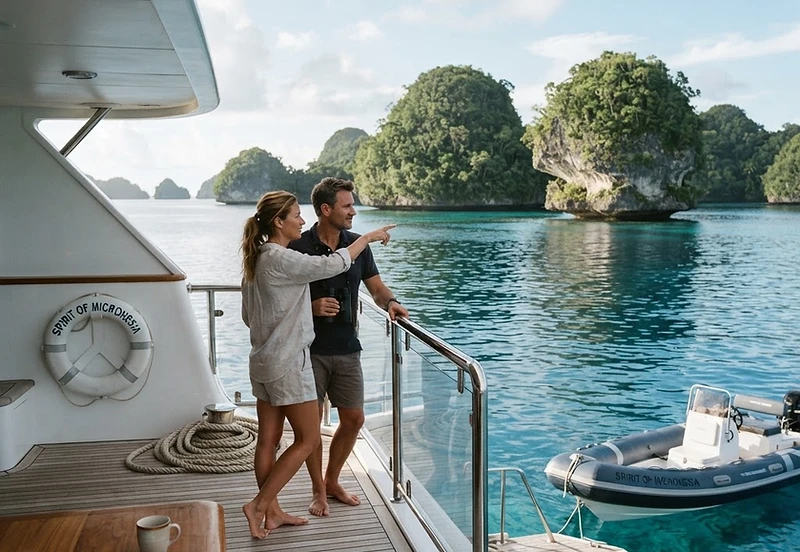
There is a profound, almost theological stillness that descends once you cross the meridian line separating the familiar trade routes from the vast, sapphire vacuum of the central Pacific. To steer a yacht toward the far-flung reaches of Micronesia is not merely to travel; it is to engage in an act of deliberate, almost radical detachment. As the last trace of the distant horizon merges into a shimmering haze, the relentless urgency of the mainland dissolves, replaced by the hypnotic, rhythmic pulse of the swell against the hull and the sharp, clean scent of salt spray. The yacht, a vessel built for the long transit, becomes a microscopic civilization moving across a liquid desert.
The Architecture of Endurance
Modern yacht design often prioritizes the spectacle of the marina, favoring floor-to-ceiling glass and expansive sundecks that shimmer under the lights of Monaco or St. Barts. Yet, the transit to the remote Caroline Islands demands a more stoic philosophy. Here, the vessel acts as an island unto itself, a self-sustaining crucible of engineering where stability, range, and fuel management take precedence over the superfluous. The navigational bridge becomes a sanctuary of low, amber light and the soft hum of glowing instruments, where the crew monitors not just the currents, but the subtle atmospheric shifts that dictate life on the open water. I recall a particular dawn, three days out from the nearest port, when the barometer dipped with a languid, ominous grace. We sat in the wheelhouse with mugs of black coffee, watching the sky bruise into a deep, velvety violet before the storm broke. True luxury, in this context, is defined by the absence of interruption and the quiet, ironclad confidence of a ship built to withstand the total isolation of the deep, knowing the hull beneath your feet is equal to the ocean’s temperament.
Sovereign Waters and Ancient Atolls
As the first low-slung atolls of Micronesia appear—thin, emerald ribbons of vegetation clutching a coral reef—the transition from open ocean to lagoon is transformative. The water shifts from the deep, impenetrable indigo of the abyss to a translucent, electric turquoise that seems to glow from beneath. We dropped anchor near a nameless sandspit, the chain rattling through the quiet in a way that felt almost sacrilegious. Taking the tender toward the shallows, the silence was absolute, save for the rhythmic lap of water against the fiberglass and the distant, thunderous percussion of the Pacific swell breaking against the outer reef. We found the local waters teeming with life, a vibrant, chaotic ecosystem that exists entirely removed from the grid. Life here follows the sun and the tide, with the vessel serving as a silent, respectful observer to a geography that has mastered the art of living in harmony with the Pacific’s vast, unpredictable mercy. Dinner that evening, eaten on the aft deck, consisted simply of fresh reef fish grilled with nothing more than lime and local sea salt, served under a canopy of stars so bright they reflected on the water’s surface like fallen embers.
The ocean does not demand anything of the traveler other than their presence and their humility.
The journey back toward the reach of cellular signals and terrestrial obligations feels, at first, like a quiet mourning. You find yourself checking the horizon for the familiar silhouette of land and feeling a strange, hollow sense of loss. Yet, the memory of that specific, profound silence—the kind that only exists thousands of miles from the nearest coastline—remains an indelible mark on one’s conscience. It is a sobering reminder that the world remains large, beautiful, and refreshingly indifferent to our efforts to tame it, leaving us nothing but the wake we leave behind and the stillness we carry forward.






