
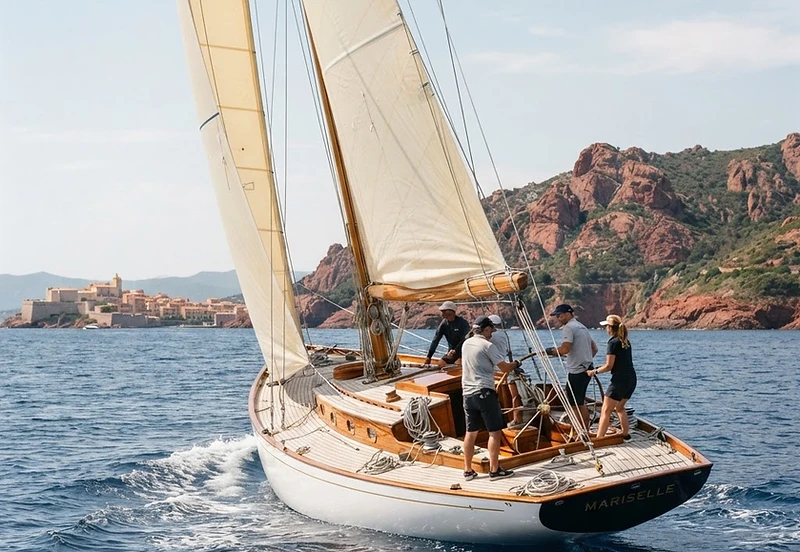
There is a specific, haunting resonance to the sound of teak decks stretching under the tension of a fresh Mistral. As the morning fog lifts from the Gulf of Saint-Tropez, the silhouette of the Mariselle—a 1934-built gaff-rigged cutter—emerges from the grey, her varnished mahogany hull gleaming with the intensity of a freshly struck bell. She is not merely a boat, but a kinetic archive of maritime history, returning to the race course after three decades of quiet dormancy. I recall standing near the companionway as we cleared the harbor entrance, the air tasting sharply of salt and pine, while the crew moved with the hushed efficiency of a well-oiled watch, their hands finding the worn, familiar grip of rigging that has outlived generations of sailors.
The Anatomy of a Restoration
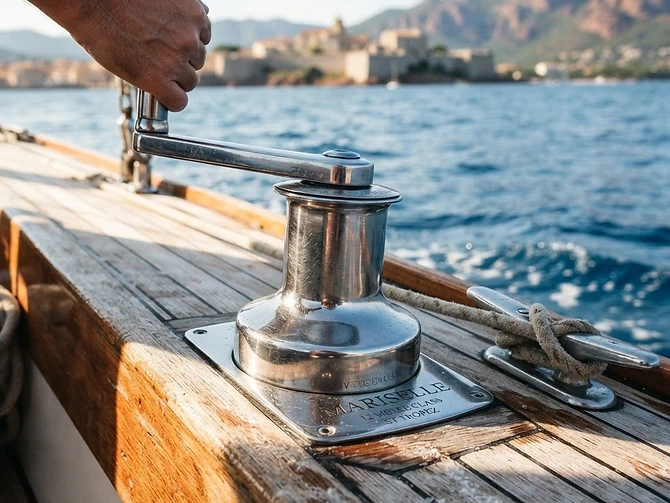
Restoring a classic racing yacht is less an act of repair and more one of archaeological stewardship. For the owners of Mariselle, the challenge lay in balancing the demands of modern safety with the rigid aesthetic purity of the interwar period. Every bronze fitting was sourced from archival molds, and the sail plan was meticulously reconstructed using traditional Egyptian cotton weaves. The result is a vessel that carries the weight of history without the drag of obsolescence. To stand on her helm is to feel the transmission of a bygone era; the rudder telegraphs the water’s texture with a sensitivity that carbon-fiber moderns have long traded for sheer raw speed. It is a tactile conversation between the wood, the water, and the person holding the wheel, where every vibration in the deck boards tells a story of structural integrity restored through painstaking, months-long labor in a quiet shipyard shed.
The Theatre of the Mediterranean
Saint-Tropez serves as the ultimate crucible for such a return. Here, the competition is not merely a contest of velocity, but a pageant of lineage. As the starting cannon echoes against the Citadel, the Mariselle heels with a slow, deliberate grace, carving a wake that feels entirely disconnected from the frenetic energy of the surrounding modern fleet.
To race a classic is to negotiate with the wind rather than conquer it.Watching her navigate the tight buoy turns, one observes a masterclass in nautical geometry, a reminder that true performance is often found in the elegant management of inertia and drift. During the mid-afternoon beat to windward, the deck became a slanted stage of focused exertion; I watched the trimmer adjust the gaff, his eyes fixed on the luff of the sail, oblivious to the shimmering turquoise expanse of the Mediterranean opening up around us. We were a ghost ship among giants, navigating the currents of the Côte d’Azur as if the intervening century had simply slipped away.
As the sun dips behind the Massif de l'Esterel, the yacht returns to her mooring, her sails furled with practiced, silent precision. The race results matter little compared to the affirmation of her survival. She remains a testament to the fact that, in a world obsessed with the ephemeral, some structures possess a gravity that time cannot erode, providing a profound, rhythmic connection to the sea that modern vessels, for all their technological prowess, have yet to replicate.






