
The White Horizon
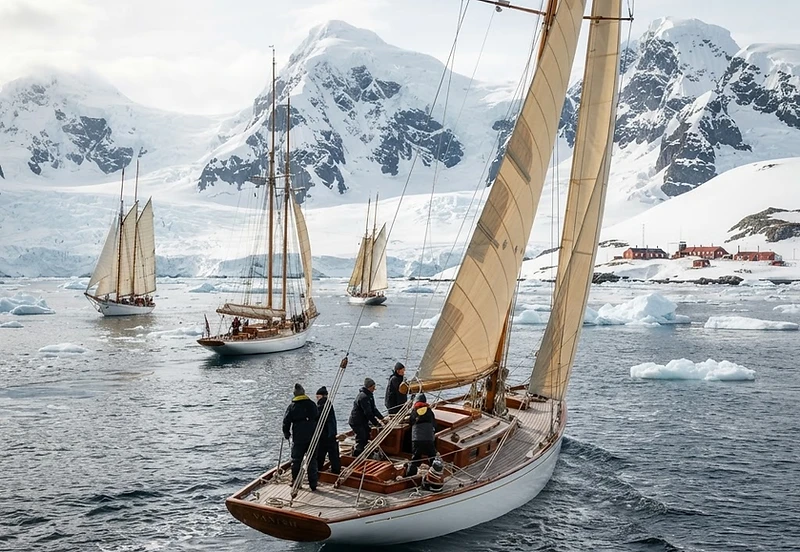
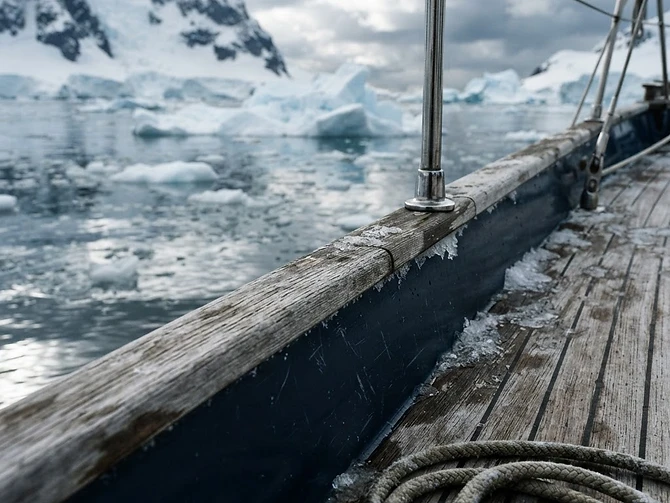
The dawn in the Gerlache Strait does not break; it merely bleeds through the heavy, iron-grey cloud cover, illuminating the jagged teeth of the Antarctic Peninsula. As our tender cuts through the swirling frazil ice, the silence is punctuated only by the rhythmic slap of freezing water against the hull of a restored 12-Metre, her varnished mahogany toe-rail standing out in stark, warm defiance against the monochrome seascape. We have arrived for a unique iteration of the Panerai Classic Yachts Challenge, an unlikely spectacle where the elegance of traditional sail meets the brutal, shifting physics of the Southern Ocean. Here, the water is not merely a medium for travel but a living, crystalline entity that demands total surrender from those who dare to steer a wooden mast through its path.
Tactical Navigation and the Galley’s Resolve
Steering a vessel built in the 1930s through these latitudes requires a granular understanding of katabatic winds and the unpredictable calving of glaciers like the nearby Neko Harbour. On deck, the crew of a classic Nautor’s Swan moves with the disciplined grace of a choreographed dance, their gloved hands managing lines stiffened by the pervasive, biting salt-spray. The sport here is not merely about speed; it is an exercise in preservation. Every maneuver is calculated to protect the hull from the stray brash ice that bobs like minefields across the racecourse, requiring constant, keen-eyed vigilance from the bow watch.
Below deck, the galley becomes a sanctuary of heat and ingenuity. Our chef, working with the limited but profound bounty of the south, prepares a lunch centered on the local Patagonian toothfish, landed at the fringes of the sub-Antarctic islands. Pan-seared and seasoned with a light reduction of sea-buckthorn berries foraged during our stopover in the northern reaches, the dish offers a sharp, citrus-forward counterpoint to the dense, fatty richness of the fish. It is a meal that acknowledges the hardship of the environment while celebrating the profound, clean clarity of the Southern Ocean’s larder, grounding our high-seas performance in the tangible, earthy reality of the coast.
The Quiet After the Gun
As the final boat crosses the finishing line near the historic base of Port Lockroy, the adrenaline of the race dissipates into the hushed majesty of a late-afternoon anchorage. We gather in the saloon of a support vessel, the air smelling faintly of teak oil, aged wool, and the lingering, comforting scent of a wood-burning stove. Dinner is an informal affair, a necessary recovery of calories: shards of salt-cured mutton, seasoned with wild indigenous herbs, served alongside hearty, root-heavy porridges that speak to the ancestral necessity of sustenance in a climate that never relents. There is no bravado here, only the shared, quiet acknowledgement of the day’s navigation through the bergy bits.
Outside, the light begins to fail, casting long, bruised-purple shadows across the surrounding ice shelves. We watch as the last fragments of the day catch the horizon, turning the glaciers into luminous, cathedral-like structures. In this final moment, as the anchor chain grumbles against the seabed of the Antarctic Sound, the yachts look less like racers and more like ghosts of a bygone era, resting quietly against the ancient, frozen pulse of the world’s most desolate coast.






