
The Anatomy of an Awakening
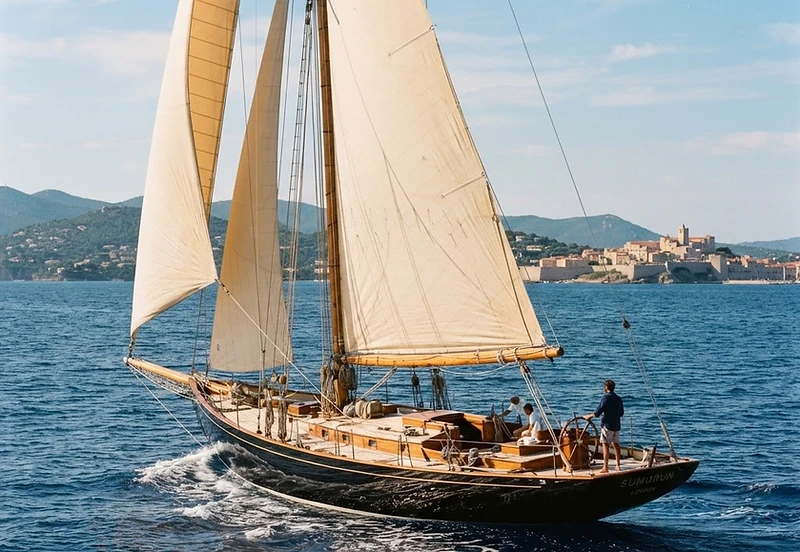
There is a specific, resonant quality to the sound of timber straining against the swell, a language largely lost to the synthetic rigidity of modern carbon-fiber racing shells. As this 1930s-era cutter glides through the thick, pearlescent morning mist of the Gulf of Saint-Tropez, one is reminded that elegance is not merely an aesthetic choice, but a functional imperative of fluid dynamics. The hull, having undergone a meticulous three-year restoration that involved stripping away decades of non-breathable resins to return to traditional white-oak frames and mahogany planking, now moves with a supple cadence. It is a living, breathing machine that negotiates the chop of the Mediterranean with a grace that defies the inherent heaviness of its heritage construction.
Standing at the helm, the sensation is visceral. You feel the sea through the tiller—a rhythmic pulse that tells you exactly how much pressure the rudder is carrying. The air is cool, smelling faintly of salt spray and the morning dampness clinging to the surrounding hills. It is a quiet, contemplative start to the day, punctuated only by the rhythmic slap of water against the counter stern and the distant, metallic chime of a buoy bell near the harbor entrance.
Tactile Mastery in Open Water
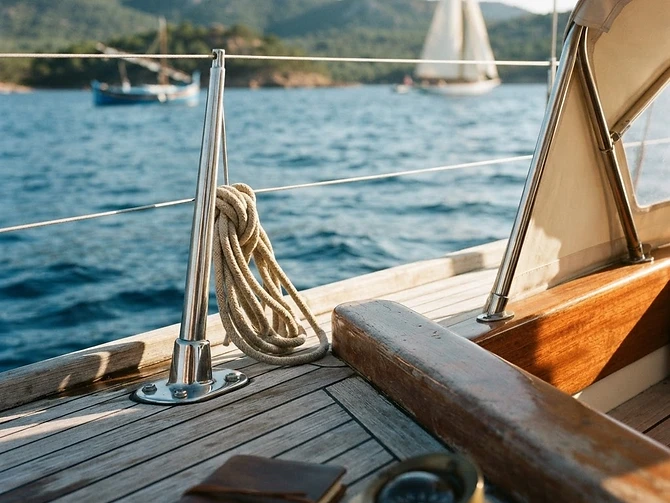
For those onboard, the act of sailing here is less about the aggressive, win-at-all-costs pursuit of a podium finish and more about the cultivation of a refined dialogue between the helmsman and the vessel. Responsiveness is the primary metric. As the light burns off the mist, we clear the point of Saint-Tropez, and the wind begins to fill. When the spinnaker blossoms—a cathedral of lightweight Egyptian cotton canvas catching the steady breeze—the cutter tilts with a gentle, predictable authority. It reveals the intricate, hard-won geometry of the deck, where every bronze fitting, polished to a muted, satin finish, speaks to a standard of joinery that predates the era of mass production.
I watched the bowman, his movements deliberate and focused, tensioning the staysail sheet. There was no shouting, no frantic energy. Just the quiet efficiency of a crew that understands the limitations and the boundless potential of the yacht. We crossed paths with a sleek, modern superyacht motoring toward Port Grimaud; the contrast was stark. While they relied on stabilizers and glass-bridge displays, we were reading the subtle darkenings on the water surface to predict the next shift. It is a choreography of pulleys, manila lines, and human intuition, played out against a backdrop of sun-bleached ramparts that have looked on at such vessels for a century.
The beauty of the classic yacht lies in its refusal to surrender to convenience. It demands a partnership that is earned rather than purchased, a rare grace in an age of automated navigation.
The Eternal Horizon
Returning to these waters is, for the yacht, a homecoming to the very conditions that dictated its original lines. The light in the Gulf of Saint-Tropez possesses a unique, slightly diffused quality that softens the harshness of the wake, casting long, gilded shadows across the teak decking. By late afternoon, we dropped anchor in a secluded cove sheltered by the rugged cliffs of the peninsula, far enough from the crowded quays of the Vieux Port to enjoy the silence. I sat on the aft deck with a simple bowl of local olives and chilled water, watching the golden hour transform the rigging into a spiderweb of copper light.
As the sun dipped behind the Massif des Maures, the vessel settled into its mooring with a satisfied creak. The racing was finished, and the crew retreated to the cockpit, the conversation drifting toward the upcoming passage to Antibes. Here, the preservation of the boat's spirit is not a chore, but an intimate routine of maintenance and respect. It remains a testament to the fact that while technology moves forward, true maritime excellence remains anchored in the past, existing in the small, quiet moments where man, wood, and wind find their perfect, fleeting equilibrium.






