
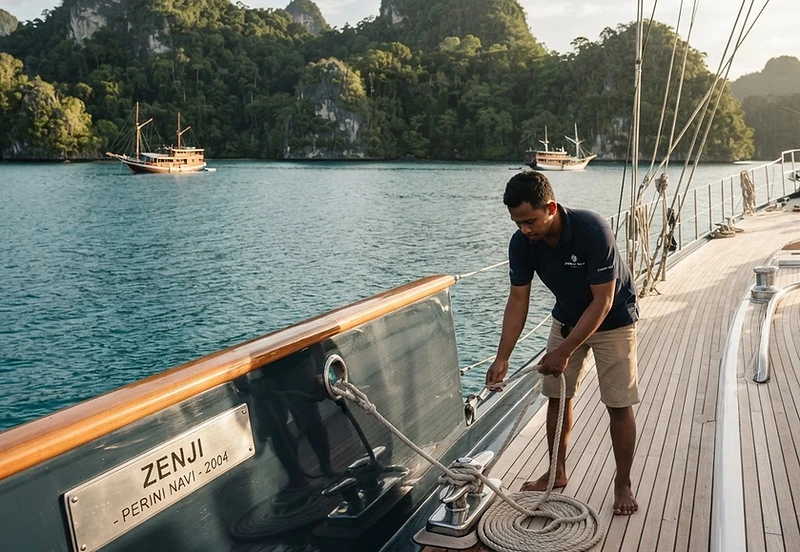
In the quiet, far-flung reaches of Raja Ampat, the water possesses a clarity that renders the hull of a vessel almost redundant. Beneath the surface, the density of life is staggering, transforming the act of chartering from a mere migration into a profound exercise in biological inventory. One does not simply sail through these islands; one navigates a shifting, breathing tapestry of biodiversity that demands a quieter, more observant form of stewardship. Aboard a vessel like the Rascal, with her traditional phinisi lines and meticulously crafted ironwood hull, the transition from the sophisticated comfort of the cabin to the raw, surging energy of the Dampier Strait feels like crossing into another epoch.
The Architecture of the Reef
To witness the Raja Ampat ecosystem is to confront the limitations of human infrastructure. The reefs here function with an architectural rigor that puts terrestrial construction to shame, creating a vertical metropolis of calcified light and shadow. Guests often find themselves transitioning from the polished, cooling teak decks of their yacht to the raw, limestone-chiseled foundations of the archipelago. Marine biologists serving as onboard guides emphasize the fragility of this complexity, teaching the observer to appreciate the structural necessity of every polyp and current. It is a lesson in the economy of space, where nothing is extraneous; the way a barrel sponge clings to a sheer wall or the deliberate choreography of a wobbegong shark hidden in the crevice of a coral head is a masterclass in survival. Here, the yacht serves not as a barrier, but as a silent, mobile platform for witnessing an endurance that has outpaced all modern design.
Discipline in the Deep
The rhythm of life on board is dictated not by the schedule of a bustling marina or the demands of the mainland, but by the tidal shifts and the migrations of the pelagic. One morning, anchored near the karst spires of Wayag, I sat on the swim platform as the sun began to leach the color from the stars, watching the water ripple with the movement of a school of fusiliers. Engaging with this environment requires a disciplined patience, a willingness to suspend the haste of the modern world.
The sea, when observed through the lens of a researcher, ceases to be a backdrop and becomes a participant in the dialogue of the voyage.Each dive serves as a data point, an intimate inspection of a world that thrives entirely independent of human intervention. It is an exercise in restraint, ensuring that the footprint of the vessel remains as light as the currents it follows, whether we are deploying a tender for a silent approach to a hidden beach or meticulously checking the anchor’s path to avoid the fragile sea-grass beds.
The Living Light
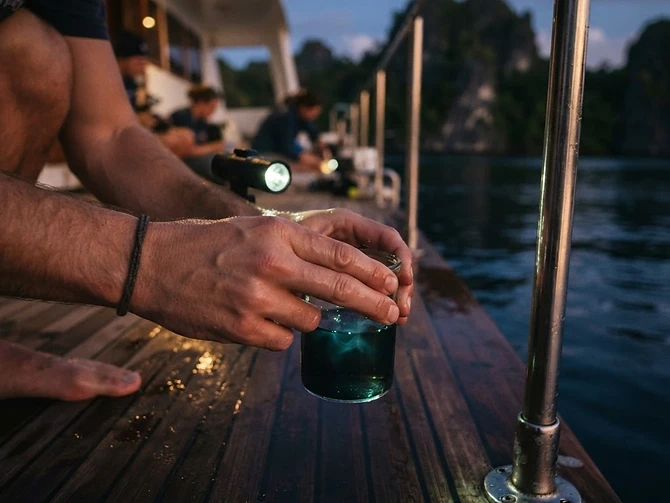
As the sun retreats behind the jagged karst formations, the ocean undergoes a metamorphosis. The water shifts from a brilliant, crystalline turquoise to an inky, velvet black, and the bioluminescence begins to bloom. It is most visible when the tender cuts through the wake, scattering thousands of tiny, phosphorescent sparks into the dark—a liquid constellation that mimics the sky above. On the aft deck, the conversation invariably turns to the day's inventory: the precise count of pygmy seahorses, the shadow of a manta ray in the gloom, or the sudden, electric strike of the plankton. There is an elegance in this collective reflection, a shared acknowledgement that we are merely visitors within a masterwork of natural engineering. To leave Raja Ampat is to accept that the true luxury of such a journey lies not in the service provided, but in the clarity of the perspective gained while adrift in the world's most vibrant laboratory.






