
The Quiet Threshold of the Salish Sea
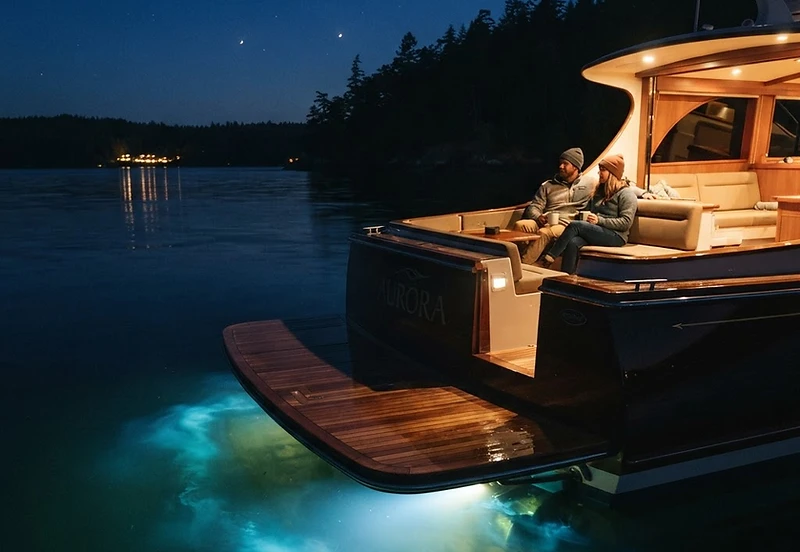
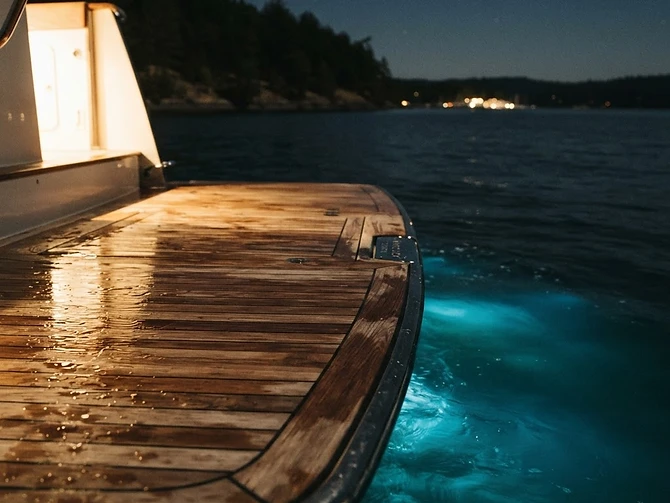
The anchor chain of the Hinckley Talaria settled into the sandy bottom of Reid Harbor with a metallic rasp that resonated through the length of the vessel. To the west, the jagged silhouette of Stuart Island dissolved into the indigo depth of a Pacific Northwest twilight. The air here carries a bracing clarity, redolent of damp cedar and the sharp, saline tang of bull kelp. Standing on the teak swim platform, the water felt like liquid silk—a chilling, vital contrast to the lingering warmth of the late August afternoon. We had spent the day navigating the complex currents through the Speiden Channel, the yacht slicing through the chop with a poise indicative of refined naval engineering. As night claimed the horizon, the decision to slip into the water was not merely for sport; it was an attempt to touch the pulse of a region that keeps its most profound secrets beneath the waterline.
Culinary Rhythms and the Morning Catch
Life aboard follows the arc of the sea, anchored by the galley's methodical, understated rhythms. Earlier that day, we had secured a haul of spot prawns from a local fisherman operating out of the historic Roche Harbor. Our chef, working in the compact, high-efficiency galley, treated these Pacific gems with the reverence they demand. They were flash-seared with a touch of local wildflower honey and a squeeze of charred lime, served alongside a salad of foraged sea beans and wild rocket gathered from the nearby hillsides. This is the true privilege of the San Juan cruise: the direct line from the cold, nutrient-rich currents of the Salish Sea to the varnished mahogany of the aft dining table. Dinner was a lesson in meroir, where the saline crispness of the shellfish mirrored the bracing bite of the mountain air, grounding us in the specific, unvarnished character of the coast.
The Nocturnal Architecture of the Deep
Stepping off the platform, the transition from the illuminated stern to the pitch-black water was absolute. As I descended, the flick of a fin ignited a ghost-trail of bioluminescence—a swirling, ephemeral nebula of green-blue light that clung to the neoprene of my suit like captured stardust. Beneath the yacht, the underside of the hull appeared as a monolithic, shadowed sanctuary, providing a safe harbour for small, darting schools of rockfish hovering near the stabilizers. The silence was complete, broken only by the rhythmic, mechanical pulse of my own respiration. In the tight beam of my torch, the rocky seafloor revealed a tapestry of orange cup corals and giant plumose anemones, their delicate tentacles reaching into the slack current. There is a specific, sobering humility in drifting beneath a vessel that normally dominates one's perception from above; looking up, the yacht became a dark, towering silhouette against the faint, shimmering reflection of the moon. It was a profound reminder that we are merely guests here, passing through a wild, unblinking ecosystem that continues its ancient dance long after the saloon lights have been dimmed.
Climbing back onto the swim platform, the transition to the world of heavy linen and warm towels felt jarring, yet essential. Shivering slightly, I watched the water settle behind the transom, the bioluminescent sparks slowly fading into the black, leaving only the steady, comforting glow of the spreader lights reflecting off the dark, moving surface of the harbor.






