
The Turn of the Tide
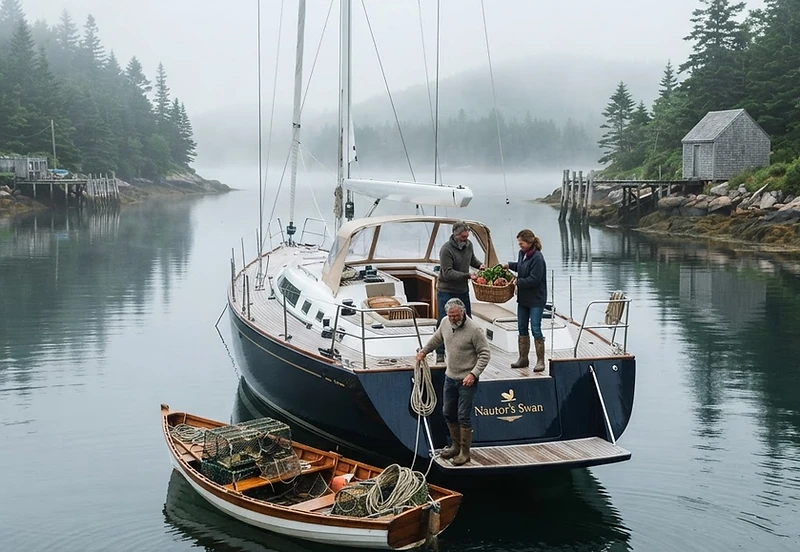
The dawn watch off the South Shore of Nova Scotia carries a clarity that is singular to the North Atlantic. From the teak decks of our Nautor’s Swan, the world is measured in the rhythmic slap of cold, dark water against the hull and the haunting, tremolo call of a loon echoing off the spruce-lined banks. We have spent forty-eight hours navigating the fog-wreathed granite outcroppings that define this stretch of the Maritimes, an environment that demands absolute respect for the depth sounder and a surrender to the unpredictable temper of the wind. As the morning mist peels away to reveal the iconic, tiered silhouettes of the church steeples in Mahone Bay, our passage transitions from the calculated navigation of the deep channel to the tactile, intimate scale of the shoreline. The tender is lowered in a practiced, fluid motion, its outboard silent for a moment as we drift into the wake of the local lobster fleet.
From the Saltwater to the Shucking Board
The ride toward the wharf is an exercise in reading the coastal topography—the way the dark, coniferous forest meets the iron-grey Atlantic. We are making for the docks near the harbour, where the morning’s yield is already being sorted with methodical precision. There is a profound, unadorned honesty to the foodways here; one does not seek artifice when the ingredients are pulled from the frigid, nutrient-dense currents of the bay. We observe a fisherman offloading Atlantic sea scallops, their adductor muscles firm, plump, and translucent, still carrying the briny chill of the deep water. The culinary rhythm of this coast is tied to the gear and the landing. We favour the simple, local preparation: a brief, intense sear in a heavy pan, seasoned only by the residual sea salt of the harvest and perhaps a touch of locally foraged spruce-tip infusion, which provides a bright, resinous citrus note that pierces through the buttery richness of the shellfish.
The Ritual of the Return
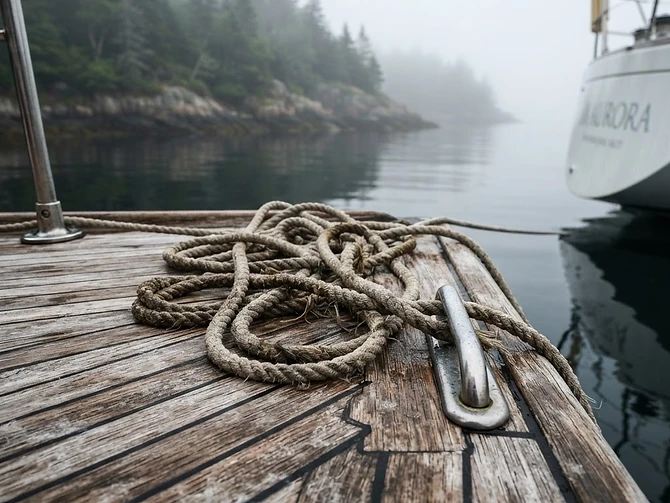
A lunch ashore in the Maritimes is rarely about the theatre of service; it is about the synchronicity between the sea state and the arrival. At a rough-hewn table, we enjoy lobster rolls that eschew the cluttered preparations of more southerly ports, opting instead for generous chunks of knuckle and tail meat, lightly dressed in a house-made mayonnaise that allows the natural, oceanic sweetness of the crustacean to command the palate. The conversation is sparse, punctuated by the structural groan of wooden fishing boats tethered to the pilings and the rhythmic thrum of a single-cylinder engine idling across the cove. This is the enduring luxury of the yachting life: the ability to oscillate between worlds, maintaining the refined sanctuary of the vessel while anchoring oneself in the rugged, tangible reality of the coast. As we cast off the lines, the late afternoon sun catches the surface, turning our wake into a ribbon of shattered silver that guides us back toward the yacht, our movements dictated entirely by the slow, inevitable retreat of the tide.






