

The Architecture of Lift
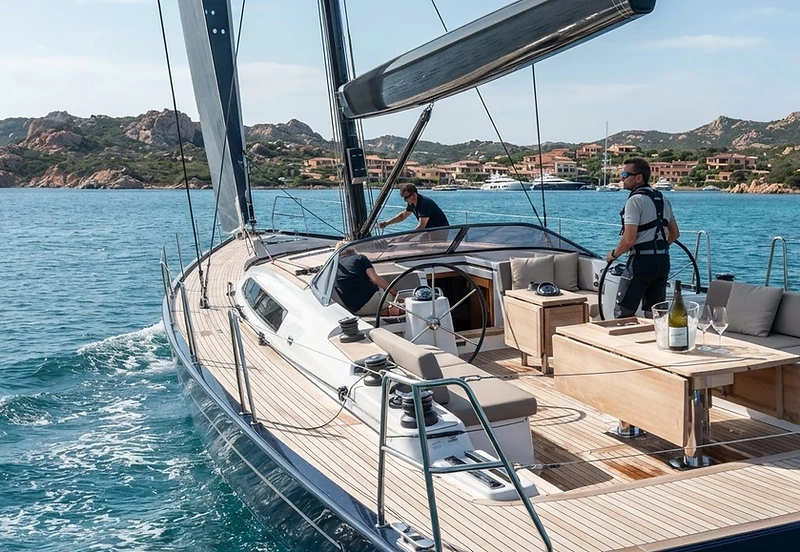
To witness a modern foiling monohull—specifically a refined cruiser-racer like the Wallycento or the latest evolution of the AC75—is to see the traditional yachting narrative rewritten by the brutal, beautiful honesty of physics. As the wind fills the wing sail and the carbon-fiber foils begin to bite into the water, the hull does not merely slice through the swell; it detaches from it. The vessel ceases to be a displacement craft and becomes a suspended bridge between two fluid mediums. There is a profound architectural purity to this act: the reduction of drag is the pursuit of absolute efficiency, a design philosophy that echoes the stark, minimalist lines of the mid-century villas perched along the Costa Smeralda. When the hull lifts clear, leaving only a ghost of a wake, the yacht becomes an airborne sculpture, carving lines into the troposphere rather than the surface of the Tyrrhenian Sea.
The Pulse of Precision
Living aboard such a vessel requires a subtle, yet total, shift in one’s internal rhythm. As the boat accelerates to speeds that once belonged exclusively to heavy powercraft, the sensations aboard become sharp, immediate, and crystalline. I recall a Tuesday morning off the coast of Porto Cervo, the light turning the water to hammered silver, as we transitioned onto the foils. The acceleration was not a lurch, but a seamless surge, a transition into a different state of matter. Beneath the deck, the crew monitors the flight height and cant angles with a focus that demands total presence. Every gust is an invitation; every millimeter of foil trim is a negotiation with the chaotic energy of the ocean. It is a visceral reminder that whether in naval engineering or performance sailing, grace is the byproduct of total control and the courageous abandonment of the status quo.
The Quiet After the Flight
The ocean does not yield to force; it is negotiated through intelligence and the constant calibration of velocity against the horizon.
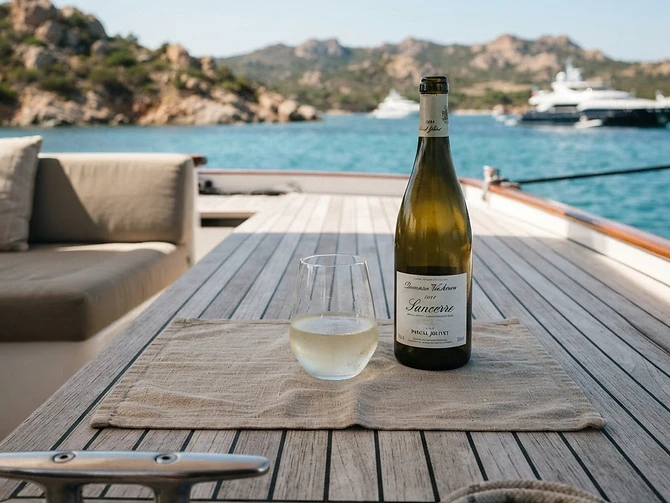
When the foils finally retract and the vessel settles back into its displacement mode, there is a palpable, almost tectonic shift in the atmosphere. The harsh, high-frequency whine of the water rushing against the carbon surfaces dissipates, replaced by the deep, rhythmic lap of the tide against the topsides. One sits on the teak, still vibrating with the ghost of that speed, as the yacht finds its natural buoyancy once more. It is the moment the adrenaline recedes, leaving behind a clarity that only open-water passage can provide. As we dropped anchor in a secluded, unnamed cove north of Caprera, the silence of the evening was not empty; it was heavy with the recent memory of the speed achieved. A simple bowl of local olives and a glass of chilled, crisp Greco di Tufo served on the aft deck felt like a reward for the turbulence we had just outrun. The yacht rested there, a work of static art once more, a masterpiece of modern engineering tethered to the sea floor, waiting patiently for the wind to invite it back into the sky.
Ultimately, the beauty of the foiling yacht is found in its dual nature. It is a creature that demands everything from its stewards while in motion, yet offers a sanctuary of profound stillness once the anchor bites. To sail such a vessel is to understand that the destination is merely a convenient excuse for the journey, and the journey, when flown, is an entirely new way of seeing the world.






