

The Synchronized Narrative of the Passage
In the quietude of the bridge, long after the midday sun has climbed to its zenith and the autopilot hums with the steady, reassuring vibration of twin MTU engines against the swell of the Ionian, there is a particular ritual that defines the true yachtsman. It is not found in the grand gestures of arrival at a busy quay, but in the private, rhythmic intersection of data and intuition. Every entry in the leather-bound captain’s logbook—the wind speed in knots, the fluctuating barometer, the specific churn of the stabilizers—serves as a chronicle of our relationship with the sea. Here, between the rigid lines of the logbook and the shifting horizon of the Mediterranean, the vessel becomes a bridge between two worlds: the mechanical precision of our engineering and the unpredictable, fluid reality of the open water.
The Architecture of the Vessel as Timepiece
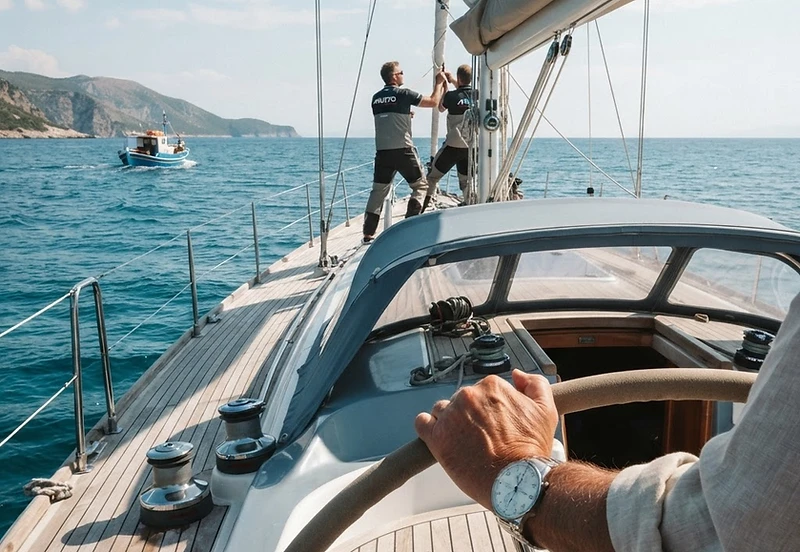
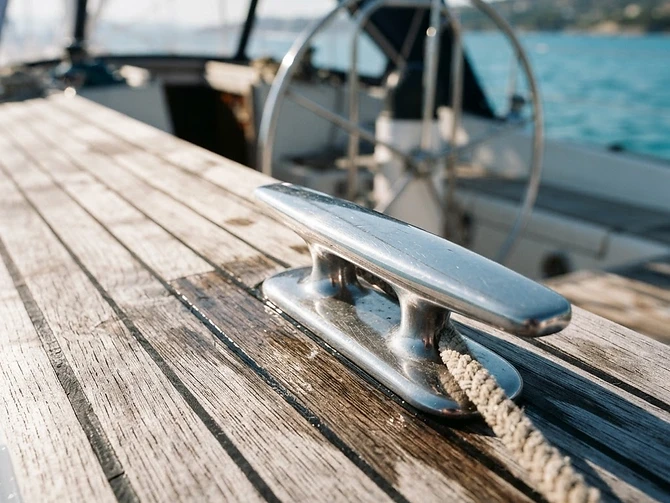
A superyacht, specifically one of the sleek, naval-grade builds from the Feadship or Abeking & Rasmussen yards, functions much like the movement of a complex mechanical masterpiece. Every bulkhead, every meticulously laid teak deck, and every piece of recessed lighting acts as a gear in a larger apparatus designed to maintain equilibrium against the chaos of the deep. To sit in the main saloon, where the minimalist architecture frames the shifting, electric blues of the Peloponnese, is to experience a spatial precision that mirrors the internal geometry of the finest calibre. When we log our position, we are not merely noting latitude and longitude; we are acknowledging the structural integrity of our floating home as it carves a path through the tides, moving with a grace that belies its immense tonnage.
The Ritual of the Passage
I recall a morning off the coast of Kefalonia when the stillness was so profound the surface of the sea resembled polished obsidian. I sat on the aft deck with a simple breakfast—a dish of Greek yogurt, local honey, and crushed walnuts—watching the crew finalize the tension on the tender’s lashings. There is a singular gravity to these moments. The heavy, tactile reality of navigating a passage demands engagement that digital screens, with their glowing, sterile data, simply cannot provide. The logbook requires a steady hand; it asks that the captain acknowledge not just the arrival, but the journey itself, noting the subtle shift in the swell as we move from protected waters into the open Ionian.
As the yacht eventually swings to her chain in the golden, honeyed light of dusk at a secluded anchorage near Ithaca, the logbook is finally closed for the day. There is a distinct, quiet satisfaction in the sound of the pen capping, a finality that signals the transition from the labor of navigation to the repose of the evening. Life aboard is defined by these disciplined, quiet habits, where the precision of the ship’s log is matched only by the steady, unhurried rhythm of the sea itself. It is a life that finds beauty in the intersection of the technical and the elemental, a journey where every mile is a testament to the vessel's enduring grace, and every evening anchorage serves as a reminder that we are merely guests in this vast, salt-sprayed theater.






