
The Weight of the Atoll
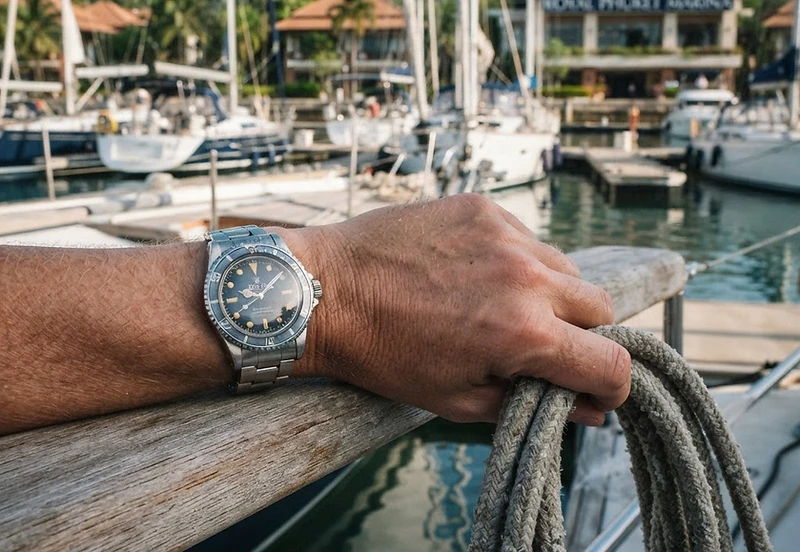
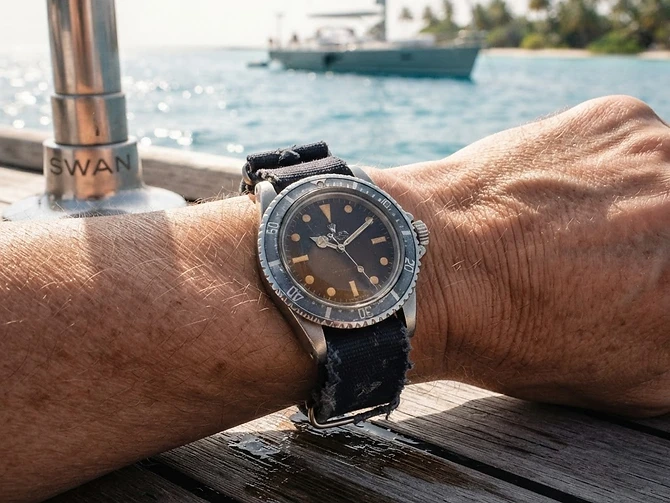
The dawn watch off the coast of Laamu Atoll is rarely a silent affair. As the sky transitioned from a bruised purple to a pale, clinical gold, the 42-meter Nautor’s Swan sliced through the Indian Ocean’s swell with a rhythmic, predictable grace. On the bridge, the air smelled of ozone, damp teak, and the faint, lingering sweetness of the espresso pulled in the galley just moments before. I adjusted the bezel on my 5513 Submariner, a habit more ritual than necessity. Its steel, once sharp-edged and brilliant under the halogen lights of a boutique, had softened into a muted, charcoal matte finish—a record of thirty years of salinity, ultraviolet exposure, and the abrasive, persistent grit of reef-sand. It is a surface that speaks of latitudes crossed and anchorages gained, a tactile map of a life spent in the lee of islands that do not appear on standard charts.
The Geometry of the Reef
By mid-morning, the Swan had reached the southern fringes of the Huvadhu Atoll. Negotiating the narrow channels of a Maldivian atoll is an exercise in high-stakes geometry; the depth sounder chirped with an urgency that tethered us firmly to the present. On deck, the crew moved with a quiet, practiced intensity, coiled lines hummed with tension, and the jib shuddered as we tacked into the crystalline shallows. There is a profound honesty in how a watch changes when it is lived in at sea. The tritium indices have turned the color of parchment left in a coastal sun, a subtle amber bloom that mirrors the fading paint on the old dhonis we pass, bobbing in the distance. The bracelet, too, has stretched with the exertion of the sea, links looser now, conforming to the wrist like a well-worn leather glove. It does not tick with the cold, sterile precision of a silicon-based movement; it carries the slight, erratic drift of a mechanism that has endured the constant thermal fluctuations of the tropics.
The Quiet Anchorage
We dropped anchor in the lee of a nameless spit of sand near Fuvahmulah, the silence that followed the engine’s cut-off absolute and heavy. We sat in the cockpit, nursing glasses of cold water, watching the tide swirl around the hull like ink in a basin. The watch on my wrist felt heavier here, anchored by the stillness of the anchorage. It is no longer just a tool for measuring the transit time between port calls or the duration of a diving session off a coral wall; it is a ledger. Every scratch on the lugs represents a specific moment of clumsiness on a rain-slicked deck or a brush against the brass of a mooring cleat at the Royal Phuket Marina. When we finally depart for the long reach back toward the northern channels, the sun will strike the crystal, and the watch will catch the light, not with the glare of a new object, but with the soft, diffused glow of something that has finally earned its place in the world.
As the light fails, the luminous compound on the dial wakes, emitting a faint, ghostly green pulse that seems to draw its energy from the deep water beneath us, anchoring my pulse to the rhythm of the tide.






