
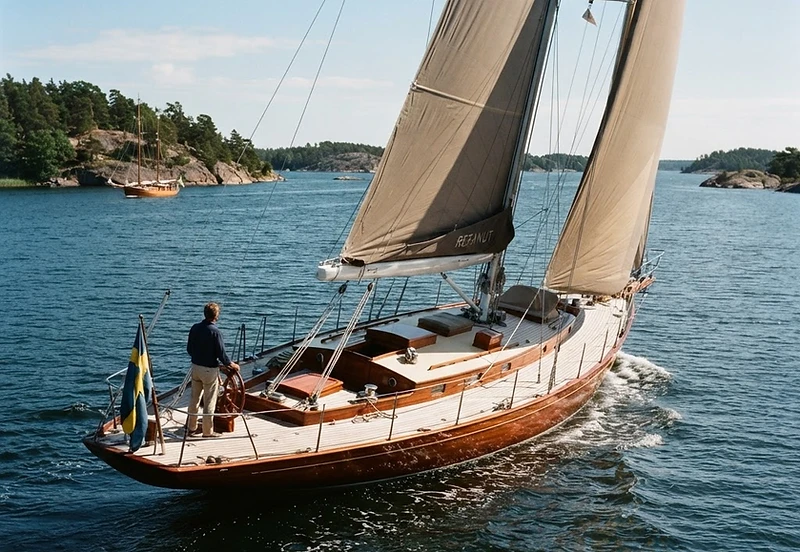

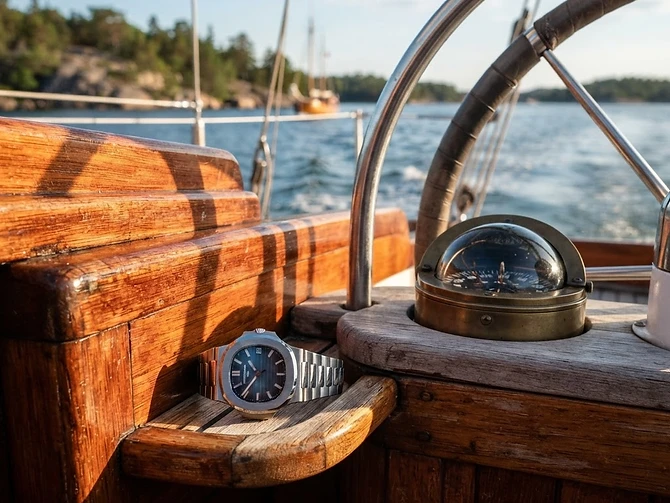
The varnish on the caprail of the Refanut, a legendary 1955 ketch designed by the visionary Knud Reimers, possesses a depth that seems to absorb the pale, northern light of the Stockholm archipelago. Stepping aboard from the weathered wood of the Sandhamn jetty, the immediate sensation is one of structural integrity—the heavy, rhythmic thrum of the wind in the stays and the distinct, nostalgic perfume of saltwater married to the faint, sweet scent of linseed oil. We are not moving with the sharp, hollow acceleration of modern carbon-fiber craft, but with the deliberate, muscular grace of a vessel purpose-built for these specific, granite-bound waters. There is a weight to the way the mahogany hull displaces the Baltic, a confident slide through the chop that speaks of a bygone era of maritime craftsmanship.
The Geometry of the Baltic
As we clear the harbor, the landscape shifts from the softened greens of distant pines to the jagged, glacial-scoured rock that defines this region. Life aboard the Refanut is dictated by the tilt of the deck; one learns quickly to anticipate the roll, moving with the center of gravity in a fluid choreography necessitated by the ketch rig. The helmsman, his hands weathered and steady, watches the tell-tales on the jib with the intensity of a grandmaster. There is a profound silence in the movement of this vessel, interrupted only by the creak of timber and the rush of water against the counter. Here, time is not measured by the digital flickers of a screen, but by the angle of the sun against the sails and the distance between the rocky outcrops that emerge like sea-beasts from the mist. You find yourself resetting your own internal rhythm to the frequency of the rigging, a mechanical peace that feels both ancient and entirely necessary.
Midday Provisions at Nässlingen
By midday, the wind eases, and we find a sheltered cove tucked behind the island of Nässlingen. The anchor chain rattles—a sharp, metallic sound against the profound silence of the surrounding evergreens—and we settle into the stillness. The crew moves with quiet purpose, unrolling a canvas cloth across the cockpit table. We dine simply: a platter of gravlax, dark rye bread, and local potatoes, flavors as spare and honest as the Baltic itself. As the ketch swings gently on her mooring, the architecture of the yacht—its low-slung, elegant lines and the intricate geometry of the standing rigging—frames the wild, unkempt beauty of the Swedish coastline. In this moment, the Refanut is not merely a vehicle, but a sanctuary; we are suspended between the sky and the cold, dark depths of the sea, completely removed from the frantic pace of the mainland.
The Ritual of the Return
As the afternoon transitions into the long, golden dusk characteristic of the Swedish summer, the ritual of the sea takes hold. We prepare for the run back toward the city, adjusting the sheets as the temperature begins to drop and the horizon turns a bruised, magnificent violet. There is a profound honesty in sailing a classic: you are constantly negotiating with the elements, never truly conquering them, but finding a way to exist within their parameters. Each tack is a conversation, each swell a reminder of the ship's pedigree. When we finally secure the lines back at the docks in Stockholm, the solid ground feels strangely transitory, a stubborn, unmoving interruption after a day spent entirely within the fluid, timeless rhythm of the ketch. We linger on deck for a final moment, reluctant to abandon the mahogany embrace of a boat that feels, for all intents and purposes, like a living, breathing companion.






