
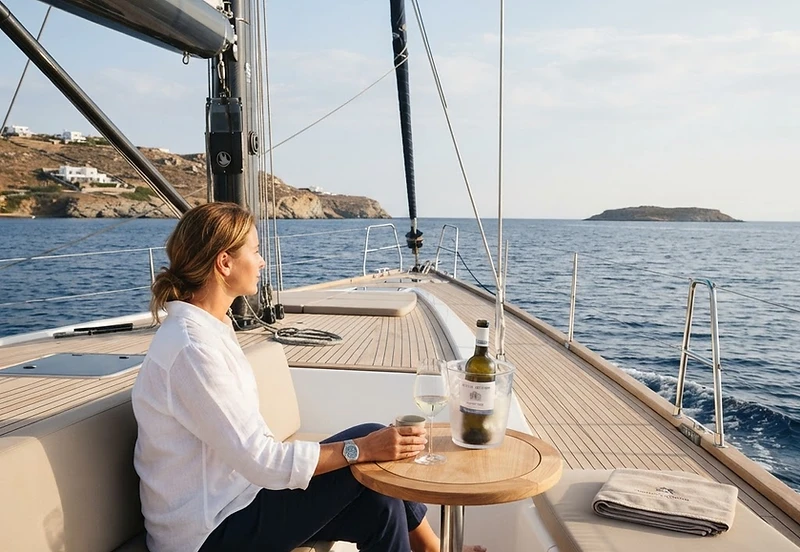
The Aegean at dawn is not blue, but a muted, shifting slate, the water so perfectly flat it mirrors the soft, pale stucco of the distant Parikia coastline. Aboard the Nautor's Swan, the silence is absolute. We are anchored in the lee of Antiparos, the keel biting deep into the silty shelf. There is a distinct, low-frequency hum to the yacht—the gentle, rhythmic respiration of a vessel at rest—that feels entirely removed from the clamor of the typical summer transit through the Cyclades. Here, the vessel is not merely a mode of transport, but a secluded, mobile sanctuary suspended between the depth of the sea and the first light of the Mediterranean.
The Geometry of the First Pour
I step onto the foredeck, the teak still cool with the night’s residual dampness under my bare feet. A ceramic cup of coffee, brewed with beans sourced from a small, dedicated roastery in the heart of Athens, feels substantial and grounding in my palm. The only movement in this pristine theater is the slow, deliberate swing of the anchor chain, a rhythmic, metallic chatter against the hull that marks the passage of the hour. In the distance, the whitewashed cubes of the village seem to hold the shadows of the receding night, an architectural study in stark, unadorned geometry that demands a similar clarity of mind. It is in this porcelain hour, before the heat of the day and the inevitable arrival of the Meltemi winds, that the yacht reveals its true purpose: to provide a frame through which one might observe the world without intruding upon it.
Calibration and the Open Horizon
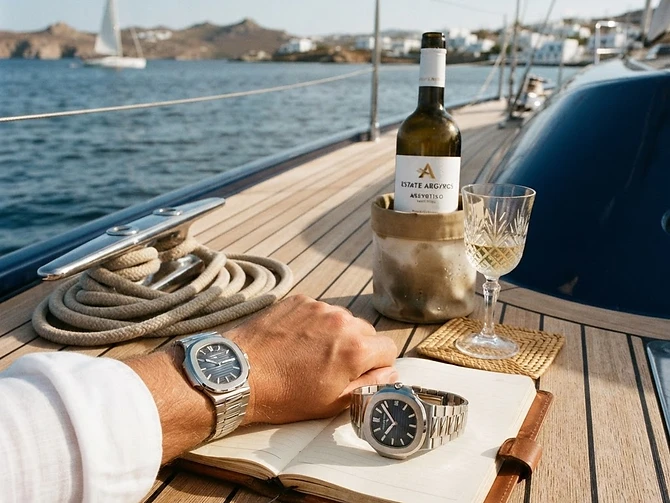
As the sun finally crests the ridge of the island, catching the polished stainless steel of the bow pulpit and setting the rigging ablaze with sudden, amber light, the bay begins to stir. The transformation is subtle—a shift in the water's hue from slate to a translucent, shimmering turquoise. There is a strange, shared language between the yacht and its environment; both are systems of precision, engineered to navigate the vast, unpredictable expanses of the natural world with a disciplined, mechanical grace. Beside me, the deckhand begins the meticulous work of hosing down the teak, the spray creating tiny, fleeting rainbows that vanish as quickly as they appear. Beside my seat, a small table is set with a simple breakfast—fresh figs, local honey, and a carafe of chilled water—a modest offering that highlights the purity of the surrounding elements. Here, amidst the gentle, hypnotic undulation of the Aegean, the world seems to pause, held in the tension between the quiet creak of the halyards and the infinite, beckoning horizon.
The Departure
By the time the breeze begins to ruffle the surface of the water, the anchor locker is already prepped for the short run to the harbor. The morning has been lived not in miles or knots, but in the small, tactile observations of a vessel waking to its surroundings. We turn the prow toward the open sea, the course set for the deeper channels, leaving the quiet anchorage of Antiparos to the ghosts of the morning. There is a quiet thrill in the transition—the transition from the stillness of the bay to the purposeful life of a yacht under sail, ready to chase the horizon until the light fades once more.
As the Nautor's Swan catches the wind, the deck tilts, and the engine’s idle is replaced by the harmonious rush of water against the hull. The Aegean, now fully awake and vibrant, invites us forward. We leave behind the porcelain silence of the dawn, carrying with us the serenity of a day begun in perfect, solitary alignment with the sea.






