
The Geometry of the Morning
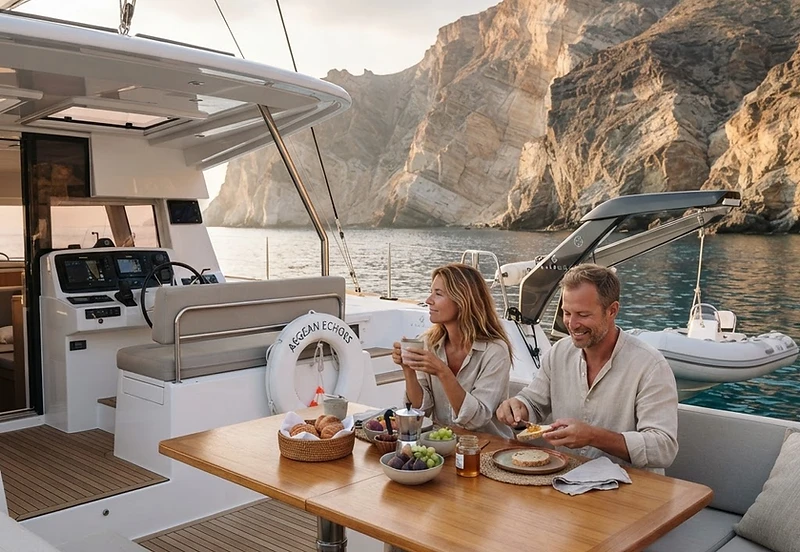
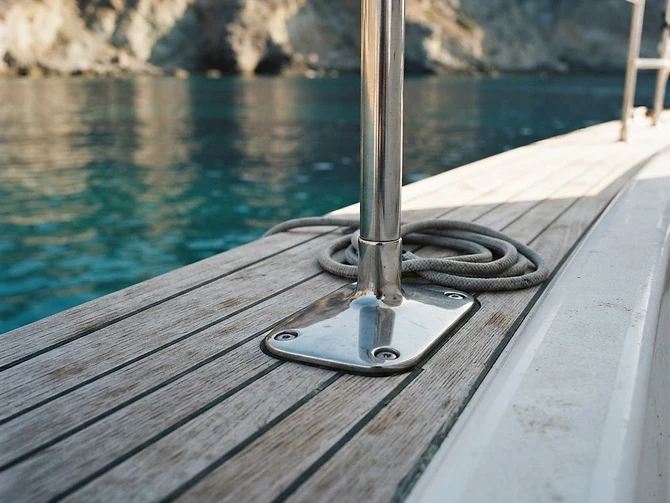
The dawn in the Cyclades is not merely a visual transition; it is an acoustic one. Aboard our catamaran, swinging gently on the hook in the crystalline basin of Polyaigos, the first light hits the white-washed cliff sides of the uninhabited island, turning the jagged limestone into a soft, glowing ochre. There is a profound equilibrium in the aft cockpit of a well-found multihull. As the sun climbs, the primary sensation is one of suspension—the feeling that the vessel, a sturdy Lagoon 62, is not so much floating on the water as it is tethered to a living, breathing landscape. The teak decking underfoot remains cool from the night, and the faint, rhythmic slapping of small Aegean swells against the bridge deck tunnel serves as a persistent, low-frequency heartbeat, a tactile reminder of our connection to the basin.
The Galley and the Aegean Harvest
Life aboard in these waters demands a synthesis between the vessel’s capabilities and the rugged bounty of the islands. Our morning routine begins not with grand gestures, but with the specific, aromatic work of the galley. Having made a brief, early-morning tender run to the bustling, salt-crusted docks of Kimolos the previous evening, the chef returned with a heavy basket of local treasures: deep-green katsikaki cheese from the local cooperative, wild thyme honey, and the intense, sun-dried tomatoes that define the Cycladic pantry. We set the cockpit table—a space that functions as both a bridge wing and a dining room—with a simple, deliberate spread. The star remains the local fava of Schinoussa, a yellow split pea puree so velvety it requires little more than an aggressive drizzle of robust, peppery olive oil pressed on the nearby hillsides of Milos, and a generous scattering of sea salt harvested from the rock pools of the southern coast. To eat this here, while the tender bobs alongside and the anchor chain hums occasionally through the bow roller, is to understand the geography of the Aegean through the palate, tasting the very minerals of the islands we navigate.
The Ritual of the Open Reach
By mid-morning, the meltemi winds begin their familiar, strengthening sweep, turning the cobalt water into a field of whitecaps beyond our protective lee. The aft cockpit becomes a stage for the day’s tactical decisions. We chart the path toward the hidden coves of Folegandros, noting the depth soundings as we prepare to weigh anchor. The catamaran, with its wide beam and shallow draft, allows us to tuck into the kind of secluded, rocky inlets where the water is so clear one can count the sea urchins clinging to the submerged basalt shelves. As the lines are hauled and the engines settle into a low, purposeful thrum, the cockpit transforms again. It is no longer a lounge; it is a workspace. We clear the breakfast remnants—the crusts of sourdough, the dregs of mountain tea—and prepare the winches for the run. The transition from the stillness of the anchorage to the momentum of the passage is seamless, a fluid movement that feels as natural as the turning tide. The anchorage does not simply fade into the distance; it remains imprinted in the mind, a quiet, limestone-shadowed memory held by the sea until the next swing of the anchor.






