
The Harmonic Shift
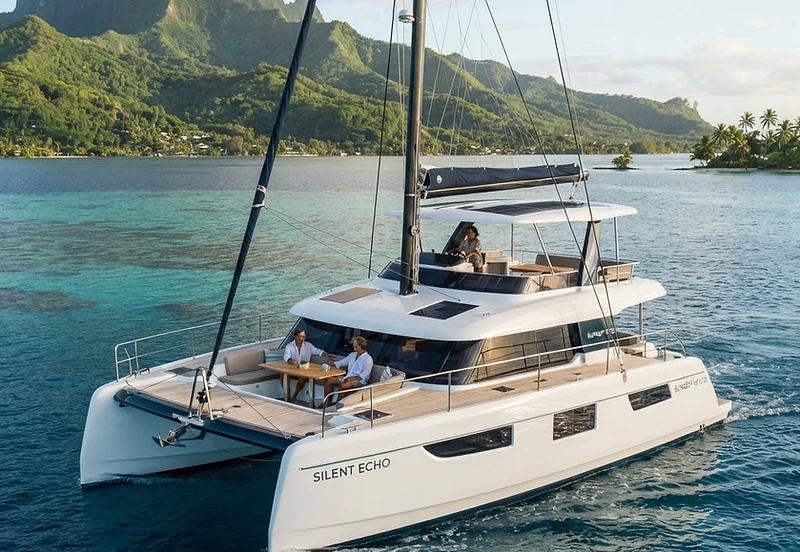
In the transition between the vibrant violet of a Tahitian dusk and the velvet depth of an equatorial night, the traditional diesel engine is a jarring intruder. Tonight, however, aboard our Sunreef 60 Eco, the air remains pristine. We are crossing the lagoon toward the leeward reaches of Raiatea, the twin electric motors emitting nothing more than a faint, rhythmic pulse—a quietude that feels less like boating and more like floating on a liquid mirror. The water, a brilliant, saturated turquoise under the setting sun, has shifted to an obsidian ink that swallows our hulls. Without the persistent vibration of combustion, the natural music of the passage takes hold: the crisp, staccato lap of water against the composite hulls, the groaning of a tightened line, and the occasional, distant sigh of the surf breaking against the distant barrier reef. This is a navigation stripped of its mechanical anxiety, where the helm feels as intuitive as a tiller in a dinghy, yet carries the displacement of a refined, sea-kindly vessel.
The Culinary Tide of the Motu
Our arrival at the weathered jetty of Restaurant L'Escale in Uturoa is marked not by the discordant roar of an exhaust, but by the soft, ambient hum of the harbor at rest. In French Polynesia, the culinary landscape is inseparable from the reef that cradles these islands. We step ashore, the dock groaning gently underfoot, to meet a local fisherman who has arrived with the morning’s catch of mahi-mahi. The galley team has spent the afternoon scouring the markets for the finest ingredients of the Society Islands: hand-pressed coconut milk, the sharp, aromatic punch of ginger from the island’s interior, and the essential, fermented intensity of miti hue. We take our seats on the terrace overlooking the darkening harbor, the table set with charred octopus finished with hand-harvested sea salt and a bright, acidic squeeze of lime from the valley’s own citrus trees. The meal is an exercise in restraint: a poisson cru that tastes precisely of the morning tide, seasoned with the velvet fat of fresh coconut and a subtle dusting of local chili. The connection is visceral; the sea beneath our keel is the same ecosystem that provides the sustenance laid out before us, creating a dialogue between the vessel and the shoreline that feels both ancient and intentional.
Returning to the Anchorage
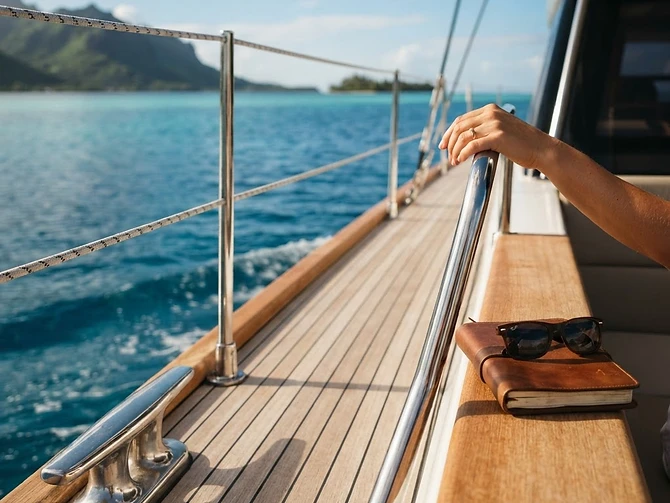
The return to the anchorage is the most profound movement of the journey. As we untie the lines, the lack of fumes allows the cooling land breeze to carry the intoxicating, heavy scent of tiare flowers from the mountains of Raiatea. We steer back toward the lagoon, the electric propulsion leaving the wake undisturbed, an architectural grace note on the dark surface of the sea. We drop the anchor in thirty feet of water, the sound of the galvanized chain clicking against the windlass carrying with startling clarity through the stillness. Standing at the rail, watching the Southern Cross begin to sharpen against the vast, star-drenched expanse of the Southern Hemisphere, there is a realization that the vessel has become a seamless extension of the sea itself. In this remote corner of the Pacific, the luxury is not found in the raw output of horsepower, but in the absolute absence of noise, allowing the natural resonance of the water to assert its dominion.






