
The Geometry of the Solstice Sky
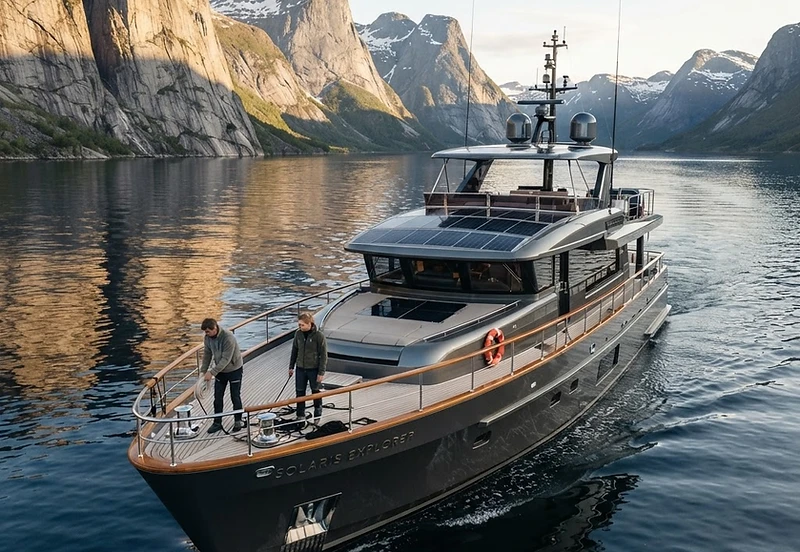
There is a specific, metallic quality to the light in the Helgeland region during the height of summer. It does not so much illuminate the landscape as it does reveal the skeletal structure of the fjords, turning the granite faces of the Seven Sisters mountains into cold, glowing sentinels that loom over the Vestfjorden. Aboard our vessel, the deck is remarkably quiet, save for the rhythmic lap of the Arctic current against the hull. We are running under a sophisticated array of integrated photovoltaic laminates—a setup that feels less like mechanical propulsion and more like an organic extension of the water’s own kinetic movement. The captain, a man who has spent three decades navigating the volatile moods of the Norwegian Sea, watches the flow of data on the bridge with a habitual intensity. We are ghosting through the archipelago, drawing our energy directly from the sky, a silent thief of the northern radiance that seems to stretch the day into an eternal, golden morning.
The Galley and the Cold Harvest
Navigation in these waters requires an intimacy with the local foodways that only arrives through patience and a willingness to follow the local rhythm. By midday, we have slipped into a protected cove near the village of Husøy, dropping anchor where the water turns a startling, opaque emerald. Our tender trip ashore is brief, bringing us to a local fisherman who has just returned with a haul of torsk—Arctic cod—and buckets of sweet, cold-water shrimp caught in the deep, frigid channels. The galley onboard is a cathedral of precision, where our chef performs the alchemy of the region: searing the cod in a light butter emulsion spiked with freshly foraged wild chives and a hint of local mountain sorrel gathered from the nearby headlands. To dine here is to understand the geography. The meal is bright, acidic, and stubbornly fresh, a reflection of the clean, biting air that defines the Helgeland coast. There is no pretension in the preparation; it is simply a dialogue between the morning’s catch and the heat of the induction range, powered by the very same solar bank that pulled us across the sound. We finish with a preserve of cloudberries gathered from the boggy tundra nearby, their tart, complex sweetness grounding the meal in the specific soil of the coast.
The Stewardship of the Drift
As the afternoon transitions into the prolonged, golden dusk of the Arctic, we set our heading further north. The solar array continues to feed the battery banks, maintaining a steady, whisper-quiet cruise that allows us to hear the distant, piercing cry of sea eagles circling the granite precipices. There is a profound sense of stewardship in this way of travel, a recognition that the sea grants us passage only if we are willing to move in its own cadence rather than forcing our way through the swells. We spend the evening on the aft deck, the only sound the gentle, distant hum of the electric drive and the occasional clink of heavy silver against fine porcelain. As we pass the low-slung, weather-beaten skerries, the water darkens to a deep, bruising violet, reflecting the towering rock walls of the mainland. We are not conquering this landscape; we are merely passing through it, a small, sun-brightened fragment of the greater Norwegian drift. The engine’s hum fades into the silence of a world that refuses to turn off the lights, leaving us suspended in the calm of an endless Arctic twilight.






