
The Geometry of the Lagoon
The transition from the open Indian Ocean into the protected embrace of the Baa Atoll is a lesson in hydraulic architecture. As our crewed 62-foot catamaran, a vessel designed with a graceful, low-profile stance that holds the light, slipped through the reef pass, the water shifted from a deep, bruising indigo to a startling, translucent turquoise. There is a specific tension in the rigging when a craft finds the quiet water of a lagoon—a sudden, rhythmic stillness that replaces the heaving, persistent swell of the passage. We dropped anchor in the lee of a sandbar near Dharavandhoo, the chain rattling through the hawsepipe with a metallic clarity that seemed to startle the reef sharks idling in the shallows below. Life aboard quickly settled into the non-negotiable cadence of the tides, governed entirely by the sun’s trajectory rather than the arbitrary ticking of a clock.
The Galley and the Morning Catch
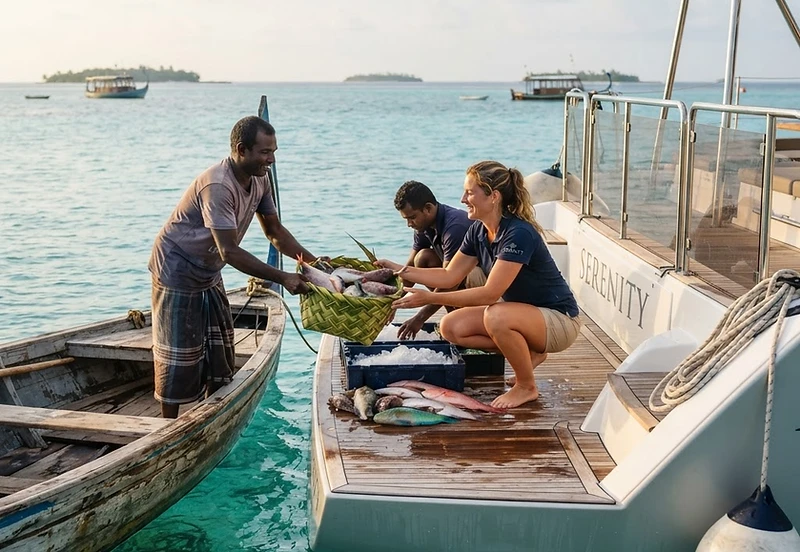
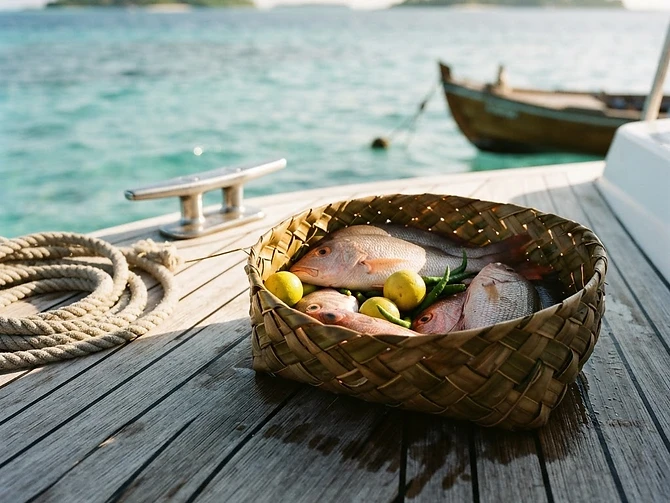
Our days were defined by the essential dialogue between the yacht’s galley and the local bounty. Each morning, before the trade winds began to stiffen and disturb the surface, our chef would take the tender to the docks at Eydhafushi to meet the dhonis returning with their haul. The selection was a masterclass in the region's biodiversity: silver-scaled wahoo, firm-fleshed jobfish, and the occasional prized yellowfin tuna. Back on the aft deck, the transformation of these ingredients was elemental. We sat beneath the bimini, shielded from the relentless midday glare, as the chef prepared mas huni—a traditional Maldivian breakfast of finely chopped tuna, grated fresh coconut, and bird’s eye chili, all bound by the sharp, acidic punch of local lime. The taste was piercing, grounding, and entirely of the archipelago, a vivid reminder that the most sophisticated luxury is found in eating exactly what the sea provides, prepared with a reverence for the immediate origins of the catch.
Shadows and Shoreline Rituals
By late afternoon, the heat would pull us toward the water, where the quiet ritual of the sunset anchorage took hold. We motored the tender toward the faint, weathered outline of a jetty at a remote island, seeking the unadorned hospitality of a local shack known primarily to the skippers who ply these labyrinthine channels. There, we dined on reef fish seared over embers of coconut husks until the skin crackled, accompanied by a vibrant sambal of pounded chilies and aromatic curry leaves. The atmosphere was defined by the soft, rhythmic lap of the tide against the salt-bleached pilings and the sharp, clean smell of woodsmoke drifting out from the shore to mingle with the cooling salt spray. As the sky bled from copper to a deep, bruised violet, the yacht waited for us, a bright, welcoming silhouette against the vastness of the darkening Indian Ocean—a sanctuary of teak and stainless steel floating in the middle of an expansive dream.
Returning to the deck under a canopy of stars so dense they seemed to vibrate, the only sound was the gentle, hypnotic slap of water against the hulls. The catamaran, suspended in the velvet dark of the lagoon, felt less like a mere vessel and more like a bridge between the wild, shifting moods of the sea and the quiet, enduring comforts of our own making.






