
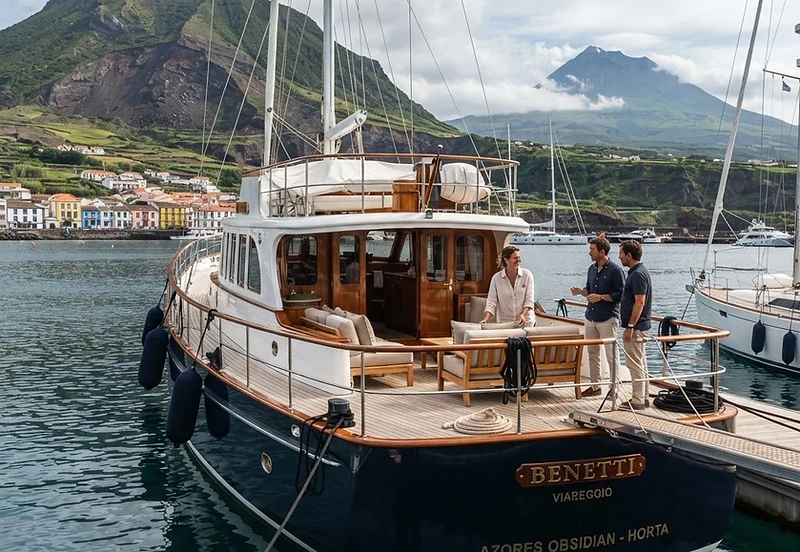
The Atlantic does not suffer fools, nor does it tolerate the fragile. When we finally brought the 1962 Benetti Vittoria into the harbor at Horta, the transition from the chaotic, grey heave of the open ocean to the sheltered calm of the port felt like crossing a threshold into another century. Her hull—stripped to bare steel and meticulously rebuilt over three grueling years—seemed to hum in sympathy with the deep, basaltic blues of the surrounding Azores. She is a vessel of a different era, possessing the rounded, purposeful tumblehome that modern naval architecture has largely discarded in favor of volume and stark, angular efficiency. Watching her settle into her berth at Marina da Horta, one is reminded that a boat of this lineage is less a luxury object and more a piece of kinetic architecture, designed to slice through the mid-ocean chop with a grace that defies her age.
The Geometry of a Second Life
Restoring a classic Italian motor yacht is a profound dialogue with history. In the shipyard, we chose to maintain the original lines envisioned by the Benetti design team, while discreetly integrating modern stabilizers to handle the unpredictable swells of the North Atlantic. The salon remains a study in mid-century restraint: mahogany bulkheads, polished brass hardware, and deep, low-slung seating that invites one to look out at the horizon rather than at a screen. It is a space that demands a specific kind of internal silence. Every morning, as we cleared the headland toward the looming silhouette of Pico Island, the Vittoria felt less like a machine and more like a companion, her twin engines thrumming with a rhythmic, mechanical heartbeat that felt perfectly at home against the vast, empty backdrop of the deep sea.
Volcanic Mornings at the Edge of the World
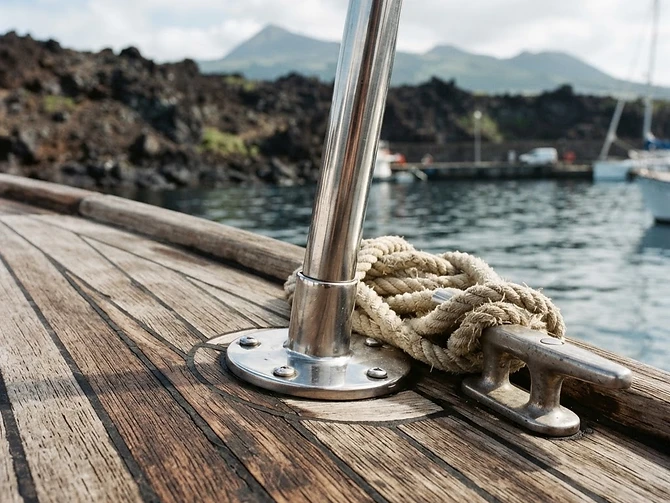
Life aboard the Vittoria is governed entirely by the rhythms of the port and the unpredictable temperament of the wind. We spent three days moored under the shadow of the Caldeira, the air thick with the scent of damp earth and biting salt. Before the morning breeze picked up, turning the bay into a sparkling sheet of silver, we would sit on the aft deck, watching the local fishing boats navigate the breakwater. There is a singular beauty in the way the morning light strikes the deck—a warm, golden glow that softens the harshness of the steel and makes the history of the boat feel tangible.
One particular morning, the air still and heavy with the promise of heat, we sat watching the mist clear from the flanks of the mountains. The stillness was absolute, broken only by the occasional clatter of a halyard against a mast in the marina. In such moments, the yacht acts as a lens, focusing the grandeur of the surroundings into something manageable and intimate. To traverse the Atlantic in a vessel of this pedigree is to accept that you are merely a custodian of her legacy, responsible for her passage through these volatile waters.
As the sun dipped behind the jagged peaks of Faial, casting long, bruised shadows across the marina, we polished the brass binnacle one last time, the metal warm to the touch. There is no urgency here, only the steady, measured progression of a restoration well-kept. The Vittoria is not just a boat; she is a vessel of memory, keeping time with the Atlantic in a way that suggests she will be here long after the newer, sleeker hulls have vanished into the grey.






