
The Anatomy of the Quiet Season
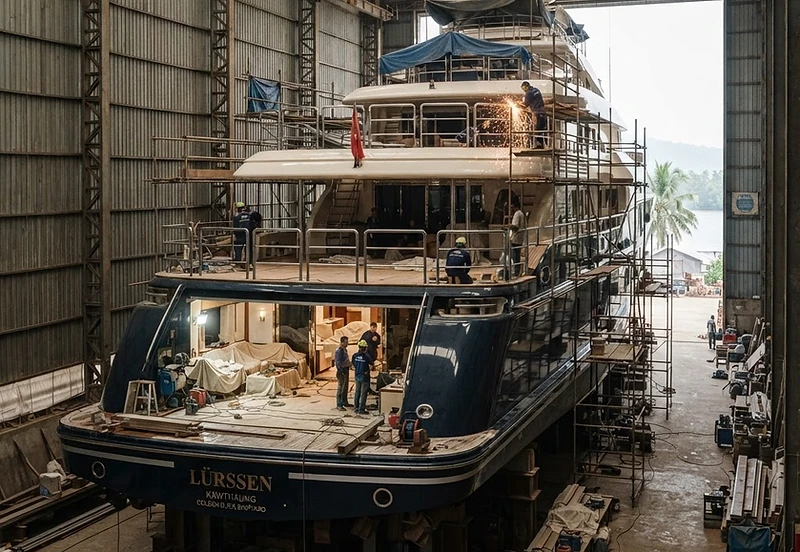
The Andaman Sea in winter offers a stillness that is seldom found in the bustling ports of the Mediterranean. Off the coast of Kawthaung, the humidity drops, and the water turns a startling, glass-like turquoise. It is here, pulled from the salt-spray and into the cavernous, industrial embrace of the local shipyards, that our 70-meter Lürssen begins her hibernation. The vessel, stripped of her teak decking and sensitive navigation arrays, feels strangely hollowed, yet the air inside the shed is thick with the focused, rhythmic hum of the refit. The smell of fresh varnish and metallic dust replaces the familiar, bracing brine of the open archipelago, yet the ship remains the absolute heart of our world.
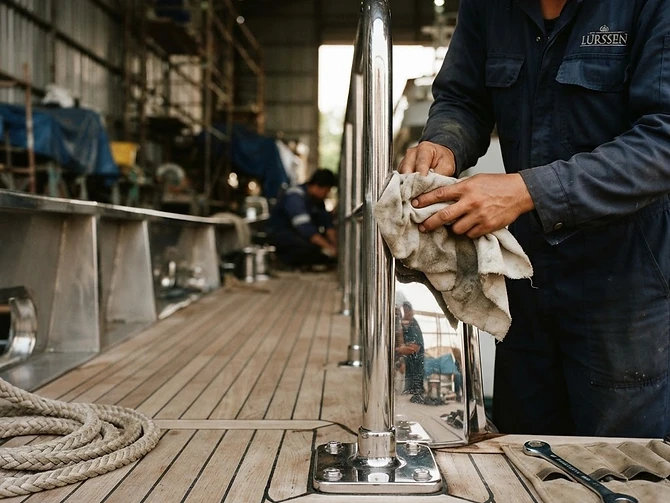
There is a peculiar, almost sacred intimacy to seeing a yacht of this caliber in her undressed state. Without the soft lines of bespoke linen or the ambient glow of dimmed deck lighting, the raw engineering of the Lürssen becomes the focus of our daily existence. We spend hours tracing the complex hydraulic veins of the stabilization systems and inspecting the structural integrity of the hull, an exercise that commands a deep, monastic respect. This is not merely maintenance; it is the preservation of a mobile sanctuary.
The Shore-Side Rhythm of the Crew
Off-season maintenance is not merely about mechanical integrity; it is an exercise in recalibrating the internal life of the vessel. Without the relentless pressure of a charter itinerary, the crew’s daily rituals undergo a fundamental transformation. We find ourselves trading the polished discipline of the guest-service routine for the sensory grounding of local life in Kawthaung. On mornings when the shipyard noise crescendos into an unbearable drone of pneumatic tools and welding arcs, we slip away to a small street-side cafe, Golden Duck. The scent of star anise and roasted chilies there offers a sharp, vibrant contrast to the sterile, clinical environment of the shed.
Over steaming bowls of mohinga, we discuss the day’s refit hurdles—the alignment of the hydraulic passerelle or the meticulous, labor-intensive sanding of the interior mahogany cabinetry—in a register that is softer and more contemplative than the standard radio chatter of the bridge. This period of respite allows us to reconnect with the land we so often merely gaze upon from the anchorage. It is a necessary shedding of our own roles; we are no longer just custodians of luxury, but travelers finding our own footing in the dusty, humming streets of the border town.
Wellness in the Wake of the Archipelago
The discipline of yachting is relentless, even when stationary. To maintain our own equilibrium, we lean into the rhythms of the archipelago even while anchored to the concrete of the yard. We have adopted a practice of evening mindfulness on the vessel’s sun deck, currently covered in protective scaffolding rather than the familiar, soft linen upholstery. In the cooling air of dusk, as the sun dips behind the distant, jagged limestone karsts of Lampi Island, we gather to observe the transformation of the yard lights against the encroaching dark.
The silence of the Andaman at dusk is the greatest teacher; it reminds us that our work is ultimately for the sake of the horizon, not the dock.
It is a shared, human gesture: the collective act of keeping the spirit of the sea alive while the steel is being mended. We are preparing not just a yacht for her next voyage through the Mergui, but ensuring that the life aboard—the hospitality, the quiet attention to detail, and the grace of our shared passage—is as refined as the hull itself. By the time the scaffolding is dismantled and the final coats of antifouling are applied, we will have done more than just ready a vessel. We will have renewed our own commitment to the quiet, dignified pursuit of the sea.






